
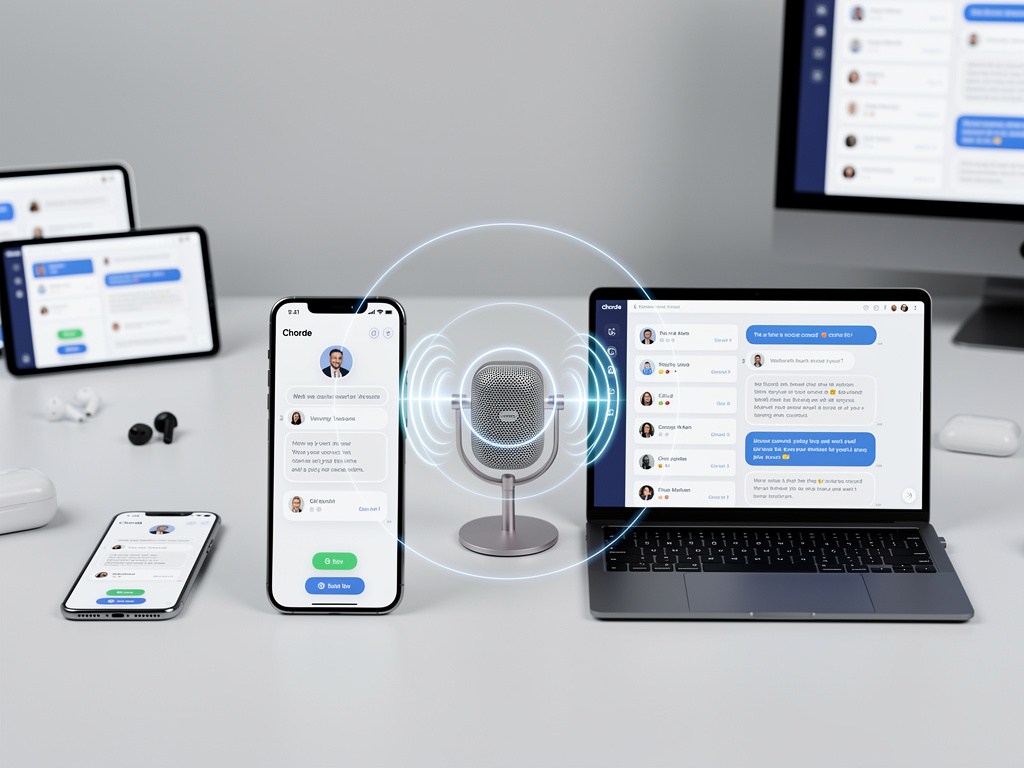
For decades, email has remained stubbornly tethered to the keyboard. Despite advances in voice recognition, artificial intelligence, and natural language processing, the average professional still spends hours each day hammering out replies, drafting follow-ups, and sorting through overflowing inboxes with their fingers. A small but ambitious company called Chorde is betting that the era of typed email is finally ready to end — and it’s offering a lifetime subscription to its voice-first email platform for a one-time payment of $39.97.
The deal, highlighted by TechRepublic, represents a significant discount from Chorde’s standard pricing and positions the product squarely at professionals who want to manage their inboxes without ever touching a keyboard. But behind the promotional pricing lies a broader question about whether voice-driven email can actually gain traction in a market dominated by entrenched players like Gmail, Outlook, and Apple Mail.
What Chorde Actually Does — And How It Works
Chorde is an AI-powered email client that allows users to compose, reply to, and manage emails entirely through voice commands. Rather than simply transcribing spoken words into text — a feature that has existed in various forms for years — Chorde applies artificial intelligence to interpret the user’s intent, structure the message appropriately, and format it in a way that reads like a professionally written email. The user speaks naturally, and the AI handles the rest.
According to the product’s description as reported by TechRepublic, Chorde supports integration with major email providers, meaning users don’t need to abandon their existing accounts. The platform works with Gmail, Outlook, and other popular services, functioning as a layer on top of existing infrastructure rather than a replacement for it. Users can dictate new messages, respond to threads, and organize their inboxes using voice controls, with the AI adjusting tone and formality based on context.
The Lifetime Deal: A $40 Bet on the Future of Email
The lifetime subscription offer — $39.97 for permanent access — is the kind of aggressive pricing that typically signals one of two things: a company confident enough in its product to bet on long-term user retention, or a startup desperate to build a user base before funding runs dry. In Chorde’s case, the pricing appears designed to lower the barrier to entry for skeptical professionals who might not otherwise take a chance on a voice-first email tool.
Lifetime deals have become increasingly common in the software-as-a-service world, particularly among early-stage companies looking to generate upfront revenue and build word-of-mouth. Platforms like AppSumo have popularized this model, offering steep discounts on new tools in exchange for early adoption. The risk for buyers is that the company may not survive long enough to honor the “lifetime” promise. The risk for the company is that it locks in revenue at a fraction of what recurring subscriptions would generate. For Chorde, the calculus seems to favor rapid user acquisition at this stage.
Why Voice Email Has Struggled to Catch On
The concept of voice-controlled email is not new. Apple’s Siri, Google Assistant, and Amazon’s Alexa have all offered some form of email dictation for years. Microsoft has built voice typing into Windows and its Office products. Yet despite the availability of these tools, the vast majority of email users still default to typing. The reasons are both practical and cultural.
On the practical side, voice dictation has historically suffered from accuracy problems, particularly in noisy environments or with accented speech. Even when transcription is accurate, the resulting text often lacks the structure and tone that professional communication demands. An email that reads like a transcript of someone talking — complete with filler words, run-on sentences, and awkward phrasing — can undermine the sender’s credibility. Chorde’s AI layer is designed to address this specific problem, transforming casual speech into polished prose. But whether it can do so consistently across the wide range of contexts in which email is used remains an open question.
The Cultural Barrier: Offices Aren’t Built for Talking
The cultural barriers may be even more significant. Open-plan offices, shared workspaces, and public settings all make voice dictation impractical or socially awkward. Speaking an email aloud in a quiet office is the auditory equivalent of reading someone else’s screen — it broadcasts private communication to anyone within earshot. Even in private offices, many professionals simply prefer the quiet concentration that typing affords.
That said, the rise of remote work has shifted some of these dynamics. Professionals working from home offices, in their cars, or in other private settings have more freedom to speak aloud without concern for eavesdropping colleagues. The pandemic-era shift toward distributed work may have inadvertently created a larger addressable market for voice-first productivity tools. Chorde appears to be positioning itself to capture exactly this segment of the workforce — people who spend significant time away from their desks but still need to stay on top of their inboxes.
AI Email Tools Are Proliferating — And Competition Is Fierce
Chorde enters a market that is becoming increasingly crowded with AI-powered email tools. Google has integrated its Gemini AI into Gmail, offering features like suggested replies, email summarization, and draft assistance. Microsoft’s Copilot brings similar capabilities to Outlook. Startups like Superhuman and Shortwave have built entire businesses around making email faster and more efficient, though they have focused primarily on keyboard-and-mouse interfaces rather than voice.
The broader AI email market is expanding rapidly. Tools that summarize long email threads, automatically categorize messages, draft responses based on previous correspondence, and flag urgent items are becoming standard features rather than premium add-ons. In this environment, Chorde’s differentiator is its voice-first approach — the idea that the entire email workflow can be handled without typing. Whether that distinction is enough to carve out a sustainable niche depends on execution and on whether the underlying AI is sophisticated enough to handle the nuances of professional communication.
Who Stands to Benefit Most From Voice-First Email
The most obvious beneficiaries of a tool like Chorde are professionals who are frequently away from their desks: salespeople on the road, executives moving between meetings, field workers, and anyone whose job involves more talking than typing. For these users, the ability to fire off a well-crafted email while driving (hands-free, of course) or walking between appointments could represent a genuine productivity gain.
Accessibility is another significant consideration. For users with physical disabilities that make typing difficult or impossible, voice-first email tools can be transformative. While screen readers and dictation software have existed for years, they often require significant setup and lack the AI-powered formatting that makes dictated text read naturally. A purpose-built voice email client like Chorde could serve this community more effectively than general-purpose accessibility tools, provided the AI performs as advertised.
The Risks of Betting on a Lifetime Deal
For potential buyers, the $39.97 lifetime deal raises the usual questions about sustainability. Lifetime software deals are only as good as the company behind them. If Chorde fails to secure additional funding or generate enough recurring revenue from users who don’t take the lifetime offer, the service could shut down, leaving lifetime subscribers with nothing. There is no public information about Chorde’s funding status, investor backing, or financial runway, which makes the purchase something of a leap of faith.
On the other hand, $40 is a relatively low-risk bet. If the tool works well for even a few months, most users would likely consider the investment worthwhile. And if Chorde does succeed in building a loyal user base, the lifetime subscribers will have locked in access to a maturing product at a fraction of its eventual cost. As TechRepublic noted, the deal represents a significant markdown from the product’s regular pricing, making the risk-reward calculus more favorable than many similar offers.
Where Voice-First Email Goes From Here
The broader trajectory of AI in email seems clear: more automation, more intelligence, and more options for interacting with messages beyond the traditional compose window. Whether voice becomes a primary input method or remains a niche feature for specific use cases will depend on how quickly the technology improves and how willing users are to change deeply ingrained habits.
Chorde’s bet is that the technology is ready and the habits are shifting. The lifetime deal is an invitation to test that hypothesis at minimal cost. For industry watchers, the more interesting question is whether the major players — Google, Microsoft, Apple — will respond by building more sophisticated voice email features into their own products, potentially rendering standalone tools like Chorde redundant. History suggests that when a startup identifies a genuine need, the incumbents eventually absorb the innovation into their own platforms. Chorde’s window of opportunity may be real, but it is unlikely to stay open forever.





 WebProNews is an iEntry Publication