
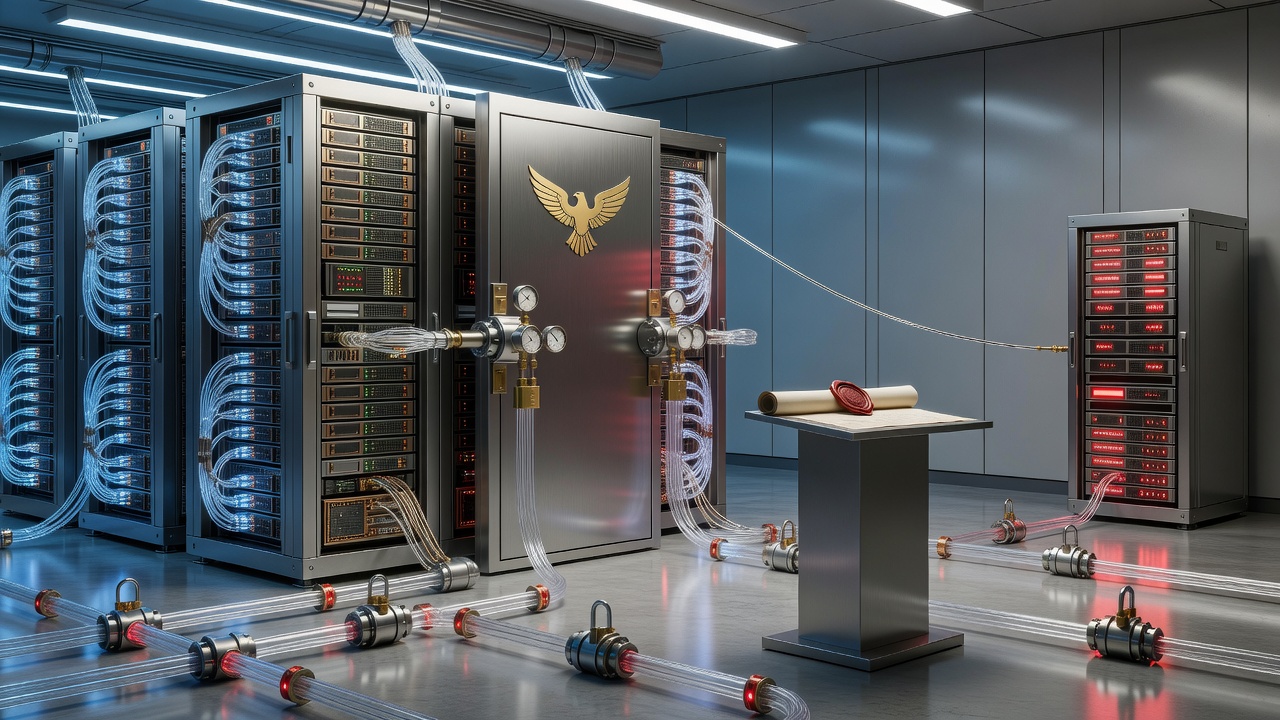
The Trump administration has quietly taken charge of who gets to use the most powerful American artificial intelligence systems. No longer do OpenAI and Anthropic alone pick their partners for cutting-edge models. Government approval now shapes those lists. Sources say the shift marks a structural change in how frontier AI reaches the market.
Project Glasswing gave Anthropic direct say over access to its Mythos cybersecurity model. Daybreak played a similar role for OpenAI. Both efforts now require explicit White House sign-off, according to people familiar with the discussions. The change surfaced in reporting from CNBC on July 17.
A White House official pushed back. “The Administration continues to collaborate with all of America’s frontier labs to strengthen the security of this technology without stifling innovation,” the official told CNBC. Decisions on timing and scope of releases rest with the companies, the statement continued. Engagements remain voluntary.
Actions on the ground tell another story. Last month officials blocked Anthropic’s Claude Mythos 5 and a related Fable 5 model over national security worries. Access returned only after weeks of tense talks. OpenAI, for its part, announced in June it would restrict new models to trusted partners to meet government demands.
The mechanism tying it all together launched this week. Gold Eagle, a new AI-powered cybersecurity clearinghouse, coordinates vulnerability discovery and fixes across public and private sectors. It grew directly from President Trump’s June 2 executive order on AI innovation and security. That order, detailed in Eastern Herald coverage from July 6, set a 60-day clock for voluntary standards on frontier model testing.
Under the framework, labs provide government experts up to 30 days of early access before broader release. Classified benchmarks run by the National Security Agency and Commerce Department’s Center for AI Standards and Innovation evaluate cyber risks. User conditions follow each model—domestic commercial users, vetted foreign firms, select governments.
Yet the order explicitly bars mandatory licensing or preclearance. Industry received that language as reassurance against heavy regulation. Researchers at the University of Pennsylvania’s Wharton School called the setup something else. They described it to Eastern Herald as “a backdoor licensing regime built on existing Commerce Department authority, with conditions that shift without public notice.”
Timing adds pressure. On the same day Moonshot AI released Kimi K3, the Chinese model matched or beat U.S. frontier systems on key benchmarks. David Sacks, former White House AI czar, reacted sharply. “This is how you lose the AI race,” he posted. “The rest of the world won’t play by our rules if we bog ourselves down.”
The contrast feels stark. American labs face partner vetting, export controls, and negotiation delays. Chinese developers push open-weight models that spread faster and cheaper. One independent benchmark showed Kimi K3 outperforming Fable and GPT-5.6 in at least one category.
Anthropic and OpenAI have poured billions into infrastructure to stay ahead. Recent deals show the scale. Meta is in talks to lease Anthropic up to $10 billion in compute over two years. SpaceX, TeraWulf, and CoreWeave add tens of billions more in commitments. The companies remain unprofitable. Their valuations ride on expected growth from these very models now under tighter oversight.
Gold Eagle aims to turn AI’s power toward defense. It scans for flaws faster than traditional methods. It reduces duplicate work. It shares remediation steps with critical infrastructure operators and agencies. A White House release on July 14 called it “unprecedented cybersecurity vulnerability coordination.” Coverage in Politico from July 14 noted the program began internal operations by the executive order’s July 2 deadline.
Critics question accountability. What happens if a model clears the classified tests yet causes harm after deployment? Who sets the exact standards when benchmarks stay secret? Labs cannot fully know the tests they face. Conditions on access can change privately.
The original The Next Web report on July 18 captured the tension. Participation is called voluntary. Sources describe operational reality as something closer to gating. If partner lists for flagship models need government green lights, distribution power has moved.
Discussions on X reflected the moment. One post noted the clearinghouse gives the federal government early eyes on the most advanced private AI systems. Another warned centralized control of fast-moving technology creates massive information asymmetry. Prediction markets, some suggested, might become the only honest price discovery left.
Negotiations continue. An announcement on the full voluntary framework could arrive in early August, per the Eastern Herald timeline. Google, Amazon, and Microsoft have joined talks alongside the primary labs. Meta’s open-weight Llama approach sits outside the core process, creating what one analysis called a structural gap.
Export controls already played a role. In mid-June the Pentagon restricted foreign access to certain Anthropic Claude models. The lock lasted about three weeks. It lifted July 1 after the company agreed to 99%-plus jailbreak filters in a private deal. No public verification process accompanied the change.
Parallel financial talks add complexity. OpenAI has pitched a $42.6 billion equity stake to the administration. Officials involved in policy also appear in those discussions. Hardware moves continue too. Anthropic explores 2-nanometer chip partnerships with Samsung even as compliance talks drag on.
The administration walks a narrow path. Sophisticated AI brings enormous cybersecurity risks. At the same time, overcontrol could slow American innovation exactly when Chinese capabilities accelerate. Sacks’s warning resonates across industry chats. Lose the race and the rules may not matter.
Gold Eagle, for now, focuses on vulnerabilities. It collects data from multiple sectors. It validates findings. It prioritizes patches. Financial institutions watch closely. The Consumer Finance Monitor outlined potential impacts in a July 17 analysis, noting faster flaw identification could protect critical systems but also tie private risk management to federal priorities.
Executives at frontier labs weigh options. Full cooperation risks ceding strategic autonomy. Resistance invites export hurdles, delayed approvals, and high-level calls. The voluntary label offers some cover. Operational dependence on government goodwill does the rest.
History offers little guide. Previous technology waves faced export rules on encryption or supercomputers. None matched AI’s speed of improvement or dual-use nature. A model’s weights, once distributed, prove hard to recall. Partner vetting before release becomes a choke point.
So the White House now holds that point. Not through new legislation. Not via a dedicated regulator. Through executive order, classified testing, and programs framed as collaborative. The labs still build the models. But who touches them first? That decision has moved inside the Beltway.
Whether the approach secures American leads or hands momentum to competitors remains unsettled. Kimi K3’s arrival the week of Gold Eagle’s launch offered an early data point. The gap narrows. The controls tighten. The race continues.


 WebProNews is an iEntry Publication