
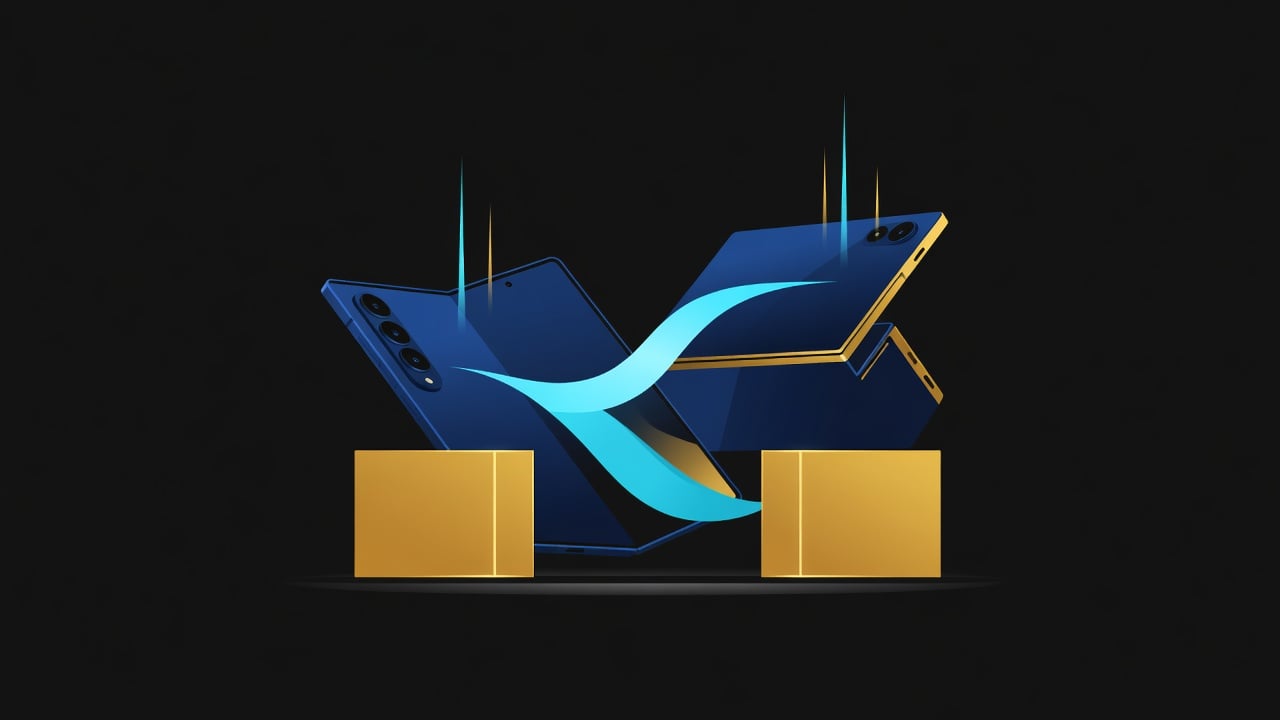
Samsung stands on the edge of its most ambitious foldable year yet. On July 22 the company will unveil not one but two book-style devices at its Galaxy Unpacked event. One carries forward the familiar tall-and-narrow blueprint. The other stretches wider, shorter, and aims straight at Apple’s rumored foldable iPhone. Both carry Ultra-level expectations. Both come with higher prices. And both reflect years of incremental tweaks finally colliding with fresh competition.
The standard Galaxy Z Fold 8 adopts a 5.5-inch outer screen. That alone marks a departure. Previous Folds forced users to type on narrow strips that felt more like afterthoughts. This time the cover display measures roughly phone-like proportions when closed. Unfolded, it reveals a 7.6-inch inner panel. The chassis shrinks to 9.7 mm folded, 4.5 mm open, and lands near 201 grams. Design ambition now centers on everyday usability rather than just thinness.
But the device insiders call the Galaxy Z Fold 8 Ultra keeps the classic recipe. Its outer screen stretches 6.5 inches. The inner panel hits 8 inches with a resolution bump to 2504-by-2256 pixels. Peak brightness climbs to 3600 nits. That figure tops the Galaxy S26 Ultra by a full thousand nits, according to 9to5Google. The Ultra also adds an anti-reflective coating on the inner display. Leaker Ice Universe first floated the idea on X. Later reports from SamMobile confirmed the claim. Glare drops. Outdoor readability rises. Crease visibility shrinks thanks to new Flex Titanium layering that Samsung tested through 500,000 folds.
Power comes from the same Snapdragon 8 Elite Gen 5 for Galaxy chip in both models. Overclocked for Samsung handsets, it pairs with 12 GB or 16 GB of RAM and storage tiers up to 1 TB. Battery capacity finally grows. The Ultra packs 5000 mAh cells. The wider Fold 8 sits at 4800 mAh. Both support 45-watt wired charging. That marks real progress after years of modest 25-watt speeds. Android Authority first reported the capacity increase back in March. Recent leaks from WinFuture, cited across multiple outlets, now lock in the numbers.
Cameras tell two different stories. The Ultra sticks close to last year’s formula yet upgrades select lenses. A 200-megapixel main sensor leads a trio that includes a 50-megapixel ultrawide and 10-megapixel 3x telephoto. Selfie cameras on both sides rate 10 megapixels. The wider Fold 8 simplifies to a dual 50-megapixel rear setup. That decision drew criticism in dummy unit photos that surfaced in June. Android Authority noted the absence of a dedicated telephoto could disappoint power users. Still, both phones gain software tricks borrowed from the S26 Ultra. Low-light performance and dual-recording modes appear in early Korean leaks.
Software runs Android 17 with One UI 9. Samsung promises seven years of updates. Galaxy AI features expand. Live Translate, Note Assist, and generative tools now feel native to the larger canvas. Taskbar refinements and better app continuity promise to make the foldable experience less jarring. But the real conversation centers on price.
Base models start at roughly $1,899 for the wider Fold 8 and $2,099 for the Ultra, according to Android Authority’s July reporting on European listings. Those figures represent $100 to $200 jumps from last year. Global memory shortages drive part of the increase. So does added titanium and larger batteries. Digital Trends warned buyers last week that holding off for potential storage upgrade promos might make sense. Yet early demand signals remain strong. Bluetooth SIG and FCC filings for the Ultra surfaced weeks ago. Case makers already list accessories for both SKUs.
And here the strategy splits. The wider Fold 8 chases buyers tired of narrow cover screens. It competes directly with whatever Apple eventually ships. The Ultra, meanwhile, doubles down on productivity. S Pen support returns in some reports, though confirmation remains mixed. Android Authority noted late last year that the digitizer might reappear on the new wide model instead. A new Carbon Standing Case, trademarked for the lineup, could turn either phone into a mini laptop. CNET’s fresh roundup published hours ago highlights how these accessories may sway enterprise users.
Recent leaks paint an even clearer picture. WinFuture dropped comprehensive specs just days ago. The Ultra’s inner display jumps in sharpness. Its body measures 123.9 by 161.4 mm unfolded. Weight hovers near 218 grams for the premium variant. PhoneArena summarized the data yesterday, calling the dual-pronged approach Samsung’s clearest response yet to market pressure. On X, analysts and enthusiasts have debated the naming confusion. Why call the familiar design “Ultra” while the newcomer takes the base name? Samsung’s branding team offered no comment. The market will decide.
Display durability still looms large. Both phones use improved ultra-thin glass. Crease reduction reaches levels that match or beat rivals, per Ice Universe’s latest posts. Brightness gains matter most in direct sun. The 3600-nit figure turns the inner screen into a legitimate outdoor companion. That change alone could shift how professionals use these devices on job sites or during travel.
Battery life gains could prove the biggest daily win. Past Folds drained fast under heavy multitasking. The new 5000-mAh cell paired with a more efficient chipset should deliver noticeable improvement. Wireless charging stays in the 15- to 25-watt range. Qi2 compatibility appears likely given recent certification hints. No one expects 65-watt speeds. Focus remains on balance between thinness and endurance.
Camera performance will face immediate scrutiny. The Ultra’s 200-megapixel sensor promises detail. Yet past Samsung foldables often lagged behind slab flagships in consistency. Software processing must close that gap. Early indications from S26 Ultra feature parity offer hope. Video modes, color science, and low-light detail all factor into the final verdict.
Pricing remains the thorn. At $2,099 the Ultra sits in rarefied air. Buyers must weigh the wider model’s usability against the Ultra’s larger canvas and brighter panel. Early renders suggest the wider Fold 8 feels more like a traditional phone when closed. That single change could drive broader adoption. But the Ultra retains the prestige. Its colors, build, and accessories position it as the halo product.
Launch timing adds pressure. Apple’s foldable project reportedly enters mass production soon. Google’s Pixel Fold 3 improves but lacks Samsung’s scale. Chinese rivals push aggressive pricing and innovative form factors. Samsung answers with two devices, heavy AI integration, and a promise of longevity through software support.
Industry watchers expect pre-order bundles to soften the blow. Free storage upgrades, bundled cases, or trade-in credits often appear. Still, the baseline jumps feel real. Memory costs rose sharply this year. Titanium components add expense. Consumers notice.
Even so, the improvements stack up. Brighter screens. Bigger batteries. Sharper displays. Reduced creases. Faster charging. These changes address complaints that have followed the Fold line since its debut. The wider design option removes one of the biggest barriers to mainstream use.
Samsung no longer iterates alone. The foldable market has matured. Competition forces bolder moves. The July 22 stage will showcase whether those moves land. For insiders tracking component costs, hinge reliability, and long-term software polish, the dual launch offers rich data points. For buyers, it presents a clear choice. Narrow prestige or wide practicality. Premium price either way.
One thing looks certain. The era of modest annual updates has ended. Samsung bet big on two distinct foldables. The market’s response will shape the category for years ahead.


 WebProNews is an iEntry Publication