
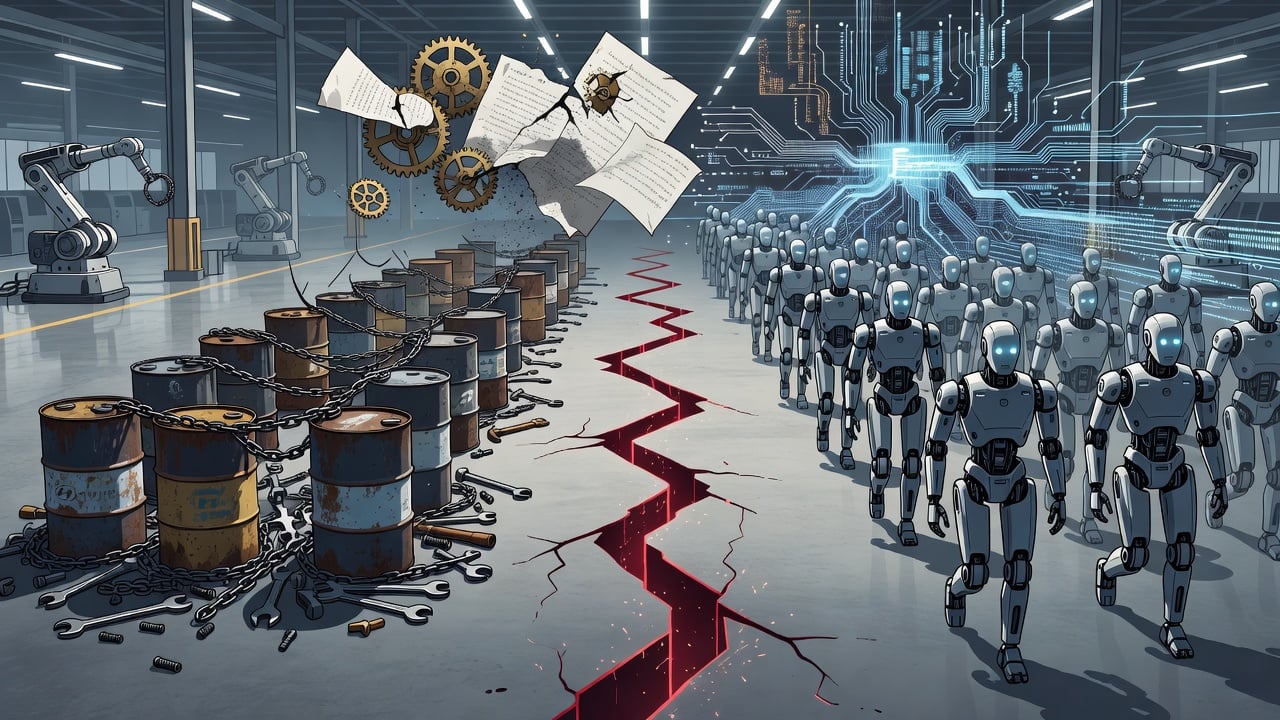
Thousands of Hyundai workers in South Korea walked off the job this month. Their target wasn’t just pay or hours. It was the company’s bold plan to roll out thousands of humanoid robots on the assembly line.
The partial strikes began after 15 rounds of talks collapsed. Union members cut shifts short by two hours early on, then moved to four-hour stoppages. Production at the massive Ulsan complex slowed to a crawl. And the world took notice.
This marks the car industry’s first factory stoppage driven by fears over humanoid robots. The Wall Street Journal reported the details from the factory floor in Ulsan. Workers there watched Hyundai unveil its Atlas robot in January. The 6-foot-2 machine strutted across a stage. Its joints spun 360 degrees. Tens of thousands of employees stared in silence.
Hyundai acquired Boston Dynamics years ago. Now it intends to deploy more than 25,000 Atlas units across Hyundai and Kia plants. The Korea Herald first detailed the scale of those ambitions. The robots would tackle repetitive tasks. They could lift up to 110 pounds. Management insists they will work alongside people. They promise improved safety and output. But union leaders hear something different.
“We have to prepare to ensure there are safeguards in place.” So said Byun Jun-hwan, secretary general of the Korean Metal Workers’ Union and lead negotiator. He spoke directly to The Wall Street Journal. The union represents roughly 40,000 workers. It supports new technology in principle. Yet it demands guarantees. No robots replace humans without explicit agreement. No deployment without worker input.
The dispute runs deeper than machines. Wages sit front and center. So do profit-sharing formulas. The union wants bigger bonuses tied to Hyundai’s record earnings. It also seeks a shift from hourly wages to fixed salaries. But the robot question overshadows everything else. This isn’t abstract worry about future automation. It’s concrete resistance to a specific rollout plan.
Hyundai aims to place Atlas robots at its nonunionized Metaplant complex in Georgia by 2028. That U.S. factory operates without the Korean union’s reach. The timing feels strategic. Workers in Korea see the writing on the wall. Once robots prove themselves abroad, domestic pressure will mount. One X user captured the tension. “The Hyundai strike over Atlas is the first serious labor test of humanoid manufacturing,” they posted. “It is arriving before the robots have done the work.”
Recent coverage adds context. Ars Technica noted the strikes began July 13 through 15 with early shift endings. Four-hour walkouts followed from July 20 to 22. The outlet highlighted how this represents the most significant organized labor pushback against the latest robotic wave. Production of some 5,000 vehicles stands at risk. That could slash revenue by $135 million. A full strike remains possible if talks stay stalled.
Industry voices push back on the alarm. Automakers and robotics executives argue job loss fears run overblown. Robots handle dangerous or dull work. Humans move to higher-value roles. Yet history offers mixed lessons. Past automation waves in auto plants often led to fewer positions over time. The difference now lies in the form. Humanoids promise flexibility that fixed industrial arms never delivered. They can switch tasks. They learn on the fly. They mimic human movement with growing precision.
Boston Dynamics built Atlas originally for defense research. Videos showed it running, jumping, even performing parkour. Hyundai’s version targets factory floors. It kicks soccer balls in promotional clips tied to the FIFA World Cup. The spectacle excites investors. It unsettles workers. One Forbes analysis called it the first humanoid robot strike ever. The piece examined how multiple issues fuel the conflict. Wages and profit-sharing matter. The robot element makes this moment unique.
Union strategy has evolved. Members voted overwhelmingly in late June to authorize action. That vote came after Hyundai announced its robot plans. Negotiators now link automation safeguards to the broader contract. They want final say on where and when robots appear. They seek retraining commitments. They demand transparency on productivity gains. So far, Hyundai has offered few specifics on domestic timelines. The Georgia deployment serves as both test bed and warning.
Financial Times covered the initial strike vote weeks ago. Its reporting showed workers fear direct replacement. The union doesn’t oppose progress. It opposes unilateral decisions that erode bargaining power. This stance echoes earlier fights against outsourcing. Yet robots can’t be sent overseas. They arrive on site. They plug into existing lines. They require human oversight, at least for now.
Recent social media chatter reflects global interest. Posts on X reference the WSJ story repeatedly. Some highlight parallels with U.S. unions. The United Auto Workers eyes organization at the Georgia Metaplant. If successful, similar tensions could arise stateside. Others point to China’s rapid robotics adoption. There, labor responses differ. Government influence shapes outcomes. In Korea, independent unions drive the conversation.
Hyundai’s leadership faces a balancing act. The company reports strong profits. Demand for its vehicles remains high. Investors applaud the Atlas initiative as forward-looking. Yet prolonged strikes threaten output at a critical plant. Ulsan produces roughly half of Hyundai’s global volume. Disruptions ripple across supply chains. Suppliers feel the pinch. Dealers await inventory.
Analysts watch closely. This conflict tests whether humanoid robots can integrate without major labor friction. Previous automation focused on fixed robots. Those systems complemented human labor in clear ways. Humanoids blur the line. They stand beside workers. They perform similar motions. They raise questions about supervision, maintenance, and skill shifts.
The union’s position carries risks. Public sympathy may fade if strikes drag on and prices rise. Hyundai could accelerate overseas robot deployment. That move might weaken domestic leverage. Yet the union holds cards too. Its members possess institutional knowledge. They understand the production process intimately. Robots still need programming, troubleshooting, and adaptation. Humans provide that expertise.
Byun and his team continue talks. They push for concrete language in the new contract. Safeguards must address not just current jobs but future ones. What happens when Atlas improves? When costs drop? When capabilities expand? Those questions loom larger than this summer’s negotiations. They define the next decade of manufacturing labor relations.
Other outlets have joined the coverage. Futurism detailed how the strike slows lines to a trickle. It quoted the same union leader. It framed the moment as part of a broader pattern. From Detroit to Shenzhen, new workers clock in. The humans they displace fight back. This Hyundai case stands out. It targets a technology still in early deployment. The fight begins before the robots fully arrive.
Executives at Boston Dynamics and Hyundai emphasize collaboration. Atlas handles heavy lifting in hazardous spots. It reduces injury rates. It boosts consistency. Those benefits sound compelling in boardrooms. On the factory floor, they translate into uncertainty. Will new roles emerge fast enough? Will wages reflect productivity gains? Will workers train the very machines that might sideline them?
The coming weeks will prove decisive. Either sides reach compromise with clear robot guidelines. Or escalation follows. A full strike could halt output entirely. Hyundai might then reveal more details on its timeline. Either path sets precedent. Other automakers watch. So do unions worldwide. Tesla, BMW, and others explore similar technologies. Their labor contracts may soon include robot clauses.
One thing seems clear. The era of humanoid robots in factories has begun in earnest. The pushback has started too. Not as rejection of technology. But as assertion of control over its pace and impact. Workers aren’t resisting change itself. They resist changes imposed without their voice. That distinction matters. It shapes how this story unfolds from Ulsan outward.


 WebProNews is an iEntry Publication