
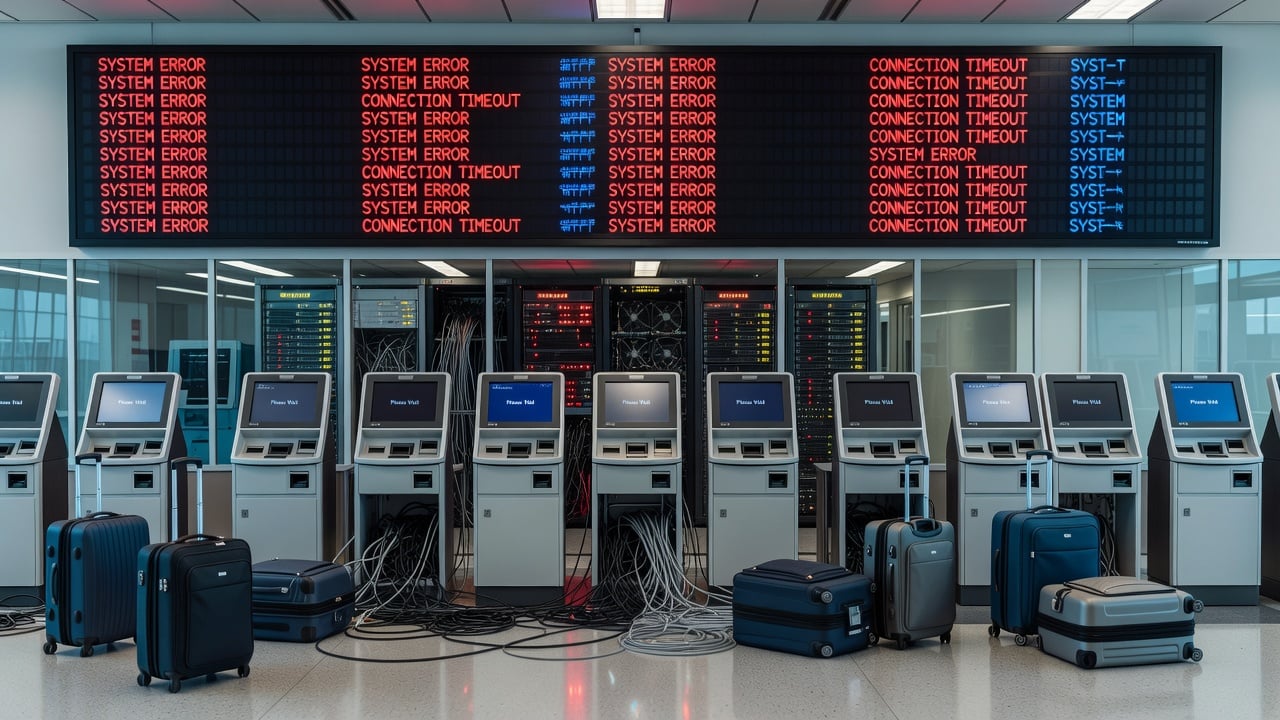
United Airlines faced a sudden technology outage early Saturday that brought operations to a halt across the country. Delays piled up. Passengers waited in long lines. Check-in systems went dark.
The disruption started before 7:40 a.m. Eastern time. Reports flooded in from travelers stuck at major hubs. By 8:23 a.m., more than 430 complaints had registered on Down Detector. And the problems spread fast from East Coast terminals to West Coast gates.
Passengers described chaos at airports including Washington Dulles International in Virginia and Newark Liberty International in New Jersey. Some couldn’t check in. Others struggled to board planes or locate checked bags. Social media lit up with complaints of missed connections and frayed tempers. But the carrier moved quickly to contain the damage.
A spokesperson for the airline confirmed the root cause. “Our teams are getting our operations back to normal after a technology outage affected contact centers and check-in processes earlier today,” the spokesperson told Business Insider. The outage struck the reservation system directly. That prevented processing of new check-ins and ticket handling. Flights already in the air or pushed back from the gate stayed unaffected. Still, the ripple effects proved significant.
United encouraged customers to monitor updates through its mobile app. Operations began returning to normal as technicians isolated and fixed the glitch. Yet the episode exposed vulnerabilities that have plagued the industry before. Two years ago United joined other carriers hit by widespread tech failures tied to a faulty CrowdStrike software update. Pilots received warnings then about lost ground communications. Thousands of flights were canceled in the aftermath.
Patterns of Fragility Emerge Across Airline Systems
Saturday’s events echoed those past headaches. But they also highlighted how much the sector depends on interconnected digital networks. A single point of failure in reservations can cascade into ground stops and mounting delays. Data from FlightAware later showed more than 2,000 U.S. flight cancellations tied to the incident. Over 1,000 additional flights faced delays throughout the day. Chicago’s O’Hare International Airport saw some of the heaviest impact, with local news outlets reporting hundreds of affected departures.
WGN TV noted the resolution came after several tense hours. “United Airlines says technology outage that caused delays early Saturday morning at O’Hare, elsewhere has been resolved,” the station reported in updates shared widely on social platforms. Passenger frustration boiled over in real time. One traveler on X accused the airline of blaming weather for Dublin-to-New York cancellations when the true culprit appeared technological. Other carriers on the same routes operated without similar trouble.
The outage arrived at a busy summer travel period. Families heading out for vacations found themselves rerouted or stuck overnight. Business travelers missed critical meetings. And the financial toll on United could add up through compensation claims, lost revenue and reputational damage. Industry analysts have long warned that legacy carriers carry aging backend systems patched together over decades. These setups handle millions of transactions daily yet buckle under unexpected loads.
Recent coverage from Yahoo Travel captured passenger stories in detail. Many described hours spent in queues while gate agents lacked workable tools. The United app failed to update bag locations or process refunds. Trust eroded further for some loyal flyers who already felt squeezed by higher fares and tighter seating.
United’s official X account posted an update around midday Saturday. “Our operations are returning to normal after an early morning technology issue affected functions including contact centers and check-in processes.” The message drew mixed replies. Some thanked the airline for transparency. Others demanded better prevention. One post captured the mood bluntly: delays, cancellations, hours in queues. The systems simply stopped working.
This isn’t an isolated case for United. Earlier in 2026 the carrier dealt with other operational hiccups, including FAA-mandated schedule cuts at congested airports. Those reductions aimed to ease congestion but still left travelers facing fewer options. Saturday’s technology failure compounded perceptions of unreliability. And it raised fresh questions about oversight from regulators who monitor airline cybersecurity and system redundancy.
Travel sites rushed to advise affected customers. United’s own travel alerts page urged passengers to check status frequently and consider rebooking options where available. The carrier promised to accommodate those impacted with flexible changes and hotel vouchers when necessary. Yet implementation varied by airport. At some locations staff appeared overwhelmed while at others recovery seemed smoother.
Broader Implications for Industry Resilience and Passenger Expectations
Experts point to increasing complexity in airline software stacks. Modern reservation platforms integrate with global distribution systems, airport infrastructure and third-party vendors. A breakdown anywhere can halt the entire flow. United has invested heavily in technology upgrades in recent years. Those efforts include new mobile tools and data analytics for better forecasting. But incidents like this one show the distance left to cover.
Comparisons to the 2024 CrowdStrike event feel inevitable. That outage grounded flights worldwide and cost the industry billions. United specifically cautioned pilots about communication blackouts then. The airline canceled thousands of flights over several days. Recovery took nearly a week in some markets. Saturday’s problem resolved faster. Still, it served as a reminder that full protection against these failures remains elusive.
Passengers on X shared videos of crowded terminals and lengthy lines at customer service desks. One clip from O’Hare showed frustrated groups waiting for any update. Another from Newark captured agents manually processing tickets on paper forms. The contrast with sleek digital kiosks underscored how quickly high-tech operations can revert to analog workarounds. And the human element suffered most.
Travel analysts suggest airlines must prioritize redundant systems and regular stress testing. Federal authorities may step up scrutiny of critical reservation platforms following this event. For now United says its teams have restored full functions. Customers should verify flight status directly through the app before heading to the airport. Simple advice. But one many wish they had followed earlier.
The episode also fuels ongoing debates about competition and service quality in U.S. aviation. With major carriers controlling dominant hubs, alternatives often prove limited. When United stumbles, passengers bear the brunt. Some vow to switch loyalties. Others accept the risks as part of flying. Either way, the pressure builds for carriers to demonstrate stronger safeguards against technical meltdowns.
Additional reporting from WGN TV confirmed the outage’s reach extended beyond initial reports. Operations at Denver, Houston and San Francisco faced secondary delays as aircraft rotations fell out of sync. Crew scheduling added another layer of complexity once ground processes resumed. The full accounting of costs and canceled itineraries will likely emerge in coming days.
In the end, Saturday’s technology outage delivered another lesson in operational fragility. Airlines promise reliability. Reality sometimes falls short. Travelers adapt. They complain on social media, seek refunds and move forward. But the memory lingers. United now faces the task of rebuilding confidence while shoring up systems that failed under pressure. The industry watches closely. So do the millions who fly its planes every day.


 WebProNews is an iEntry Publication