
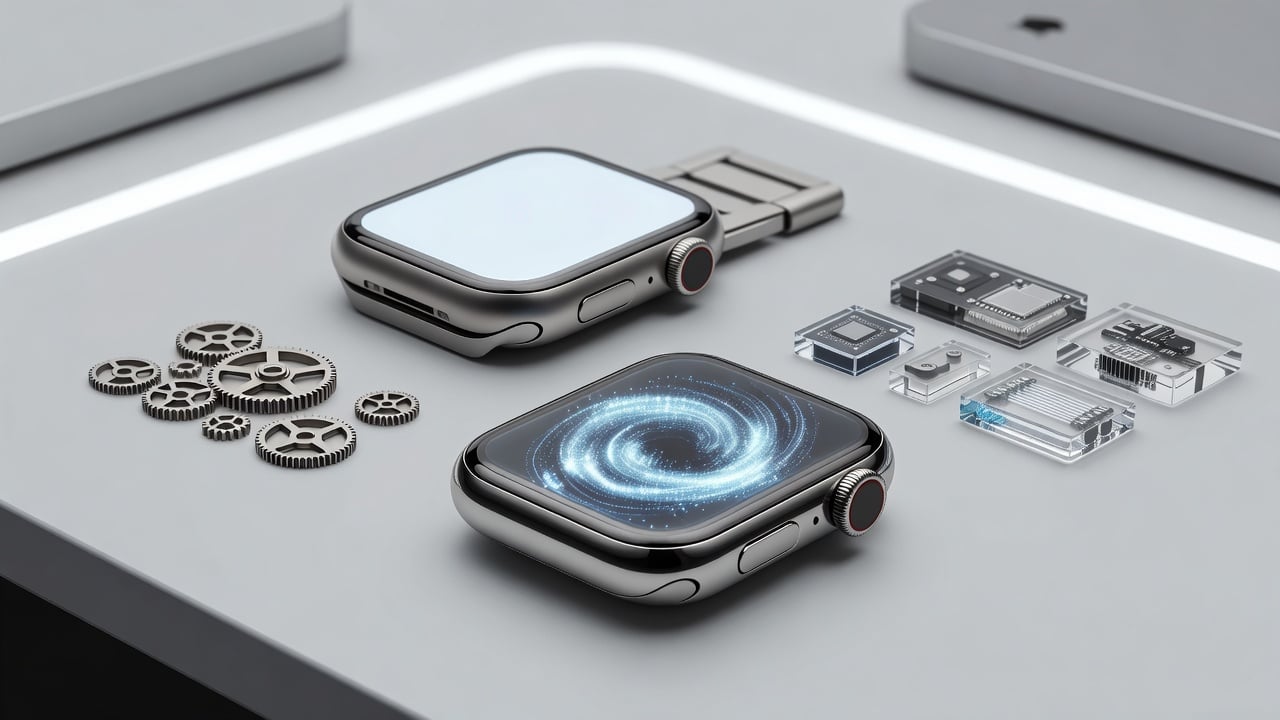
Apple has long maintained a steady rhythm of incremental updates to its wearable lineup, but rumors of a more substantial overhaul to the Apple Watch have circulated for some time. According to a report from AppleInsider, any major redesign of the device remains several years away, suggesting that current models will continue to receive refinements rather than a complete visual or structural transformation in the immediate future. This timeline aligns with the company’s historical approach to hardware development, where significant changes often require years of preparation to balance innovation with reliability and manufacturing scale.
The current generation of Apple Watch features a design language that has remained largely consistent since its debut more than a decade ago. The rectangular face with rounded corners, digital crown on the right side, and selection of materials ranging from aluminum to titanium have become instantly recognizable. While the Series 10 introduced a slightly thinner profile and larger display area, these adjustments represent evolutionary steps rather than a departure from the established form. Industry observers point out that Apple tends to perfect a design before committing to wholesale changes, as evidenced by the multi-year gaps between major iPhone redesigns.
One factor contributing to the delayed timeline involves the complex supply chain and manufacturing processes required for a new smartwatch. Creating fresh tooling for cases, displays, and internal components demands substantial investment from both Apple and its partners. The AppleInsider article highlights how these considerations often push ambitious projects further into the future, allowing the company to refine technologies like advanced sensors and battery systems before integrating them into a redesigned chassis. Current production lines optimized for existing dimensions would need complete retooling, a process that could disrupt delivery schedules if rushed.
Display technology stands as one area where meaningful progress continues despite the absence of a full redesign. Recent models have adopted brighter OLED panels with improved energy efficiency, and future iterations may incorporate under-display sensors to reduce bezels even further. Such advancements could create the impression of a new design without altering the fundamental shape. Health monitoring capabilities have also expanded steadily, with features like sleep apnea detection and enhanced heart rhythm analysis building on previous generations. These software-driven improvements allow Apple to deliver value to users while hardware designers focus on longer-term structural concepts.
Material choices present another avenue for gradual differentiation. The transition from stainless steel to titanium in premium models demonstrated Apple’s willingness to explore lighter and more durable options. Future versions might experiment with recycled materials or entirely new composites that offer better thermal properties for advanced processors. However, any shift in materials would need to maintain the device’s water resistance ratings and structural integrity during everyday activities. The AppleInsider coverage suggests that engineers are evaluating multiple options but have not yet settled on combinations ready for mass production within the next couple of product cycles.
Battery life remains a persistent consideration in wearable design discussions. Although recent Apple Watch models have achieved noticeable gains through more efficient chips and optimized power management, users continue to express desire for multi-day endurance without compromising on features. A comprehensive redesign could potentially accommodate larger battery cells by adjusting the overall dimensions or redistributing internal components. Yet such modifications risk alienating customers accustomed to the current size and weight profile. Apple’s strategy appears to favor incremental battery improvements alongside software updates that extend usage time through intelligent power allocation.
The integration of new health sensors represents one of the more promising areas for near-term development. Blood oxygen monitoring, while currently limited by regulatory questions in some markets, illustrates how additional capabilities can be added to existing hardware through careful calibration. Looking further ahead, non-invasive glucose monitoring and advanced hydration sensors could eventually find their way into the device, though these technologies require extensive clinical validation before commercial deployment. The delayed redesign timeline gives researchers additional time to perfect these systems and ensure they meet medical-grade accuracy standards.
Watch bands and customization options have become central to the product’s appeal, allowing users to adapt the device for different occasions and activities. Any future redesign would likely preserve compatibility with the existing band ecosystem to avoid frustrating current owners. This consideration places constraints on how dramatically the case shape can change. Engineers must account for the mechanical interface between the watch and bands while exploring new attachment methods that might offer improved security or easier swapping.
Software updates continue to breathe new life into older hardware, demonstrating the value of Apple’s tightly integrated approach. WatchOS updates regularly introduce features that enhance functionality without requiring new devices. The latest versions emphasize personalized health insights and improved workout metrics, showing how the company can extend the useful life of existing models. This strategy reduces pressure to release dramatic hardware changes every year and allows designers to focus on concepts that truly warrant a departure from current aesthetics.
Competition in the smartwatch market has intensified, with manufacturers offering devices at various price points and with different feature sets. Some competitors emphasize longer battery life or specialized health tracking, while others focus on fashion-forward designs. Apple’s response has been to strengthen its position through superior build quality, privacy protections, and integration with other products in its lineup. The AppleInsider report indicates that company executives believe the current design still has room to evolve before a complete overhaul becomes necessary.
Manufacturing sustainability has gained prominence in Apple’s public commitments. Future redesigns will almost certainly incorporate more recycled rare earth elements and reduced carbon emissions during production. These environmental considerations influence material selection and assembly processes, sometimes extending development timelines as suppliers adapt to new requirements. The company has demonstrated its ability to balance ecological goals with performance targets, suggesting that any redesigned Apple Watch will reflect these priorities.
Consumer expectations around durability and repairability also shape design decisions. The current models balance premium aesthetics with practical considerations like crack-resistant glass and sealed components that maintain water resistance. A major redesign would need to preserve or improve upon these attributes while potentially introducing easier battery replacement options in response to regulatory pressures in various regions. Such changes require careful testing to ensure they do not compromise the device’s overall reliability.
Looking at the broader wearable technology sector, trends toward smaller sensors and more flexible electronics could eventually enable entirely different form factors. However, Apple has historically avoided radical departures that might confuse its user base. The company prefers to introduce new concepts through limited editions or separate product lines before applying them to flagship devices. This measured approach helps maintain the Apple Watch’s reputation for dependability while still advancing the state of the art.
Health and fitness tracking accuracy continues to improve through better algorithms and additional data points from multiple sensors working in concert. Future models may incorporate environmental sensors that measure air quality or UV exposure, providing more comprehensive wellness information. These additions would likely fit within the existing design envelope initially, with a full redesign reserved for when multiple new technologies reach maturity simultaneously.
The accessory market surrounding the Apple Watch has grown substantially, encompassing everything from protective cases to specialized bands for medical use. Any significant design change would need to consider how these third-party products might adapt or become obsolete. Apple typically provides ample notice and transition periods when updating connection methods or dimensions, but the prospect of a complete redesign still creates uncertainty for manufacturers and consumers alike.
Pricing strategy will play a key role in how a future redesign is received. Current models span a wide range from the more affordable SE to the high-end Ultra series designed for extreme conditions. A new design could potentially introduce fresh tiering options or consolidate certain features across more models. Market analysis suggests that maintaining distinct positioning between different Apple Watch variants helps capture various customer segments without cannibalizing sales.
Global regulatory requirements add another layer of complexity to development timelines. Different regions impose varying standards for wireless communications, medical device classifications, and environmental compliance. The extended period before a redesign allows Apple to address these requirements comprehensively rather than rushing through certification processes. This thorough preparation helps avoid launch delays that have affected other technology products.
User feedback gathered through surveys and support interactions provides valuable direction for future iterations. Many owners appreciate the current balance of size, weight, and functionality, suggesting that dramatic changes should offer clear benefits rather than novelty alone. The AppleInsider article captures this sentiment by noting that Apple appears focused on perfecting existing elements before committing to a visual transformation that might not resonate with all users.
As development continues behind closed doors, speculation about specific design elements will persist. Some analysts predict a more squared-off appearance reminiscent of earlier concepts, while others expect subtle refinements to corners and button placement. Whatever direction Apple ultimately chooses, the multi-year timeline indicates a deliberate process aimed at delivering a product that feels both fresh and familiar. The company has successfully walked this line with other devices, suggesting confidence that the approach will yield positive results when the time comes.
In the meantime, consumers can expect continued enhancements to performance, battery efficiency, and health capabilities within the current design framework. These updates ensure that the Apple Watch remains a compelling choice even as the industry explores alternative wearable formats. The measured pace of hardware redesign allows Apple to maintain quality standards while gathering real-world data that will inform more substantial changes when they finally arrive. This strategy has served the company well across its product categories and seems likely to guide the Apple Watch through its next several generations.


 WebProNews is an iEntry Publication