
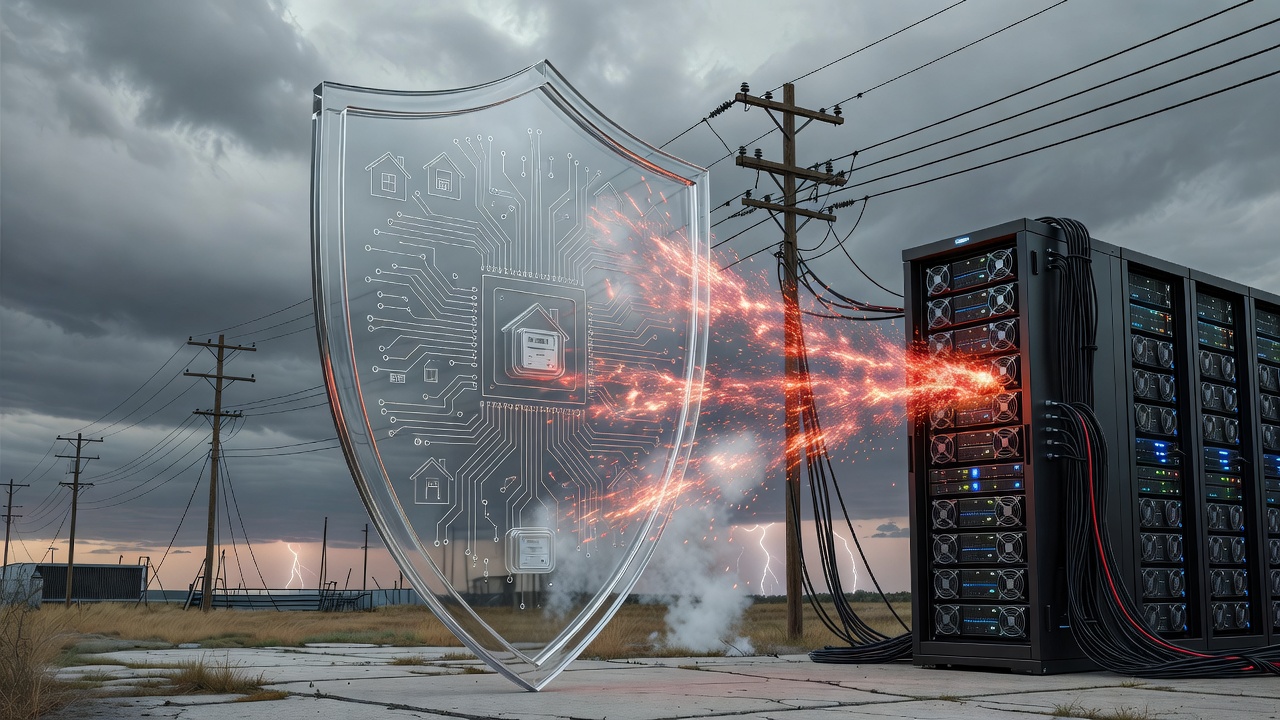
President Donald Trump stood in the White House on July 23 and made a bold claim. Electricity bills for American families would actually come down. This despite the explosive growth of power-hungry data centers built to fuel artificial intelligence.
The vehicle for that promise? An expanded voluntary agreement called the Ratepayer Protection Pledge. First rolled out in March with major tech firms, the latest version now pulls in utilities, governors and nearly 200 other signatories. Trump said it covers about 80% of U.S. electricity delivery to homes and businesses. Companies must build, bring or buy their own power. They cover the full cost of infrastructure. No added burden on regular ratepayers.
But energy analysts aren’t buying it. Not yet. The pledge lacks binding rules. No penalties. No timelines. No specific capacity targets. Skeptics call it little more than a handshake deal in an industry where demand is surging faster than anyone predicted.
Data centers already strain the grid. In the PJM Interconnection, which serves much of the eastern U.S., they drove $6.3 billion of the $16.4 billion in charges from the latest capacity auction. That’s 38% of the total. Joseph Bowring, president of the grid’s independent market monitor, put it plainly. “PJM is continuing to act like it’s business as usual. You have to open your eyes and recognise that it is really a paradigm shift, and failing to do that imposes costs on other customers.” (The Next Web)
The numbers tell a bigger story. Consultants at ICF project data centers could boost overall U.S. electricity demand by 25% by 2030. Monthly bills might rise as much as 40% over five years in some areas. Utilities plan to spend $1.4 trillion on upgrades by decade’s end. Yet the pledge offers no guarantee those costs stay off household ledgers.
Voluntary promises meet hard grid realities
Trump’s team points to successes already. Amazon, Google, Meta, Microsoft, OpenAI, Oracle and xAI signed the original pledge. They agreed to handle their own energy needs. Some deals point to nuclear revival. Utilities restart shuttered plants. Startups race to build small reactors. The administration pushes regulatory reforms to speed new atomic capacity. One Bloomberg report details how AI demand and Trump policies together revive interest in nuclear power. (Bloomberg)
But even nuclear faces delays. Construction takes years. Transmission lines lag further behind. And not every data center operator wants to become its own utility. Microsoft once vowed to pay its own way. Yet its former head of energy, Brian Janous, called the pledge meaningless. Data centers have covered their costs from day one under standard ratemaking. (Latitude Media)
Consumer groups express deeper worries. Jesse Lee, senior adviser at Climate Power, labeled the deal a “pinky promise.” A Consumer Reports survey found 75% of adults doubt big developers will fully cover expenses. Brookings Institution researchers note federal rules can’t easily override state utility commissions that set residential rates. (AP News)
Legal quirks add friction. Current interconnection tariffs spread grid upgrade costs across all users. FirstEnergy told regulators in 2026 that rules may block companies from paying their full share even if they volunteer. Some signatories have opposed tougher state mandates. That undercuts the idea of genuine commitment.
So. The pledge sounds good on stage. Yet it collides with physical limits. PJM forecasts demand will exceed supply by 6.6 gigawatts starting in 2027. Equivalent to more than six nuclear plants. Manufacturers in the Rust Belt already pay higher rates. Steel mills and factories compete for the same electrons. This threatens Trump’s own manufacturing revival goals. (Ars Technica)
Democrats and some Republicans agree the demand spike poses problems. They split on fixes. New York imposed a temporary moratorium on large data centers while it crafts regulations. Energy Secretary Chris Wright criticized the move. He argued green mandates and delays hand advantage to China in the AI race. (The Hill)
Trump himself has exaggerated the scale. In a July NATO summit remark he said the AI industry needs more energy than the entire country produces now. Some claim almost double. Fact-checkers call that overstated. Current data center load sits far below total U.S. generation. Still, growth projections remain steep. (WRAL)
Recent developments sharpen the debate. On July 23 the White House widened the pledge to governors and power companies. Trump touted 23 GOP governors signing on. He promised a surplus of power would lower bills. Yet analysts see political theater more than policy muscle. One Sierra Club adviser said it asks the fox to guard the hen house. Real accountability must happen in state regulatory hearings where costs get allocated. (Crypto Briefing)
FERC offers one path forward. In June it told six regional grid operators to justify or change how they charge large new loads. Deadline comes in August. Faster permitting for data centers appears in Trump’s AI Action Plan. But without reforms to cost allocation, the voluntary pledge may change little.
Some local deals show promise. Louisiana expects $2.6 billion in ratepayer savings over 15 years from its Meta agreement. Communities that welcome data centers often gain jobs and tax revenue. Others resist. They fear higher bills, strained water supplies and lost farmland.
The tension runs deep. Tech giants pour billions into AI infrastructure. Hyperscalers sign gigawatt-scale power deals. Yet the electrons remain scarce. Winners will secure firm contracts early and locate where new generation can actually come online. Losers will fight for capacity already claimed.
Trump frames the pledge as proof America can dominate AI without punishing families. Energy insiders see a different picture. Surging demand meets aging infrastructure. Voluntary promises meet regulatory inertia. Nuclear restarts offer hope but move slowly. Billions in planned spending hang in the balance.
And the clock ticks. Midterm elections loom. Voters already feel affordability pressures. If bills rise despite the rhetoric, political fallout could follow. For now the pledge buys time. Whether it delivers real protection remains unproven. Experts watch the grid. They watch the auctions. They watch the numbers. So far, doubt outweighs confidence.


 WebProNews is an iEntry Publication