
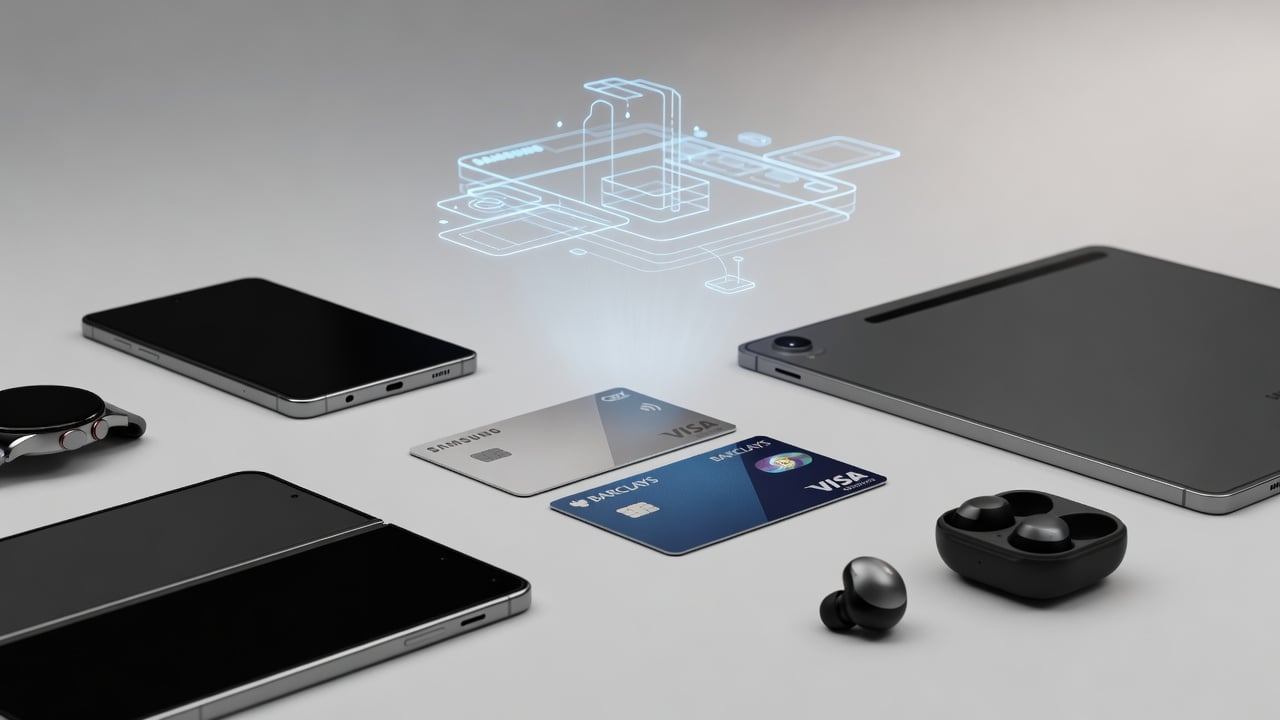
Samsung Electronics has finally pulled the trigger. After years of rumors, trademark filings and quiet negotiations, the South Korean giant launched its first U.S. credit card on Monday. Called the Samsung Galaxy Card, the product arrives seven years after Apple introduced its own titanium-backed offering. The timing feels deliberate. General availability begins July 22, just as Samsung prepares to unveil its latest Galaxy devices at Unpacked.
The card is issued by Barclays on the Visa network. It operates as a digital-first product, with applications, account management, spending tracking and reward redemption all handled inside Samsung Wallet. A physical black metal version exists for those who want one. No annual fee applies. And the rewards structure tilts heavily toward heavy Samsung users. Five percent cash back on direct purchases from Samsung. Three percent on any transaction made through Samsung Wallet. Two percent on streaming services such as Netflix, Spotify and Disney+. One percent on everything else. New cardholders who spend $2,000 in the first 90 days receive a $200 cash bonus.
But the real story lies beneath the percentages. Samsung sees the card as the opening move in a larger financial services strategy. Sih Lee, executive vice president and head of North America Fintech Business at Samsung Electronics, described the Barclays partnership as strategic and long-term. “The relationship that we’re building with Barclays is a strategic and long-term relationship,” Lee told Reuters. “So while we don’t have everything all lined up today, we do have intention to collaborate and explore all avenues of different products and different capabilities that we can actually make available as it makes sense to our customers.”
Lee’s comments echo a theme that first surfaced in late 2025. Back then The Wall Street Journal reported Samsung was in advanced talks with Barclays precisely to boost brand loyalty and replicate its success in building financial products elsewhere. The goal was never just another piece of plastic. It was about embedding finance deeper into the daily lives of the 70 percent of U.S. households that own at least one Samsung device. Nearly 30 percent own three or more.
Doug Villone, head of cards and partnerships at Barclays U.S. Consumer Bank, framed the launch in similar terms. The digital card aims to create a payments experience built for customers who live on their phones. “What makes this different because it’s native wallet is we’re actually extending all of our service APIs all the way into their operating system and their wallet,” Villone explained to American Banker. “Now, rather than going to our app or our website, you’re now servicing it within their ecosystem completely, and that reduces login, it reduces friction.”
Friction reduction matters. Samsung Wallet has existed for more than a decade. It has added cryptocurrency support and installment payments along the way. Each update, Lee said, stayed focused on users. That focus now extends to credit. The card doesn’t merely sit inside the wallet. It becomes the wallet’s financial engine. Spend. Earn. Redeem. All without leaving Samsung’s environment. The approach mirrors Apple’s playbook yet adapts it to Samsung’s broader hardware range. Phones, watches, earbuds, appliances, televisions. The 5 percent rate suddenly looks more potent when a customer buys a new Galaxy Z Fold or a family of smart refrigerators.
Comparisons to Apple Card are inevitable. And instructive. Apple’s card, originally issued by Goldman Sachs and now transitioning to Chase, offers daily cash back deposited into an Apple Cash balance or high-yield savings account. Its rates top out at 3 percent for Apple Pay purchases and select merchants, 2 percent for other Apple Pay transactions, and 1 percent otherwise. Occasional partner deals push higher. Samsung’s structure rewards ecosystem loyalty more aggressively on its own products while still delivering competitive everyday rates through its wallet. Apple users won’t jump ship. The card requires Samsung Wallet, which itself works best on Samsung hardware. Yet for the millions already inside that world, the math changes.
Industry reaction on X captured the moment. Users noted the 5 percent Samsung cash back as a clear hook. Others observed that the card keeps customers inside Samsung’s walled garden. One post highlighted the $200 bonus and 20 percent discount on a VIP loyalty program as additional sweeteners. The chatter mixed excitement with skepticism about whether Samsung can match Apple’s polish in financial tools.
Barclays gains too. The British bank continues expanding its U.S. consumer lending business. It acquired General Motors’ credit card portfolio in 2024. The Samsung deal marks its first native digital wallet credit card. Villone told American Banker the bank looks to grow partnerships when they make sense for consumers. The relationship, both sides suggest, could spawn checking accounts, loans or other services down the line.
The broader payments shift supplies context. Digital wallet usage at point of sale continues climbing. The 2026 Worldpay Global Payments Report forecasts an 11 percent compound annual growth rate through 2030. Consumers already reach for their phones. They want speed, security and simplicity. Card-linked wallets from Apple, Google, PayPal and now Samsung compete for that default position. Samsung enters late but with scale. Its device penetration gives it a built-in audience that Apple cannot claim in the Android world.
Analysts have watched Samsung’s fintech moves for years. The company once offered a financing program through TD Bank that ended new purchases in late 2024. That product focused on installment plans for gadgets rather than a revolving credit line. The Galaxy Card represents a fuller embrace of consumer finance. It also signals ambition beyond hardware margins. In an era of slowing smartphone growth, services and finance offer recurring revenue and stickier customer relationships.
Yet challenges remain. Samsung must prove the wallet experience feels intuitive over months, not just at launch. Reward redemption must avoid complexity. Customer support cannot lag. And the card must deliver genuine value to avoid becoming another forgotten plastic in a drawer. Early signs point to careful execution. The integration of APIs directly into the operating system suggests deeper technical cooperation than many co-brand deals achieve.
Lee captured the stakes when he spoke about success. “From our perspective, the success really means delivering the right experience that is useful, intuitive, and meaningfully integrated to the product and technology that our customers use every day,” he said. The words could apply to any Samsung product. Applied to finance they carry extra weight. Money touches every part of life. If Samsung gets the experience right, the Galaxy Card could become as familiar to its users as the phones in their pockets.
Apple, for its part, continues refining its own card under the new issuer. Observers wonder whether Chase will introduce fresh rewards or features once the transition completes around 2027 or 2028. Competition in consumer finance has sharpened. Banks, tech giants and fintech startups all chase the same data-rich, high-engagement relationships. Samsung’s entry adds another formidable player.
The launch also arrives at a moment of record profitability for Samsung. Its second-quarter 2026 operating profit hit new highs driven by memory chips and AI demand. The company can afford to invest in adjacent areas such as fintech. Whether the card becomes a meaningful profit center or primarily a loyalty tool remains to be seen. For now the focus stays on adoption. Applications open online and in Samsung retail stores starting Tuesday.
Industry insiders will watch redemption rates, average balances and cross-selling success closely. If the card drives incremental hardware purchases and deepens wallet usage, Samsung will have validated its bet. If it merely duplicates existing financing options without adding stickiness, the experiment may prove short-lived. Early indicators, however, suggest a thoughtful product built for the smartphone-first generation.
Seven years is a long wait. Samsung studied the field, learned from Apple’s experience with Goldman Sachs, and chose its partners deliberately. The result looks less like imitation than adaptation. A metal card. Cash back. Wallet integration. But tuned to Samsung’s massive installed base and diverse product catalog. The real test begins now. Can Samsung turn a credit card into a gateway for broader financial services? The answer will unfold in transaction volumes, customer feedback and, eventually, additional product announcements from the long-term Barclays partnership.


 WebProNews is an iEntry Publication