
Decades of research have pinned Parkinson’s disease on a mix of genes and aging. Yet mounting evidence points to something outside the body. Something as ordinary as the rumble of trucks and cars outside a bedroom window.
A massive new analysis from Denmark delivers the strongest signal yet. Long-term exposure to road traffic noise raises the odds of developing Parkinson’s. The effect sits modest in size. It proves strikingly consistent across millions of people.
Researchers tracked 3.1 million Danish adults age 40 and older. They followed them for 18 years using nationwide health registers. The study published in JAMA Neurology on July 20, 2026, stands as the largest of its kind on this question.
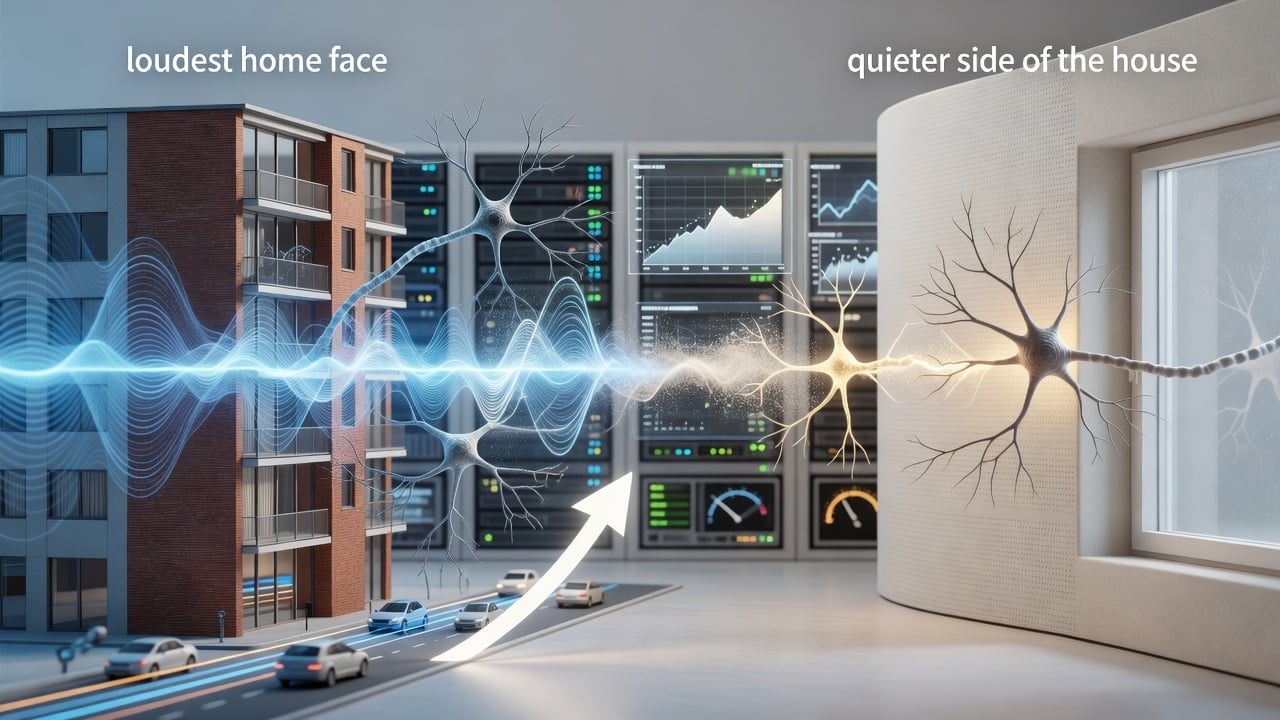
Mette Sørensen of the Danish Cancer Institute led the team. Her group modeled noise levels at both the loudest and quietest sides of each participant’s home. They calculated the difference. Then they watched who developed Parkinson’s.
For every 11.5-decibel increase in noise at the most exposed facade, risk climbed 3 percent. That figure held after adjustments for air pollution, green space, income and education. But a quieter side of the house appeared to blunt the association. The findings suggest a simple buffer could matter.
Thomas Münzel, one of the authors, called noise “still a young entrant in the Parkinson’s disease risk-factor literature.” He argued the results should shift it from speculative to credible. Further research must follow.
Scientists have long understood how noise harms the heart. It spikes stress hormones. It fragments sleep. Those same pathways now look relevant for the brain.
Chronically disturbed rest lifts cortisol. That stress response may inflame neural tissue and accelerate loss of dopamine-producing cells, the hallmark of Parkinson’s. Existing lab work supports the idea. The Danish data adds population-scale weight.
This isn’t the first time environment has entered the Parkinson’s conversation. Air pollution, pesticides and microplastics already draw attention. A 2022 Guardian report highlighted the rising focus on toxins. Noise had stayed largely off that list. No longer.
Chronic exposure above World Health Organization thresholds affects nearly one-third of Europeans. Many live with it daily. The new study, covered widely since publication, has sparked fresh debate.
A Medical Xpress article published July 23 summarized the cohort’s key statistics and displayed spline curves of risk by noise level. It echoed the 3 percent rise per interquartile increase and noted the protective signal from a 10-decibel quieter facade.
MedPage Today ran its own piece on July 21. It quoted Sørensen’s team directly on the hazard ratio of 1.03 with a 95 percent confidence interval of 1.00 to 1.05. The outlet stressed that the link survived full adjustment for socioeconomic status and other pollutants.
Experts not involved in the work strike a note of caution. Anna Hansell, professor of environmental epidemiology at the University of Leicester, told The Guardian the association likely reflects a general stress mechanism rather than a Parkinson’s-specific toxin. “The nature of the study design doesn’t ‘prove’ causation,” she said.
Dr. Peter Chan of the Nuffield Department of Population Health offered a different angle. He found the facade-difference analysis intriguing. “Noise at home is not uniform and people can mitigate by moving to different rooms,” Chan noted. Still, he warned that socioeconomic factors often cluster with noise exposure, making clean separation difficult.
John Stewart, chair of the UK Noise Association, took a more prescriptive view. “This research joins a growing list of studies which show a connection between traffic noise and people’s physical and mental health,” he said. “It shows the link is strongest where the noise is loudest. In practice, this means main roads. That suggests governments and local authorities should focus their efforts on cutting main road noise.”
The Danish team acknowledged gaps. They lacked granular data on participants’ lifestyles, smoking habits or occupational exposures. Yet the association held across income and education strata. That consistency reduces the chance of simple confounding, the authors contend.
Even so, observational studies can only show correlation. Reverse causation remains possible, though unlikely given the prospective design and long follow-up. People who develop early, undiagnosed Parkinson’s might move to quieter areas. The data argue against that pattern.
Public health implications stretch beyond Denmark. Urban planners already wrestle with traffic density. Noise barriers, quieter pavement, electric vehicles and building codes that favor courtyards or setback bedrooms could gain new justification.
Parkinson’s cases continue to climb worldwide. Better diagnostics explain some of the rise. Environmental contributors likely explain more. If noise proves causal, it joins a short list of modifiable risks.
Earlier work had tied aircraft noise to dementia and hypertension. Road noise studies focused mainly on cardiovascular outcomes. This paper breaks new ground by targeting a specific neurodegenerative disease in a cohort large enough to detect small effects.
Sørensen’s group had previously examined noise and dementia, obesity and diabetes. Their Parkinson’s analysis builds on that foundation with refined exposure modeling. They used 10-year running means of noise rather than single snapshots. That approach captures chronic exposure more faithfully.
Critics may still ask whether the 3 percent rise per 11.5 decibels carries clinical weight. At a population level it does. Millions live with elevated residential noise. A small percentage increase multiplied by large numbers translates into thousands of additional cases.
Policy makers in Europe already face pressure to meet WHO noise guidelines. This evidence could accelerate compliance efforts and funding for retrofits. In the United States, where traffic noise maps remain patchy, the study may prompt renewed federal interest.
Researchers now call for replication in other countries and cohorts. They want mechanistic studies that track cortisol, inflammation and dopamine imaging in people exposed to measured noise levels. Intervention trials that install soundproofing and monitor neurological biomarkers would carry special power.
For now the message lands clearly enough. The roar outside the window may matter more than many assumed. A quieter facade, whether by design or simple relocation within the house, could offer modest protection.
That notion feels both empowering and daunting. Individuals can rearrange furniture or choose bedrooms wisely. Societies must tackle the larger sources. Neither task will prove easy. Both suddenly look more urgent.
The conversation around Parkinson’s has shifted. Genes and age still dominate. But environment, once peripheral, now sits closer to center stage. Traffic noise has earned its place in the script.


 WebProNews is an iEntry Publication