
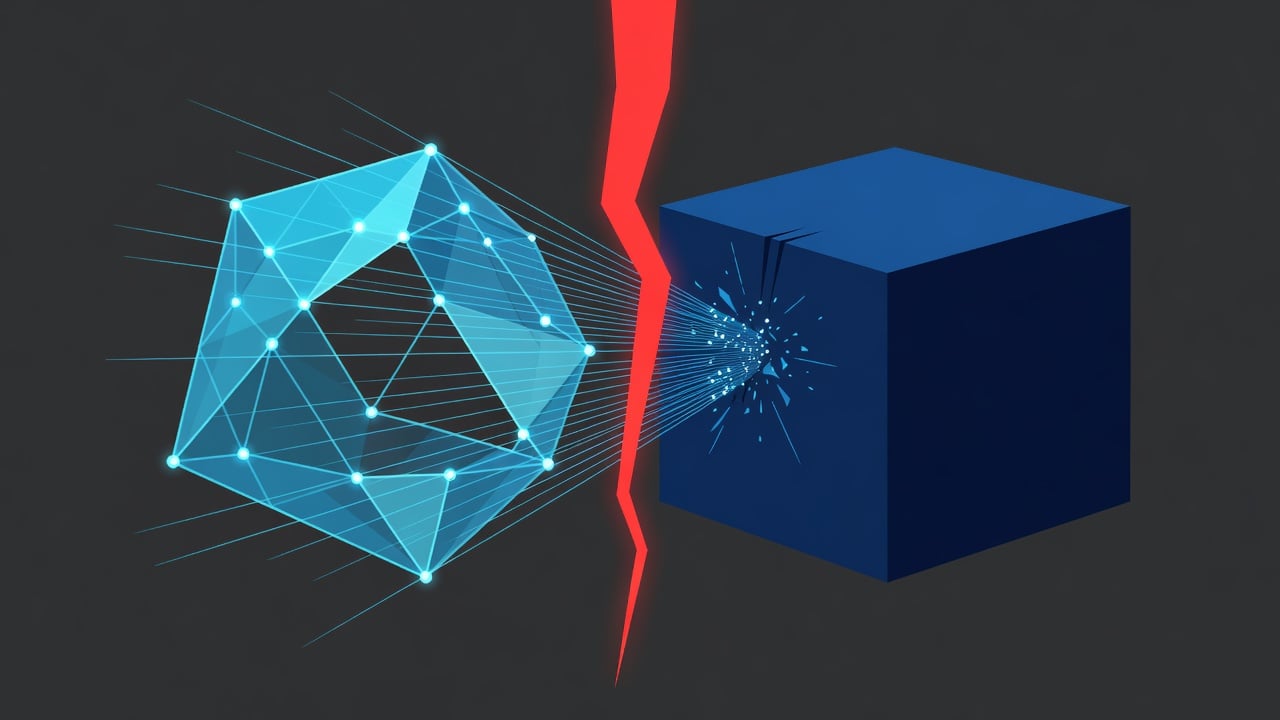
Silicon Valley stands divided. On one side sit the architects of closed AI systems who warn of grave dangers. On the other gather chipmakers, cloud providers and startup founders who see open models as the path forward. The flashpoint? Rapidly advancing Chinese systems released with weights freely available for anyone to download, modify and deploy.
This week the argument boiled over. The New York Times laid out the clash in stark terms. Anthropic and OpenAI push for tight controls. They argue advanced models carry too much risk to circulate without guardrails. Microsoft, Nvidia and a host of others fire back. Open development drives progress. It lets engineers inspect code for weaknesses. It stops a handful of labs from locking down the entire field.
The Breaking Point
Jensen Huang broke his silence on the platform. The Nvidia chief posted his first-ever message on X. “The world needs both frontier closed models and frontier open models,” he wrote. Satya Nadella echoed the sentiment hours later. The Microsoft CEO called open-source software “essential to a healthy A.I. ecosystem.” Both men added their names to a letter signed by executives from Meta, Palantir and IBM. The message was clear. Restrict these models at America’s peril.
Yet the counterpressure builds. OpenAI and Anthropic have lobbied regulators to limit access to Chinese open-weight releases. Treasury Secretary Scott Bessent and Michael Kratsios, President Trump’s science and technology adviser, have entered the fray. They frame leading American models as valuable intellectual property worth shielding. Kratsios went further this week. He claimed the administration possesses evidence that Moonshot AI distilled Anthropic’s Fable model to create its latest offering. “Stealing proprietary US technology,” he called it. “Unacceptable.”
But. The data tells a more complicated story. Chinese labs have unleashed a string of formidable systems in recent weeks. Z.ai dropped GLM 5.2 in June. Moonshot AI followed with Kimi K3. Alibaba released Qwen 3.8 days ago. WIRED chronicled the releases and their immediate impact. Benchmarks place Kimi K3 near the top. It ranks fourth on agentic tasks according to Arena. Third overall on Artificial Analysis’s intelligence index. Optimized for coding and web development. The capabilities that matter most right now.
Demand exploded. Moonshot had to throttle new sign-ups after servers buckled under load. Startups in the Bay Area quietly swapped in these models for parts of their workflows. Even Hugging Face turned to Z.ai’s GLM 5.2 to investigate a cyber incident after closed frontier systems refused to assist due to safety restrictions. Practical utility trumps rhetoric. At least for some.
And the numbers add up. Reuters reported that the top eight open-source models for agent-based tasks on Arena come from Chinese developers. The top 17 for coding tasks as well. Thousands of U.S. startups, companies and researchers depend on them. Clement Delangue, CEO of Hugging Face, didn’t mince words. “Any sort of restrictions would be a terrible blow to them and concentrate AI power even more in the hands of a few mega-corporations against whom it would be virtually impossible for anyone to compete.”
Lan Xuezhao, a San Francisco venture capitalist focused on AI, offered a blunt assessment. “I don’t think they prefer Chinese models, it’s just the best open-source models are Chinese. You go with the best and most efficient and low-cost models.”
Costs matter. Closed models from Anthropic and OpenAI have grown expensive. Usage credits add up fast for smaller teams. Chinese alternatives deliver strong performance at fractions of the price. Even if they sometimes consume more tokens. The math still works for many. Dean Ball, who recently joined OpenAI after serving in the White House, reviewed Kimi K3. He called it “a very good model.” Then added a caveat. It appeared token-hungry in his tests. Still, he concluded that open-weight systems ultimately deter excessive spending on compute infrastructure.
The divide runs deeper than economics. It reflects opposing philosophies about how technology should advance. Closed labs bet on massive scale. Huge clusters. Carefully guarded training runs. Enormous safety teams. Chinese developers, facing hardware constraints from U.S. export rules, took a different road. They emphasize openness. Rapid iteration. Community contributions. Deployment across thousands of applications. A March report from the U.S.-China Economic and Security Review Commission highlighted this strategic choice. China has committed fully to open approaches. Most labs publish both code and weights. They price access far below Western competitors.
So the models spread. Martin Casado of Andreessen Horowitz estimated that roughly 80 percent of startups pitching open-source stacks run on Chinese models. OpenRouter data showed their usage climbing toward 30 percent in recent weeks. From near zero the year before. The infrastructure layer of AI development now carries a distinct accent for many builders.
Yet anxiety grows in Washington. Reports of possible sanctions against Chinese AI firms surfaced after Kimi K3’s debut. Bessent spoke of investigations into potential intellectual property theft. The administration weighed broader restrictions. Nearly 200 companies pushed back hard. The newly formed Little Tech Association sent letters to President Trump, Commerce Secretary Howard Lutnick and Kratsios. Politico obtained the text. “American leadership requires two things: world-leading American open-weight models and continued access for U.S. builders to open models already available worldwide.”
Suhail Doshi, founder of Particle, didn’t sugarcoat the stakes. “There’ll be hundreds of companies that instantly die. It’s great for Anthropic. We’re all going to have to spend money on Anthropic.” Harry Godfrey, executive director of the association, called for precision. “The answer here would be: What is the lightest-touch way that doesn’t raise costs, limit access or inhibit American innovation while still addressing legitimate security concerns.” A scalpel. Not a sledgehammer.
China itself appears torn. Reuters revealed Beijing is considering its own limits on exporting top models. A potential “silicon curtain” around its most advanced systems. Discussions have included tiered rules. Basic tools face light oversight. Frontier capabilities might stay domestic only. The same report noted that even as Washington debates restrictions, Chinese models have become embedded in American innovation pipelines.
The irony runs thick. U.S. export controls on advanced chips aimed to slow China’s frontier progress. Instead they accelerated a parallel track built on openness and efficiency. One that now feeds back into Silicon Valley’s own development efforts. Nathan Lambert, an independent researcher who visited Moonshot’s offices, captured the uncertainty. “I think Anthropic has overhyped the risks. We rely on a few private companies and a federal government with depleted state capacity to make that judgment call.”
Rui Ma, founder of Tech Buzz China, pointed to communication failures on the American side. The enthusiasm for Kimi, she observed, stemmed in part from “poor comms and decisions from [Silicon Valley] labs in the past year.”
David Sacks, venture capitalist and Trump AI adviser, labeled K3’s performance “concerning.” The tension shows no signs of easing. Officials continue to debate. Companies keep downloading the latest Chinese releases. Researchers fine-tune them for specialized tasks. The models improve. The arguments intensify.
What emerges next remains unclear. A fragmented global AI supply chain. Targeted rules that preserve some openness while addressing specific risks. Or a sharper decoupling that forces developers to choose sides. For now the split inside Silicon Valley mirrors the larger contest. Closed versus open. Control versus collaboration. Security claims versus innovation demands. The choices made in coming weeks will shape who builds the next generation of AI systems. And who gets to use them.


 WebProNews is an iEntry Publication