
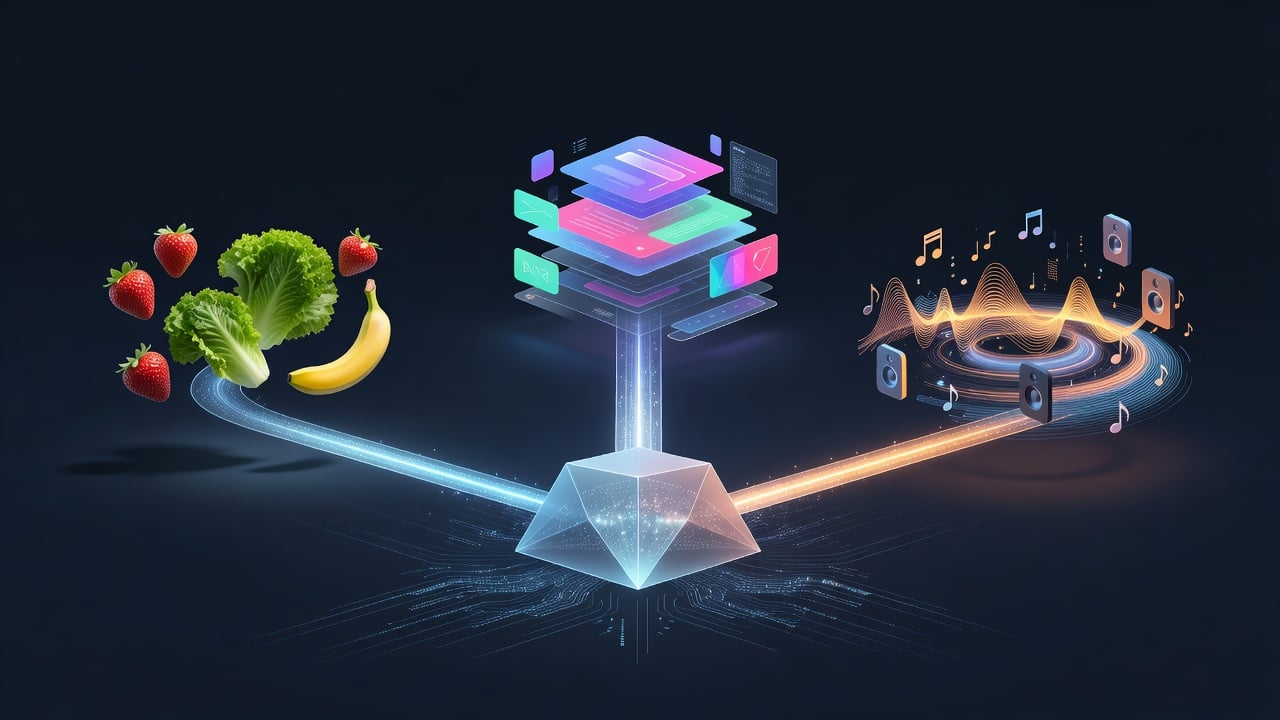
Google just made its conversational search tool a bit more useful for everyday decisions. The company started rolling out new app connections inside AI Mode this week. Users in the U.S. can now link services like Instacart for shopping lists, Canva for quick designs, and YouTube Music for playlists. All without leaving the search interface.
Search Engine Land first reported the move in detail. The publication outlined how these integrations turn vague queries into direct actions. Ask AI Mode to plan a backyard barbecue. It might suggest recipes. Then add ingredients straight to an Instacart cart. The flow feels direct. Almost too simple.
But that’s the point. Google wants AI Mode to stop at suggestions. It aims for completion. 9to5Google confirmed the YouTube Music piece. Its coverage noted that when AI Mode generates music ideas, a status message reads “Asking YouTube Music.” An inline card appears with song picks. Tap to add tracks to your library. Or hit play. The app handles the rest.
Similar patterns apply elsewhere. For Canva, users might request social media graphics for an event. AI Mode pulls templates. It lets them edit or generate new ones on the spot. Instacart handles the grocery side. No more copying lists by hand. The connections build on earlier tests. They signal a broader shift. Search no longer ends with links. It ends with done.
TechCrunch picked up the story hours after it broke. Reporter Aisha Malik wrote that the feature, called Connected Apps, starts small. Only these three partners for now. More will follow. Google spokespeople described it as a way to reduce steps between idea and execution. One executive put it plainly. Users hate friction. This cuts some of it.
The timing fits larger changes at Google. Earlier this year the company upgraded AI Mode with better context retention. It added ways to jump from standard AI Overviews straight into longer conversations. TechCrunch reported on that transition in January. The article highlighted how context carries over. Ask about a trip in an overview. Continue in AI Mode with follow-ups about flights, hotels, activities. No need to restate everything.
By April, Google let users browse the regular web alongside AI Mode chats. The Verge covered the side-by-side experience. Its report explained that links open in new tabs without kicking users out of the conversation. Sources stay visible. Answers stay grounded. These tweaks addressed early complaints. AI Mode once felt detached from real results. Now it sits closer to them.
Then came personalization. In January Google opened AI Mode to user data from Gmail and Photos. The Verge detailed the privacy controls. It stressed that users must opt in. Once connected, the system pulls relevant emails or images to refine answers. Planning a birthday? It might reference past parties from your photos. The feature expanded globally by May. No subscription needed.
At I/O 2026 Google went further. It redesigned the search box for the first time in decades. The Verge called it the biggest overhaul yet. Liz Reid, who leads search at Google, said the changes eliminate friction between overviews and deeper chats. Robby Stein, another product lead, talked up AI agents that monitor topics in the background. They notify users about updates. Think concert dates or stock movements. All while pulling from connected accounts.
These agents tie into the new app connections. An AI Mode query about dinner parties could trigger an Instacart order. Then suggest Canva invites. Follow with a YouTube Music playlist for the gathering. The system remembers prior context. It builds a thread. Short commands produce long outcomes.
Not everyone cheers the direction. A report released yesterday raised red flags about safety. PBS covered the findings from an education research group. The organization tested more than 2,600 interactions with AI Overview and AI Mode. It found the tools often failed to spot risky topics aimed at children. They answered homework questions completely. Responses varied wildly on facts. Justin Reich, director of MIT’s Teaching Systems Lab, called the results “deeply disturbing.” Both features sit inside core Search. Users cannot turn them off.
Google defends the rollout. It points to usage data. AI Mode drives more queries overall. Executives say people return because answers feel practical. The new app links push that practicality further. A vague request for “summer party ideas” no longer stops at bullet points. It generates a shopping list, design files, and soundtrack.
Search Engine Journal also reported the Connected Apps launch. Matt Southern’s story emphasized implications for brands. Visibility now stretches past clicks. It reaches carts, canvases, and playlists. Marketers must think about full journeys. Not just top-of-funnel traffic.
The rollout remains limited. U.S. users first. English primary. Google hinted at wider expansion later this year. It also teased additional partners. No names yet. But the pattern points toward services that handle real-world outputs. Booking, delivery, creation tools.
Early reactions on X mixed excitement with caution. One marketer posted that search has become the place where people decide, create, buy and act. Another called it a logical next step for an AI that already knows your email and photos. A few worried about data sharing. Each new connection asks for permission. Still, defaults matter.
Google positions all this as helpful. Not intrusive. The company upgraded its underlying model to Gemini 3.5 Flash in May. Responses got faster. More accurate on complex tasks. That foundation supports the app handoffs. Without speed, the experience would lag.
Look closer at a typical session. User types “easy weeknight dinners for four.” AI Mode suggests recipes. Cites sources. Then offers to send ingredients to Instacart. User approves. Cart populates. Total cost appears. Switch topics. “Make a thank you card for the teacher.” Canva opens inside the chat. Templates load. Customize with a few prompts. Save or share. End with “playlist for cooking.” YouTube Music delivers a mix. Play it directly.
Each step saves taps. Each saves apps switching. For busy professionals or families, the appeal shows. Yet questions linger about accuracy. About influence. If AI Mode picks the recipes, the designs, the songs, whose taste wins? Google’s training data? Partner preferences? User history?
The company says users stay in control. They can reject suggestions. Edit outputs. Disconnect apps. Time will test how many actually do. For now adoption appears strong. Google reports AI Mode as one of its fastest growing features ever.
Competitors watch closely. OpenAI, Perplexity, even Microsoft with Copilot experiment with tool use. None match Google’s distribution. Billions of daily searches. The default position on phones and desktops. That reach turns small integrations into large habits.
So the quiet rollout of three apps matters. It previews a search engine that acts. Not just informs. Future updates could add calendar booking, ride sharing, or payment flows. The infrastructure exists. The user trust remains the variable.
One thing feels clear. The blue links era faded years ago. AI summaries followed. Now comes the action layer. Google AI Mode no longer stops at knowledge. It reaches into tools people already use. And it brings those tools to the query box. The change feels incremental today. Its effects could compound quickly.


 WebProNews is an iEntry Publication