
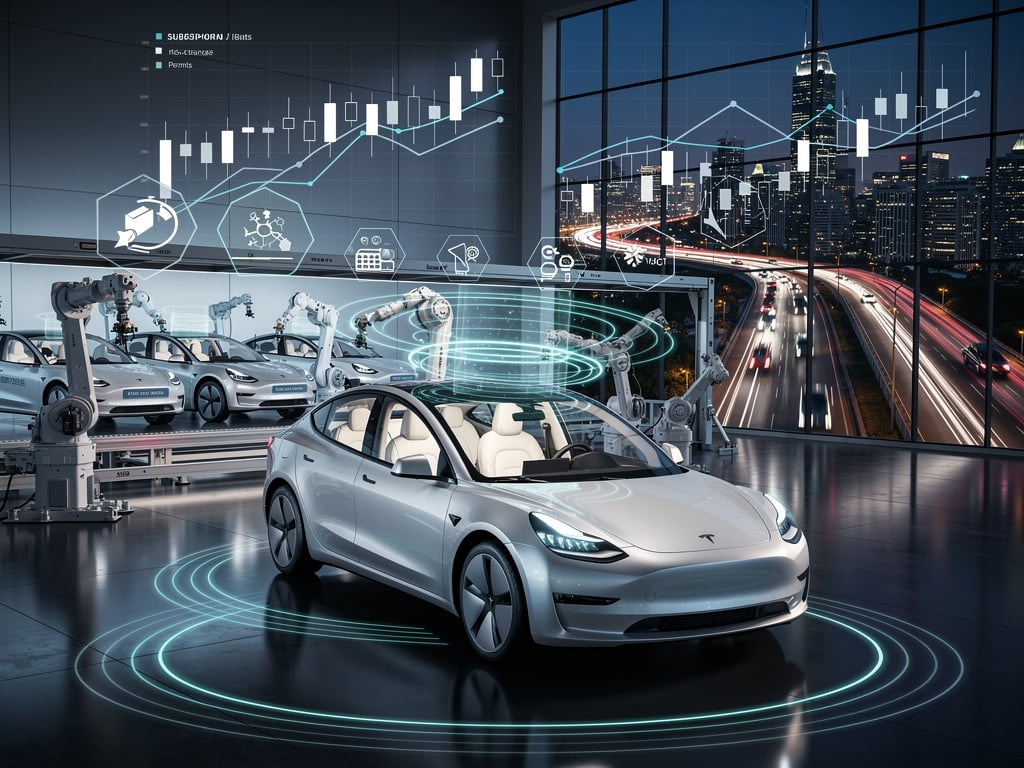
Alexander Potter has seen enough. The Piper Sandler analyst climbed into a Tesla in Missoula, Montana. Hours later he arrived in Minneapolis. No hands. No eyes on the road. The drive convinced him. Tesla has cracked the code on autonomous driving.
Potter now states plainly that Tesla has “effectively achieved Level 4 autonomy” in most conditions. He laid out six markers in a recent client note. Each one points to a company that no longer doubts its own technology. Insurance companies cut rates for Full Self-Driving users. Cybercab production ramps without steering wheels or pedals. Permits move forward for dedicated robotaxi hubs. Subscription data flows publicly for the first time. Service spreads to new cities. And that long road trip delivered flawless performance.
But the market has heard bold claims from Tesla before. Shares trade with familiar volatility. Bulls cite the data. Bears point to the gap between announcements and scaled deployment. Waymo still operates far more robotaxis in several cities. Direct comparisons remain elusive. No universal yardstick exists for disengagements or safety across companies. So Potter’s conviction stands out.
He acknowledges the skepticism. Clients repeatedly mention Alphabet’s larger fleet numbers. They question whether Tesla’s system truly matches. Potter counters with actions, not words. Tesla offers meaningful insurance discounts based on FSD performance. That decision carries real financial risk if the software falters. The company has taken it anyway. “Tesla is still the most transformative company in autos,” Potter wrote. “Over time, Tesla will likely win.” Yahoo Finance
The Minneapolis trip reinforced everything. Potter’s Tesla handled highways, city streets, construction zones and weather shifts without intervention. Such drives once seemed rare. They now feel routine for select users. Meanwhile, Tesla disclosed FSD subscription metrics in its first-quarter report. The move signals confidence. Management wants investors to see the adoption curve.
Production plans tell another story. Tesla has begun building Cybercabs at volume. The vehicle lacks any human controls. That choice only makes sense if the software can handle every scenario. Capital spending for the program already runs into hundreds of millions. Executives would not commit those funds lightly. Potter sees the spending as proof of internal certainty.
In Texas, regulators review Tesla’s application for a 200-space robotaxi facility near Dallas. The site would store, charge and dispatch vehicles. Approval would mark another step toward infrastructure built exclusively for autonomy. At the same time, Tesla prepares to roll robotaxi service into seven additional cities in the first half of 2026. Dallas and Houston already went live with unsupervised rides earlier this year. Expansion continues. Electric Vehicles
Yet scale remains modest. Recent reports place only about 32 unsupervised vehicles across Austin, Dallas and Houston. Crowdsourced trackers show steady but limited miles. Safety attendants have disappeared from many rides. Still, the operational footprint falls short of Elon Musk’s earlier forecasts. He once spoke of millions of autonomous Teslas by late 2025. Reality has proven slower.
Piper Sandler maintains its Overweight rating. The firm holds a $500 price target on Tesla stock. That figure assumes robotaxi revenue eventually becomes material. For 2026, consensus models show limited contribution. The real lift appears later. Potter argues the market underprices the progress already achieved.
Competitors face their own hurdles. Waymo logs more driverless miles in Phoenix and San Francisco. Its vehicles rely on expensive lidar and mapping. Tesla bets on vision-only systems and massive data from its fleet. The approach demands perfection in software. Any lapse draws instant regulatory scrutiny. So far, the company’s safety record supports the insurance discounts. Crashes per mile appear lower than human averages in published data.
And the broader industry watches closely. Legacy automakers once dismissed Tesla’s autonomy claims. Many now race to catch up on their own robotaxi projects. Some partner with technology suppliers. Others build dedicated vehicles. None match Tesla’s combination of fleet size, data accumulation and vertical integration. Potter believes this edge will widen.
Regulators add another variable. The current administration has signaled openness to faster deployment of autonomous systems. Permits and approvals could accelerate. Conversely, any high-profile incident might slow everything. Tesla’s cautious rollout in Texas reflects that tension. Executives describe the company as “super paranoid about safety.”
Investors now weigh the evidence. FSD subscriptions grow. Robotaxi utilization climbs in operating cities. Cybercab prototypes multiply. Each data point chips away at doubt. Potter’s six reasons do not guarantee success. They do suggest the puzzle pieces have aligned inside Tesla’s walls.
The Minneapolis drive lasted hours. Potter stepped out convinced. Others will require more rides, more cities, more quarters of data. The gap between belief and proof narrows. Tesla no longer sells a promise. It operates a service. The question shifts from if to when the economics scale. Piper Sandler has placed its bet. The rest of the Street debates the odds.
Recent updates show continued momentum. Tesla added unsupervised vehicles in Texas markets throughout spring. Plans for Phoenix, Miami and Las Vegas remain on the calendar. Production of steering-wheel-free Cybercabs has begun in earnest at Giga Texas. Each milestone feeds the same narrative Potter outlined. The software works. The hardware follows. Commercial service expands. Skeptics remain. Evidence accumulates.


 WebProNews is an iEntry Publication