
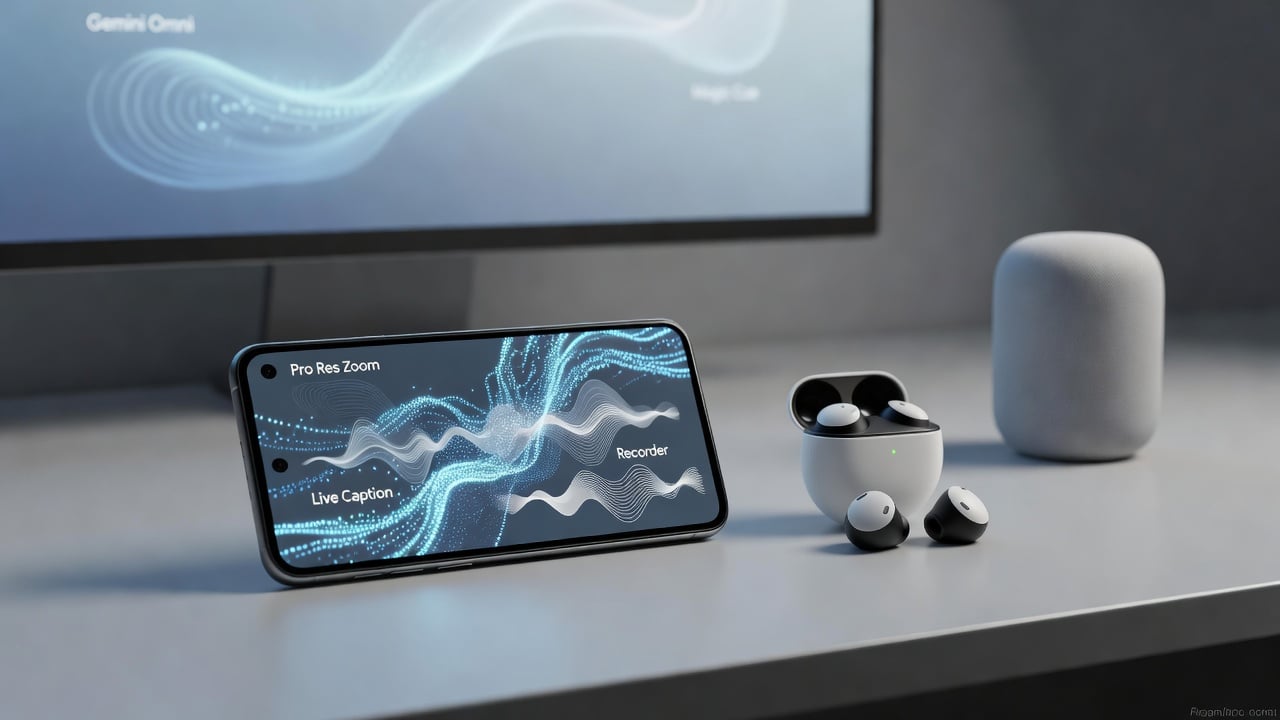
Google’s Pixel phones have long stood apart for their camera prowess. Yet the real shift comes from artificial intelligence features that handle the mundane without fanfare. A recent piece in MakeUseOf highlights four such tools that transformed one writer’s phone habits. Pro Res Zoom, Live Caption, the Recorder app, and Pixel Screenshots now anchor his workflow. They don’t shout for attention. They simply deliver.
Take Pro Res Zoom. On the Pixel 10 Pro with its Tensor G5 chip, this function pushes digital magnification to 100 times. It relies on an AI diffusion model to invent detail that optical lenses never captured. The author reaches for it every day when photographing distant text, architecture, or high-contrast scenes. A steady hand helps. A tripod works even better. The phone saves both the original shot and the enhanced version. “This feature honestly reminds me of old crime movies where someone would zoom in on a blurry suspect on camera then say ‘enhance’ and the image would magically clear up,” he wrote. “Pro Res Zoom isn’t that good, but it’s close.” Short. Direct. And accurate enough to matter.
But not every Pixel AI advance focuses on images. Live Caption turns spoken words into real-time text on screen. It runs offline. No data leaves the device. The writer activates it by pressing the volume button and tapping the speech bubble icon. He uses it constantly while watching sports or podcasts with the sound off. Family members stay undisturbed. Accuracy impresses him. Speed does too. “It’s very accurate and fast, and it’s a feature I use almost every day,” he noted. Peace at home. Practicality on the go. These gains accumulate quietly.
Memory lapses plague many as years pass. The Pixel Recorder addresses that head-on. It captures audio clearly when held near the source. Transcription happens on the device. The app distinguishes speakers. It generates searchable summaries powered by Gemini Nano. The author turns to it for meetings, interviews, and casual conversations he fears forgetting. “I’m getting older and my memory is not great. Maybe you can relate,” he admitted. For non-Pixel owners, apps like Dolby On offer partial substitutes. Still, the integrated experience sets Google’s approach apart.
Screenshots pile up fast on any smartphone. Pixel Screenshots fights the chaos with AI. It scans images, extracts text and context, then organizes everything into searchable collections. The device even suggests groupings automatically. The writer relies on it to manage both work and personal captures. No more hunting through disorganized folders. “With Pixel Screenshots, Google has created an app that turns screenshots into a hub of useful content that is easy to organize,” he explained. The feature prevents digital clutter before it spirals.
These four stand out because they solve persistent problems. Other AI additions, such as Magic Editor or Audio Magic Eraser, struck the author as novelties tried once and shelved. Daily value comes from consistency, not spectacle. And Google keeps building.
Just last month the company rolled out its June 2026 Pixel Drop. The update expands screen recording reactions, adds AI-powered video and music creation, and brings Gemini Omni for video editing. Google’s official blog details how Gemini Omni lets users reimagine clips with simple prompts. Only AI Pro subscribers access the full model. Lyria 3 music generation arrives for devices on Android 17. Forbes reported the rollout also extends Magic Cue across more messaging apps and makes voice-controlled photo edits available in additional markets. Older budget Pixels now gain AirDrop-like sharing. The breadth shows Google’s commitment to incremental yet meaningful progress.
Earlier in March 2026 another drop introduced Circle to Search enhancements, safety tools for Pixel Watch, and Magic Cue suggestions for dining. Gemini can now offload tasks like ordering groceries or booking rideshares by working in the background with installed apps. Google’s March Pixel Drop announcement highlighted how the AI scans group texts about restaurants and proposes options. Users can generate custom home-screen icon sets in five distinct styles for a cohesive look. These additions layer atop the core features the MakeUseOf writer praises.
Recent discussions on X reflect growing appreciation. One user praised the Pixel’s clean software and effortless AI camera fixes, live translation, and point-and-shoot reliability compared with devices offering “a million settings.” Another highlighted on-device capabilities like Call Notes and Recorder summaries driven by Gemini Nano, now accessible to developers via the AI Edge SDK. A demonstration of new local AI functions for the Pixel 10 circulated widely, underscoring privacy advantages when processing stays on the handset.
Industry observers note the pattern. Google avoids overloading users with flashy options. Instead it refines tools that reduce friction. The Tensor chip series, particularly the G5, enables more on-device inference. This cuts latency and protects data. Battery life benefits. So does perceived smoothness. Yet challenges remain. Some features require specific hardware. Regional rollouts vary. Subscription tiers gate advanced models like Gemini Omni. And not every AI suggestion lands perfectly. Magic Cue prompts can feel intrusive until users learn to ignore them.
Still the trajectory feels clear. Pixel devices increasingly act as thoughtful assistants rather than mere tools. The writer in MakeUseOf captured it well. Four unassuming functions altered his routine. Newer drops add depth without demanding constant attention. Pro Res Zoom sharpens distant details. Live Caption opens audio worlds silently. Recorder preserves spoken moments. Pixel Screenshots tames visual noise. Together they illustrate how targeted intelligence creates lasting impact.
Analysts expect further integration. Future updates may blend these capabilities more tightly. Imagine Recorder summaries feeding directly into calendar entries or screenshot collections informing Gemini queries. The foundation exists. Execution will decide adoption. For now, Pixel owners already notice the difference in small, repeated interactions. Those accumulate. They change behavior. And they point toward phones that anticipate needs instead of reacting to commands.
Google’s measured pace contrasts with competitors chasing headlines. The company bets on reliability over razzle-dazzle. So far the bet pays off for users who value practical gains. The four daily features prove the point. They don’t transform overnight. They improve every day. That’s the quieter power of Pixel AI.


 WebProNews is an iEntry Publication