
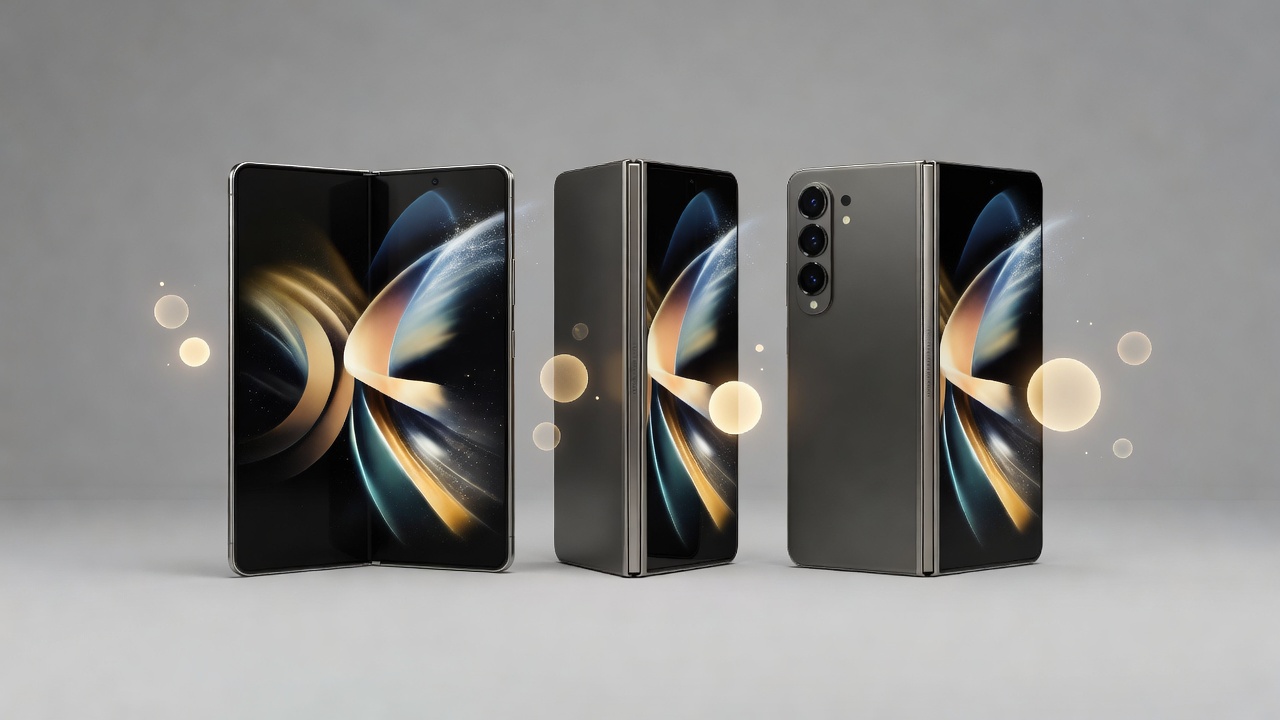
Samsung just unveiled its latest book-style foldable. The Galaxy Z Fold 8 Ultra carries forward the design language of the Z Fold 7. Yet it introduces meaningful upgrades in battery capacity, display brightness and camera hardware. The device arrives with a higher starting price. Buyers must weigh those gains against the added cost.
The Z Fold 8 Ultra measures a hair thinner when open than its predecessor. It tips the scales at nearly the same weight. Hands-on tests show the hinge now unfolds with less resistance. Samsung refined the internal mechanics with a titanium alloy component. The company described the change as an effort to balance hinge tension and magnetic force for a smoother motion.
But the most noticeable shift appears on the screens. Both the cover display and the main panel hit 15 percent higher peak brightness. The inner 8-inch panel now reaches 3,000 nits. The Z Fold 7 topped out at 2,600 nits. An anti-reflective coating further cuts glare. Outdoor visibility improves. The crease on the main display shrinks to near invisibility. Finally.
CNET tested the two devices side by side. Reviewer Prakhar Khanna noted the coating and easier unfold action stand out immediately. He added that the Z Fold 7 remains capable. Especially if it sells at a discount.
Battery life drove the biggest leap. Samsung fitted the Z Fold 8 Ultra with a 5,000 mAh silicon-carbon cell. The Z Fold 7 held 4,400 mAh. Video playback now stretches to 27 hours. That’s three hours longer than before. Charging speeds rise too. The new model supports 45 watts wired and 20 watts wireless. Its predecessor managed 25 watts and 15 watts respectively.
These figures come straight from official comparisons posted by Samsung. The company claims the Z Fold 8 Ultra delivers the longest video playback in its foldable lineup. Software optimizations help stretch that capacity further. Real-world tests will reveal how the larger cell performs under heavy multitasking. Foldables still drain power quickly when multiple apps run split screen.
Camera hardware sees a targeted boost. The ultrawide sensor jumps from 12 megapixels to 50 megapixels. Wider apertures deliver 34 percent more brightness in low light. Noise drops. Detail rises. The main 200-megapixel sensor and 3x telephoto lens carry over unchanged. Video recording adds 8K at 30 frames per second with new codec support. PhoneArena highlighted the ultrawide upgrade as a key differentiator for photography enthusiasts.
Processing power gets a refresh with the Snapdragon 8 Elite Gen 5 for Galaxy. The chip offers modest gains in CPU, GPU and neural processing over the Snapdragon 8 Elite inside the Z Fold 7. Memory configurations stay familiar. Base models pack 12 gigabytes of RAM. The 1-terabyte version steps up to 16 gigabytes. Heat dissipation benefits from extra internal space. Throttling should occur less often during extended use.
Price tags reflect these refinements. The Z Fold 8 Ultra starts at $2,099 for 256 gigabytes of storage. That sits $100 above the Z Fold 7 launch price. Higher storage tiers follow the same pattern. Samsung positioned the device as its most premium foldable offering. A new wider Z Fold 8 model joins the lineup at a lower $1,899 entry point. The naming shift has sparked confusion among buyers. The Ultra now represents the taller, narrower book-style design that defined previous Fold generations.
Recent coverage underscores the incremental nature of the update. Digital Trends published a detailed spec breakdown yesterday. It notes low double-digit performance lifts from the new processor. Battery and camera changes deliver more tangible daily benefits. The publication questions whether the $100 premium justifies the package for owners of last year’s model.
Display durability receives attention too. The cover screen uses Corning Gorilla Glass Ceramic 3. The Z Fold 7 relied on Ceramic 2. Both phones employ Gorilla Glass Victus 2 on the rear and an improved FlexHinge. IP48 rating protects against dust and water. These elements suggest Samsung focused on longevity. Foldables have historically faced skepticism over hinge wear and screen creases. The latest refinements aim to quiet those concerns.
Software support extends seven years for the Z Fold 8 Ultra. That promise matches recent flagship commitments from Samsung. Android 17 with One UI 9 ships at launch. Galaxy AI features return with minor enhancements. Object eraser, note summarization and contextual pop-ups appear on both devices. The newer hardware may unlock smoother operation for on-device AI tasks.
Market reaction appeared quickly on social platforms. Recent posts on X discussed battery gains as the standout feature. One thread compared international pricing and noted the Ultra commands a premium in most regions. Hands-on videos circulated within hours of the announcement. They emphasize the flatter fold and brighter panels under showroom lights.
Analysts see the Ultra as Samsung’s attempt to own the high end of the foldable segment. Competition from Chinese vendors offering larger batteries and lower prices continues to pressure margins. Yet Samsung maintains strong brand loyalty in North America and Europe. Pre-order bundles include trade-in credits and accessory discounts. Those incentives may soften the sticker shock.
The Z Fold 7 earned praise for its slim profile upon release. Many reviewers called it the most refined foldable to date. The Z Fold 8 Ultra builds directly on that foundation. It doesn’t rewrite the category. Instead it polishes the experience in areas users complained about most. Battery anxiety. Screen visibility. Ultrawide image quality.
Whether those fixes warrant an upgrade depends on individual needs. Power users who stretch the device for productivity may appreciate the extra capacity and faster charging. Photographers could value the improved ultrawide performance. Casual owners might find the Z Fold 7 sufficient at a reduced price now that the new model has launched.
Samsung’s decision to split the foldable range into standard and Ultra variants signals a maturing market. The wider Z Fold 8 targets media consumption with its squarer aspect ratio. The Ultra keeps the traditional tall-and-narrow footprint favored for one-handed use when closed. This dual approach lets the company address different customer preferences without cannibalizing sales.
Longer term, the industry watches for foldable adoption rates. Prices remain elevated. Durability questions linger despite manufacturer claims. Yet incremental advances like those in the Z Fold 8 Ultra steadily erode objections. Brighter screens reduce eye strain. Larger batteries extend practical use. Less visible creases improve the illusion of a single flat panel.
Industry insiders expect Samsung to continue refining the formula. Future models may integrate under-display cameras more cleanly or adopt rollable elements. For now the Z Fold 8 Ultra represents the state of the art in book-style foldables. It costs more. It delivers measurable progress. The question for buyers comes down to priorities. And budget.
One thing feels clear. Samsung no longer competes only against its past selves. The broader smartphone arena demands constant forward motion. The latest Ultra model shows the company listened to feedback. It responded with targeted upgrades rather than radical redesigns. That measured approach may prove the smartest path in a category still finding its footing.


 WebProNews is an iEntry Publication