
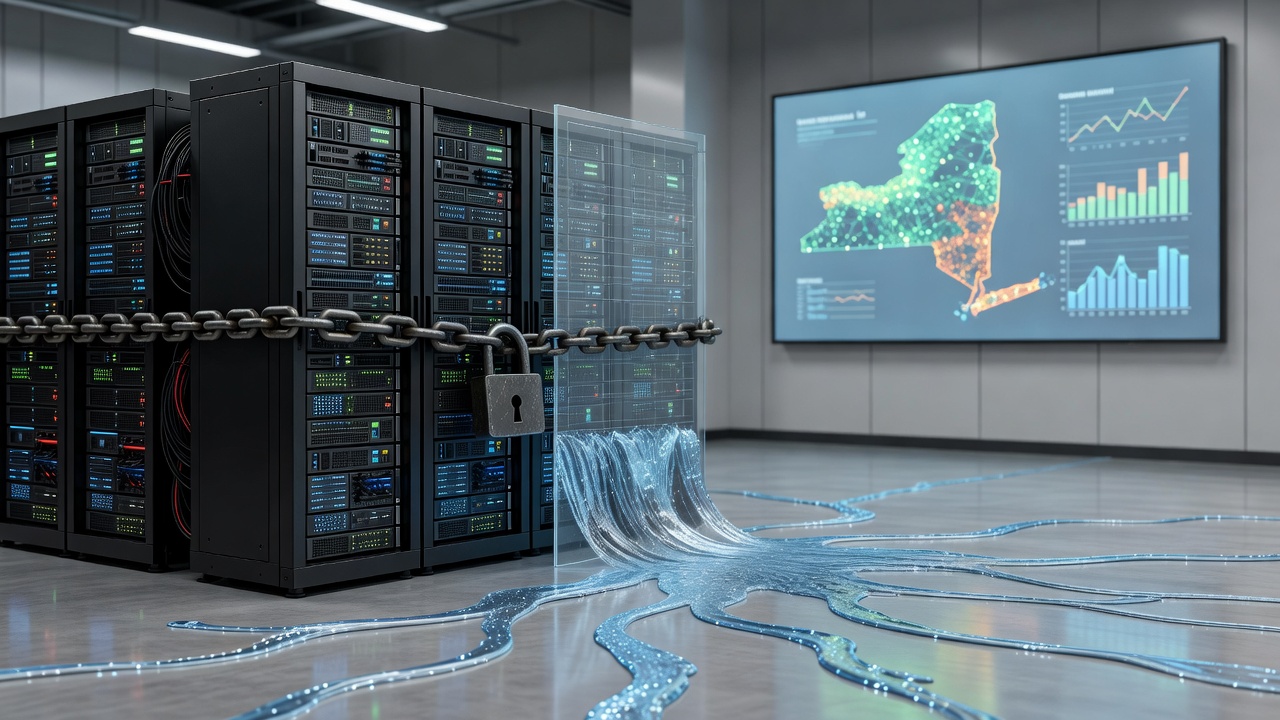
New York has taken a significant step by becoming the first state to enact a temporary halt on new data center developments, a measure set to begin in 2026. The decision reflects growing concerns about the massive energy demands these facilities place on the electrical grid and their contributions to greenhouse gas emissions at a time when the state aims to meet ambitious climate targets. According to a report from Reuters, lawmakers approved the moratorium after months of debate over how rapidly expanding artificial intelligence infrastructure could undermine progress toward cleaner energy sources.
The legislation imposes a two-year pause on approving large-scale data centers that consume more than five megawatts of power. This threshold captures most modern facilities built to support cloud computing, cryptocurrency operations, and the surging needs of AI model training. During this period, state agencies will study the full environmental impact of these operations, including water usage for cooling systems, contributions to peak electricity demand, and effects on local communities. Officials hope the findings will shape future regulations that balance technological growth with environmental protection.
Data centers have multiplied across New York in recent years, drawn by the state’s dense population of technology firms, financial institutions, and research universities. Northern Virginia may host the largest concentration in the United States, yet New York has carved out its own share, particularly in the Hudson Valley and upstate regions where land remains relatively affordable and fiber optic connections reach major metropolitan areas. Companies ranging from established cloud providers to startups racing to build AI capabilities have sought permits to construct facilities that often span hundreds of thousands of square feet and require constant, high-volume electricity.
The moratorium arrives as electricity consumption by data centers nationwide has climbed sharply. Projections from various industry analysts suggest that by the end of the decade, these facilities could account for as much as eight percent of total U.S. power demand, a figure that rivals the current usage of entire states. In New York, where lawmakers passed the Climate Leadership and Community Protection Act in 2019, the target remains clear: generate seventy percent of electricity from renewable sources by 2030 and achieve net-zero emissions across the economy by 2050. Many observers question whether those goals can hold if unchecked data center expansion continues to rely on natural gas and other fossil fuels during periods of high demand.
Supporters of the moratorium argue that the pause creates necessary breathing room for policymakers. Without detailed assessments, they say, the state risks locking in long-term commitments to energy sources that contradict its climate commitments. Data centers often operate under long-term power purchase agreements, and once built, they tend to remain in place for decades. The two-year study period will allow experts to examine how these facilities interact with the grid during extreme weather, measure their actual carbon footprints, and evaluate whether current incentive programs encourage wasteful consumption rather than efficiency.
Critics from the technology sector warn that the decision could drive investment away from New York toward states with fewer restrictions. Industry groups have pointed out that data centers bring substantial economic benefits, including high-paying jobs in construction, operations, and maintenance, as well as increased tax revenue for local governments. Some facilities also contribute to community projects, such as broadband expansion or workforce training programs. Business leaders fear that signaling hesitation about new projects might prompt companies to locate their next campuses in neighboring states like Pennsylvania or New Jersey, where officials have actively courted data center developers with tax breaks and streamlined permitting.
The debate has highlighted tensions between immediate economic gains and longer-term sustainability objectives. Electricity rates in New York already rank among the highest in the nation, partly because of infrastructure upgrades and renewable energy mandates. Adding large data centers that run servers around the clock could push those rates even higher for residential and small business customers who lack the negotiating power of major technology firms. During heat waves or cold snaps, when air conditioning and heating systems strain the grid, data centers can represent a significant portion of peak load. Some utilities have already warned that without major investments in transmission lines and generation capacity, brownouts or service interruptions could become more common.
Water usage presents another area of concern. Many data centers rely on evaporative cooling systems that consume millions of gallons annually, particularly in regions experiencing drought or competing demands from agriculture and drinking water supplies. In parts of upstate New York, where some proposed facilities would draw from the same watersheds that feed rivers and reservoirs, environmental advocates have raised alarms about potential impacts on aquatic ecosystems. The forthcoming study mandated by the moratorium is expected to include detailed modeling of these water demands under different climate scenarios.
The legislation does include exemptions for certain projects already far along in the approval process, as well as smaller facilities below the five-megawatt threshold. This carve-out aims to avoid disrupting ongoing economic activity while still capturing the largest and most energy-intensive developments. Lawmakers also directed the state energy agency to accelerate research into alternative cooling technologies, such as liquid immersion or advanced air circulation methods that reduce water consumption. Additionally, the bill encourages exploration of how data centers might support grid stability by participating in demand-response programs or incorporating on-site energy storage and renewable generation.
Public opinion on the issue appears divided. Polls conducted in the months leading up to the vote showed that many residents support action on climate change yet also value the job opportunities associated with technology infrastructure. In communities where data centers have already been constructed, opinions often split between those who appreciate the tax revenue and those who resent the constant hum of cooling fans or the sight of large industrial buildings in formerly rural areas. Local governments have sometimes found themselves caught between these perspectives, eager for the economic boost but wary of long-term infrastructure burdens.
The New York decision could influence policy discussions in other states facing similar pressures. California, Virginia, Texas, and Illinois have all seen rapid data center growth and are confronting comparable questions about energy reliability and emissions. If New York’s study produces actionable recommendations, such as stricter efficiency standards or requirements to match power consumption with new renewable capacity, those findings might serve as a template for legislators elsewhere. Conversely, if the moratorium leads to significant lost investment, other states may choose to maintain more permissive approaches.
Beyond the immediate policy implications, the moratorium underscores a broader challenge facing the technology industry. Artificial intelligence systems, particularly large language models and generative tools, require enormous computational resources. Training a single advanced model can consume electricity equivalent to the annual usage of hundreds of households. Once deployed, these models continue to draw power every time users interact with them. As adoption spreads across sectors including healthcare, finance, transportation, and education, the cumulative energy footprint expands rapidly. Industry leaders have begun acknowledging that sustainability must become a core consideration in hardware design, data center architecture, and software optimization.
Some companies have responded by investing in renewable energy projects specifically intended to offset their data center consumption. Others have explored locating facilities near sources of clean power, such as hydroelectric dams in upstate New York or wind farms along the Great Lakes. Still, critics argue that purchasing renewable energy credits or signing virtual power purchase agreements does not always translate into additional clean generation on the grid, especially when data centers increase overall demand that utilities meet with whatever sources are available at the moment.
The two-year moratorium offers an opportunity to examine these dynamics more closely. Researchers will likely assess not only direct energy and water usage but also the indirect effects, such as the carbon emissions associated with manufacturing servers and building facilities. They may also evaluate whether current building codes and energy efficiency standards adequately address the unique operating patterns of data centers, which differ markedly from traditional office buildings or manufacturing plants.
As the study period unfolds, stakeholders from multiple sectors will have chances to provide input. Utility companies, technology firms, environmental organizations, academic researchers, and local community representatives are expected to participate in public hearings and technical workshops. The goal remains to develop a regulatory framework that supports continued innovation while ensuring that growth aligns with the state’s legal commitments to reduce emissions and protect natural resources.
New York’s action arrives at a pivotal moment in the relationship between digital infrastructure and environmental policy. The rapid advancement of artificial intelligence has accelerated demand for computing power far beyond earlier forecasts. At the same time, the visible effects of climate change, from more intense storms to shifting weather patterns, have made many policymakers less willing to accept projects that could complicate emissions reduction efforts. The outcome of this moratorium and the accompanying research will help determine whether these two forces can be reconciled or whether harder trade-offs lie ahead.
For now, the legislation sends a clear signal that unchecked expansion of data centers will not continue without scrutiny. By taking time to gather comprehensive data and consider multiple perspectives, New York positions itself to make more informed decisions about how to accommodate technological progress within the boundaries set by its climate objectives. The coming months will reveal whether this approach serves as a model for other states or stands as an outlier in a nation hungry for the economic and innovative benefits that data centers can provide. The balance struck in New York may influence technology deployment patterns for years to come, affecting everything from the pace of artificial intelligence development to the affordability and reliability of electricity for ordinary citizens.


 WebProNews is an iEntry Publication