
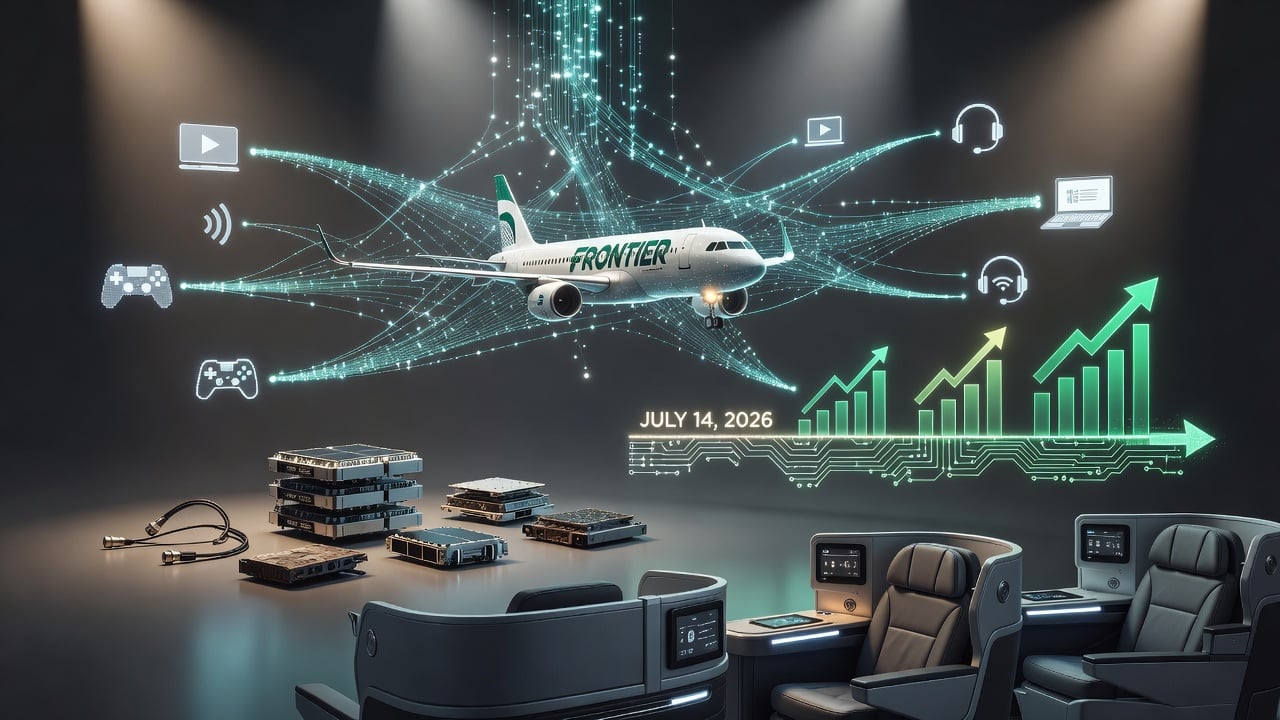
Frontier Airlines has spent years as one of the last major U.S. carriers without any in-flight internet. That changes now. On July 14, 2026, the Denver-based ultra-low-cost airline announced a deal with SpaceX’s Starlink to equip its entire Airbus fleet with high-speed satellite connectivity. Installations begin in early 2027. The move marks Frontier as the first American ultra-low-cost carrier to adopt the service.
Passengers will gain gate-to-gate access. They can browse the web, send messages, stream video, play games online, or handle work tasks. The same low-latency performance available on the ground applies at 35,000 feet. Crew members benefit too. Pilots, flight attendants, maintenance teams, and ground operations gain improved communications and real-time data flows.
“The Wi-Fi era begins. @Starlink is coming to Frontier flights 2027,” Digital Trends reported the airline posting on X that day. Simple statements. Big implications for an airline long focused on stripping costs.
Frontier’s former chief executive Barry Biffle resisted Wi-Fi for years. He argued the added hardware increased aircraft weight and fuel burn. That stance no longer holds. New CEO Jimmy Dempsey takes a different view. “Starlink transforms the onboard experience, giving customers the flexibility to work, stream, browse, and stay connected throughout their journey,” Dempsey said in a written statement, according to The Atlanta Journal-Constitution.
And Frontier does not act alone. The announcement covers five budget airlines backed by the same private equity firm, Indigo Partners. Those include Wizz Air in Europe, Volaris in Mexico, JetSMART in South America, and Cebu Pacific. Together they plan Starlink on more than 1,000 aircraft. A coordinated bet. One that signals low-cost carriers see connectivity as essential rather than optional.
This fits a wider pattern. Dozens of airlines now partner with Starlink. United Airlines has equipped roughly 26 percent of its fleet as of mid-July 2026 and targets about 1,000 planes by year-end. Alaska and Hawaiian together sit at around 36 percent. Southwest lags with less than 5 percent equipped but aims for over 300 by the end of the year. American starts installations in the first quarter of 2027. International names such as Air France, Lufthansa, and British Airways have launched trials or firm commitments. Reuters noted Frontier joins those betting on Starlink to attract travelers.
Starlink’s low-Earth-orbit satellites deliver clear advantages over older geostationary systems. Lower latency. Higher speeds. Consistent performance across oceans and remote routes. Airlines report passengers now expect reliable Wi-Fi. Many choose flights based on it. For Frontier, jumping straight to Starlink skips generations of slower, less reliable technology. The airline currently offers no Wi-Fi at all. It goes from zero to what many call the industry benchmark.
Yet questions remain. Frontier has not disclosed whether passengers pay for the service. Legacy carriers often bundle Wi-Fi with premium fares or charge per flight. Ultra-low-cost models rely on ancillary fees. Will Starlink access become another paid add-on? Or a free perk to close the gap with rivals? The airline stays silent for now. Industry observers expect a hybrid approach. Free basic access. Paid upgrades for higher speeds or streaming priority.
The timing also matters. Frontier simultaneously introduces first-class seating and refreshes its loyalty program. These steps target higher-spending customers who once avoided the carrier’s no-frills image. Reliable Wi-Fi supports that shift. Business travelers demand connectivity. Leisure passengers want to stream entertainment. Both groups influence booking decisions. Simple Flying highlighted that Frontier becomes the first U.S. ULCC to offer Starlink WiFi and asked whether others will follow.
Starlink itself gains momentum. The service now counts 46 airlines with commitments or public plans, according to recent X posts tracking the sector. That number grows monthly. SpaceX continues to launch satellites. Network capacity expands. Costs for airlines may fall as scale increases. But installation still requires hardware modifications, certification, and downtime. Early 2027 marks the start for Frontier. Full fleet rollout will stretch over years.
Competitors watch closely. Amazon’s Project Kuiper prepares its own satellite constellation and airline trials. Traditional providers such as Viasat and Intelsat push upgrades. Yet Starlink holds an early lead in speed and reliability tests. Airlines report download speeds often exceeding 100 Mbps with latency under 50 milliseconds. Enough for 4K streaming and video calls. Real-world performance varies by aircraft load and location. Still, feedback from equipped planes runs strongly positive.
Frontier’s decision reflects broader pressure on low-cost carriers. Fuel prices fluctuate. Labor costs rise. Ancillary revenue matters more than ever. Wi-Fi can drive that revenue. It also reduces crew workload through better digital tools. Real-time weather updates. Instant maintenance reports. Passenger manifests updated mid-flight. Small efficiencies compound across hundreds of daily departures.
But. The move carries risks. Hardware adds weight. Even efficient Starlink terminals consume power and require structural changes. Frontier’s Airbus A320 family planes fly tight margins. Any added cost must deliver clear returns through higher load factors or premium pricing. Early data from other carriers suggests Wi-Fi equipped flights see improved customer satisfaction scores and fewer complaints.
So far, no major reliability issues have surfaced in public reports from Starlink-equipped fleets. That track record encourages newer adopters. Frontier can learn from United’s large-scale rollout and Southwest’s ongoing installations. Best practices on antenna placement, network management, and passenger onboarding transfer across airlines.
The announcement arrives at a moment when air travel faces renewed scrutiny over passenger experience. Delays, cramped seats, and fees frustrate flyers. Free or affordable high-speed internet won’t solve every complaint. It does address one frequent pain point. Especially on longer flights where passengers expect to stay productive or entertained.
Executives at Indigo Partners clearly see the trend. Coordinating five carriers on the same platform creates purchasing power and shared operational knowledge. A smart hedge against vendor lock-in and technical surprises. If Starlink delivers as promised, the group gains a collective edge over independent rivals.
Of course, execution matters most. Timelines can slip. Regulatory approvals for new hardware sometimes lag. Supply chains for aviation-grade components remain tight. Frontier must balance this project with its existing fleet expansion and cabin upgrades. Early 2027 feels aggressive given the scope.
Passengers booking Frontier flights next year should pay attention to aircraft tail numbers once equipped planes enter service. Initial deployments will likely focus on high-frequency routes where Wi-Fi value peaks. Transcontinental flights. Popular leisure corridors. Feedback from those first flights will shape how quickly the rest of the fleet follows.
One thing stands clear. The days of Frontier as a true no-frills outlier end here. Connectivity joins bag fees and seat selection as standard expectations. The airline that once bragged about stripping everything now adds a premium feature long associated with full-service carriers. A quiet admission that pure cost leadership has limits.
Starlink’s rapid adoption across aviation mirrors its growth in other sectors. Maritime. Remote communities. Emergency response. The technology proves versatile. For airlines, it solves a problem that older satellite systems never fully cracked. Consistent performance. Affordable bandwidth. Easy passenger use.
Whether Frontier charges for Starlink or offers it free remains the biggest unknown. Market dynamics suggest most ultra-low-cost carriers will monetize it. Yet competitive pressure could force concessions. If rivals provide free Wi-Fi, Frontier may follow. Watch announcements from Spirit Airlines or other ULCCs. They face the same calculus.
In any case, the hardware is coming. Early 2027 marks the start of a new chapter for Frontier passengers. They can finally open their devices without switching to airplane mode and wondering if anything will load. Work emails. Social feeds. Movies. Games. All available from pushback to arrival. Not a luxury anymore. Simply part of the flight.
The broader industry shift continues. More carriers will announce Starlink deals in coming months. Capacity on the network must keep pace. SpaceX shows no signs of slowing satellite launches. Airlines gain confidence from each successful deployment. What once seemed futuristic now feels routine. Frontier just joined the club. Many others stand ready to follow.


 WebProNews is an iEntry Publication