
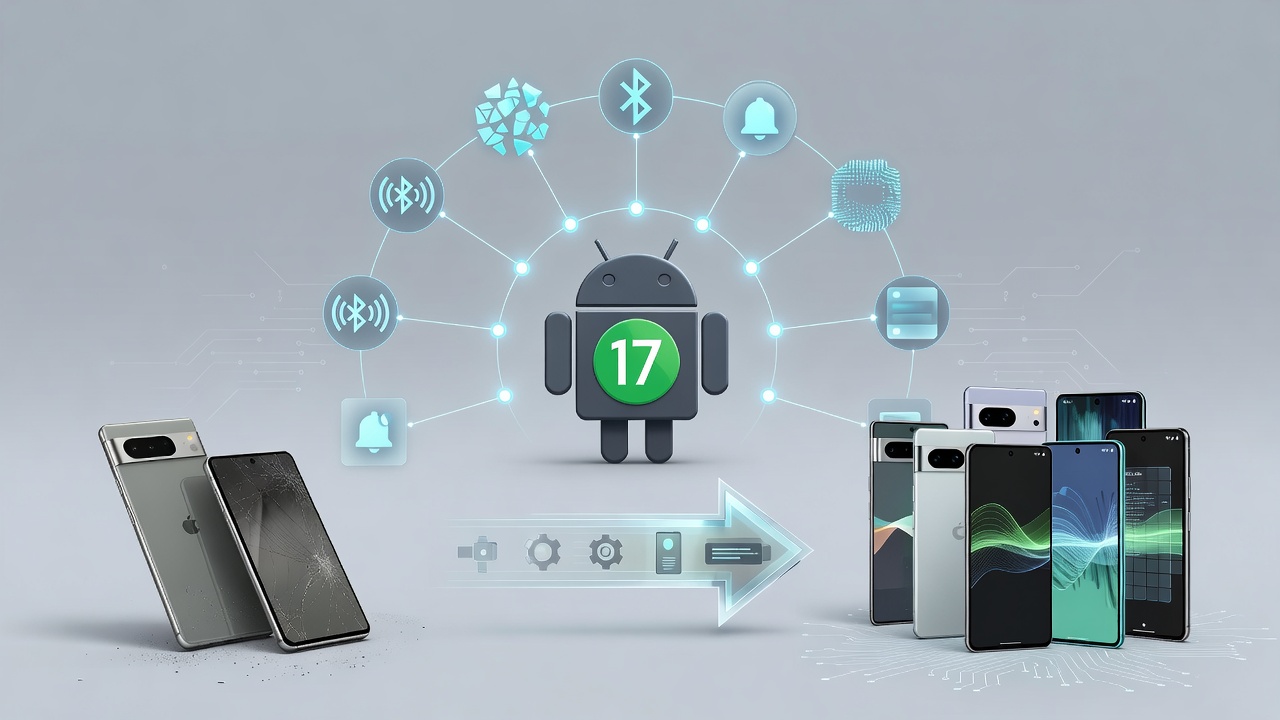
Google continues its brisk pace of updates for the Android 17 platform. On July 20, the company rolled out Android 17 QPR2 Beta 1 to testers enrolled in the Android Beta Program. The release focuses almost entirely on stability. It addresses a series of annoying bugs that had cropped up in earlier builds.
Users on compatible Pixel devices woke up to the new build CP41.260701.005. It carries the July 5, 2026 security patch. No flashy new user features appear. Instead, the update delivers targeted repairs. And it marks a quiet but significant transition for older hardware.
The Android Police first detailed the rollout. Reporters noted how Pixel owners benefit from this rapid iteration cycle. Some critics point to fragmentation risks when multiple devices receive patches at different times. Yet for single-device users the quick fixes bring welcome relief.
At the center of this beta sit eight documented issues now resolved. Bluetooth devices that lost their pairing would fail to reconnect without any error message. The fix ensures proper handling after a remote bond loss. Android Developers lists the exact ticket: Issue #412524057.
Media player controls no longer flash briefly on the lock screen. This glitch happened even when the associated app’s notifications were turned off. Testers had complained about the visual distraction upon waking their phones. The correction cleans up that behavior for a tidier experience.
One of the more dramatic problems involved Google’s own Gemini assistant. Launching the AI tool on certain Pixels triggered a system crash. Devices would reboot without warning. The beta patches the root cause behind Issue #505750489. Early feedback on X suggests the fix holds. Users who previously saw random restarts now report smoother operation.
Touch input also gets attention. Starting a drag-and-drop gesture with multiple fingers left the source app unable to receive further touch events. That broke expected behavior in several productivity and creative apps. The update restores proper event flow. Developers testing on the emulator or physical devices should see immediate gains.
Notifications sometimes vanished from the shade. They stayed hidden until a full restart. Two separate reports tracked the problem. Both now carry resolutions. For users tired of pulling down an empty panel only to reboot, this change removes a daily frustration.
Additional tweaks target developers more directly. ML-DSA key generation threw exceptions when the “NONE” string was passed instead of the proper class constant. Accessibility debugging produced misleading data because window bounds were logged as screen bounds. And window-level UI blur effects refused to render while a related developer option reset on reboot.
These changes add up. The Android Central highlighted how the Bluetooth, Gemini, and touch repairs address some of the most reported headaches from prior betas. No major SDK shifts accompany the package. A minor incremental update appears with no planned behavior changes. App compatibility testing remains light.
Support details carry weight. The Pixel 6 and Pixel 6 Pro drop out of the beta program with this release. They reached the end of their update window. Owners on those models stay on the final QPR1 build. Newer hardware picks up the baton. Eligible devices now stretch from the Pixel 6a through the Pixel 10 series, including foldables and tablets.
That cutoff arrives as Google prepares fresh hardware. The company scheduled an event for August 12. Teases have circulated with images hinting at new designs and capabilities. Software maturity on current Pixels could set the stage for those launches.
Recent discussions on X reflect mixed reactions. Some testers already installed the beta and noted smoother Bluetooth pairing and fewer Gemini hiccups. Others asked how many had tried it and whether improvements over QPR1 stood out. Japanese accounts reported the end of support for Pixel 6 and 6 Pro in clear terms. The consensus points to a maintenance-focused update rather than a feature bonanza.
Google structures these Quarterly Platform Releases to deliver fixes and small enhancements between major Android versions. QPR2 follows the pattern set by earlier drops. It builds directly on the stable Android 17 foundation released months ago. The beta gives developers and power users time to validate apps against the refined code.
Installation remains straightforward for those already enrolled. The Android Beta Program pushes the OTA automatically. Factory images and OTA files sit ready on the developer site for manual sideloading. Emulator users gain access too. The process mirrors previous QPR betas. Yet the exclusion of the Pixel 6 duo serves as a reminder that even flagship lines have finite support cycles.
Looking ahead, this beta previews elements expected in the December 2026 Pixel Feature Drop. Stability work now reduces the chance of regressions when that larger package arrives. Teams inside Google can shift focus toward new capabilities knowing core issues have been contained.
The pace feels relentless to some. From Android 17’s initial betas through multiple QPR tracks, updates arrive every few weeks. That frequency keeps Pixels competitive. It also demands vigilance from users who dislike surprises. Beta participants accept that risk in exchange for early access and influence over final quality.
One X user captured the moment with a simple question. How many installed the new beta and spotted real gains from the previous quarter’s work? Answers trickled in over the following hours. Several cited the Gemini crash fix as the standout. Others praised the notification reliability. A few mentioned the blur toggle now surviving reboots.
Industry observers track these releases for signals about Google’s broader platform strategy. The emphasis on bug fixes over splashy additions suggests a maturing operating system. Android 17 brought foundational changes. Subsequent QPRs polish the rough edges. The approach echoes past cycles yet feels accelerated by improved internal testing and telemetry.
Developers should review the API diff report for the minor SDK bump. Most apps require no code adjustments. Still, those handling cryptography, accessibility services, or advanced UI effects will want to verify behavior on the new build. The official notes stress that no app-impacting API changes landed. The goal stays compatibility and refinement.
By the time the stable QPR2 ships later this year, these fixes will have undergone extensive validation. Beta 1 serves as the first public checkpoint. Additional iterations may follow if new reports surface. Google has not published a detailed roadmap beyond the quarterly cadence. History shows steady progress until the drop stabilizes.
Pixel fans weighing whether to jump in face a familiar choice. Early adopters gain polished software and the chance to shape outcomes. Cautious users wait for the stable channel. Either path benefits from the work already completed in this beta. The invisible notifications, surprise reboots, and flaky Bluetooth connections belong to the past.
Google’s hardware event looms on the calendar. Speculation around new Pixels often includes software tie-ins. A stable Android 17 foundation paired with QPR2 improvements could let those devices shine from day one. For now the focus stays narrow. Fix what breaks. Support what still makes sense. Move the platform forward one patch at a time.


 WebProNews is an iEntry Publication