
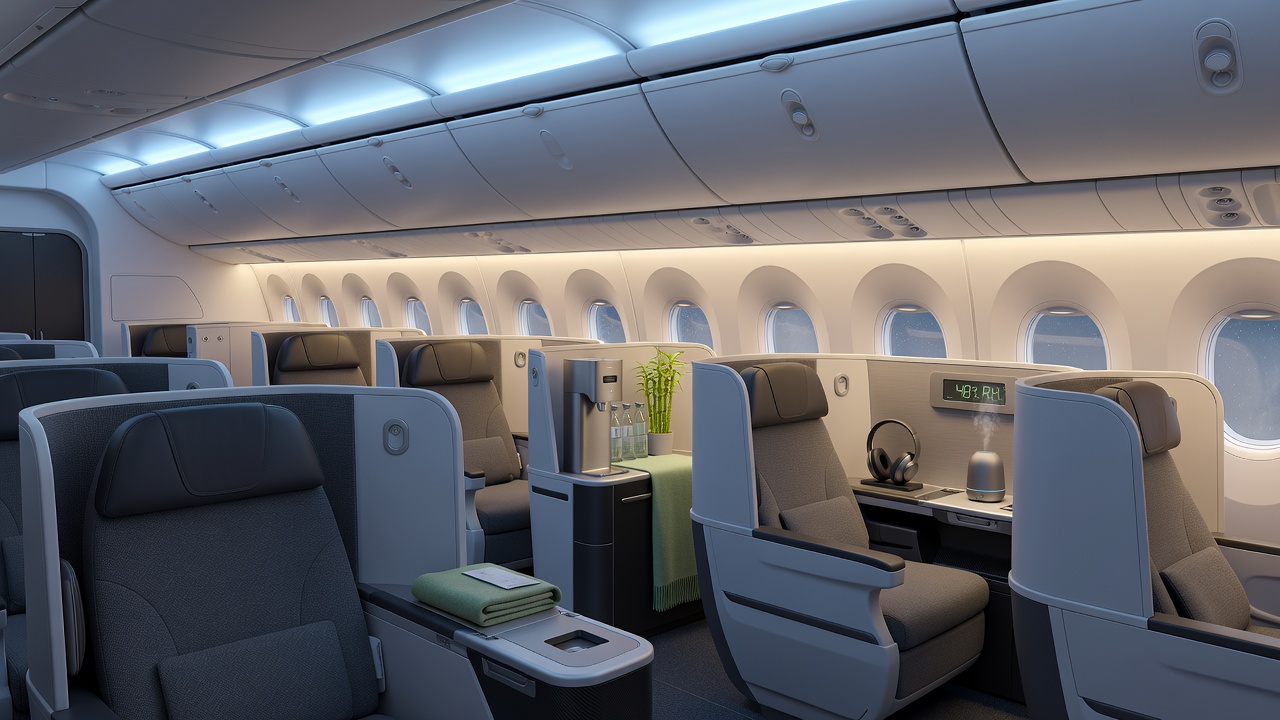
Qantas has taken delivery of the first Airbus A350-1000 specifically modified for its Project Sunrise initiative, a program designed to operate the longest commercial passenger flights in the world. The aircraft, which will connect Sydney directly to London and New York without stops starting in 2026, features an array of custom cabin elements created to help passengers cope with flights lasting up to 20 hours.
According to reporting by Business Insider, the plane represents years of collaboration between the Australian carrier, Airbus, and several specialist suppliers. Engineers focused on every aspect of passenger experience, from air quality and cabin pressure to lighting, seating, and even the way meals are prepared at altitude. The result is an aircraft that looks like a standard A350 from the outside but contains an interior tuned specifically for ultra-long-haul travel.
The aircraft’s fuselage carries the standard 350-seat capacity of the A350-1000 variant, yet Qantas has configured it with only 238 seats. This reduction creates noticeably more personal space across all four classes. Business class passengers receive individual suites equipped with doors, while premium economy and economy travelers benefit from increased pitch and redesigned seat cushions. The airline worked with German manufacturer Recaro and British designer David Caon to develop these seats, testing prototypes in pressure chambers that simulate conditions at 40,000 feet.
One of the most significant technical modifications involves the environmental control system. On conventional long flights, cabin air pressure typically equates to an altitude of around 8,000 feet, which can leave passengers feeling tired and dehydrated. Qantas engineers, working with Airbus, adjusted the system so the new aircraft can maintain a pressure level closer to 6,000 feet. The change reduces the physiological stress on the body during nearly a full day spent airborne. Humidity levels have also been increased through new water-generation and filtration technology, addressing the dry air that usually accompanies flights of this length.
Lighting plays an equally central role in the design. The cabin uses a dynamic LED system developed with experts from the University of Sydney’s Charles Perkins Centre. These lights gradually adjust color temperature and intensity to support the body’s circadian rhythms. During the first few hours of a Sydney-to-London flight, for instance, the system emits cooler, brighter tones to keep passengers awake and active. As the journey progresses, the lighting slowly transitions to warmer hues that encourage sleep. The same system can shift rapidly if the aircraft crosses multiple time zones, helping reset internal clocks more effectively.
Medical and wellness features extend beyond lighting. The plane includes a dedicated onboard lounge area where passengers can stretch, walk, or use resistance bands under guidance from pre-recorded programs. Qantas partnered with specialists in exercise physiology to create short routines that counteract the effects of prolonged sitting. A small medical room, staffed by trained crew members, stands ready for any health issues that might arise during the extended journey.
Meal service has received equally careful attention. Traditional airline catering often struggles with taste perception at altitude because lower air pressure dulls sweet and salty flavors. To counteract this, Qantas consulted with chefs and flavor scientists who adjusted recipes specifically for the unique conditions inside the pressurized cabin. Dishes incorporate stronger herbs, spices, and umami elements that remain distinct even after hours in the air. The galley equipment itself was modified to allow slower, more even cooking that preserves texture and nutritional value over the long duration.
Passengers in all classes will have access to improved inflight entertainment. Larger high-definition screens, noise-canceling headphones, and an expanded content library featuring new Australian productions aim to keep travelers engaged. Power outlets and USB-C charging ports appear at every seat, while high-speed satellite Wi-Fi covers the entire route, including remote sections over the Indian Ocean and Pacific.
The Airbus A350 itself brings several inherent advantages to the program. Its composite fuselage and wings produce a smoother ride than older aluminum aircraft, reducing turbulence effects that can disturb sleep. The Rolls-Royce Trent XWB engines run more quietly than previous generations, creating a calmer cabin environment. Fuel efficiency improvements allow the plane to carry enough fuel for the 20-hour sectors while still meeting strict weight restrictions for takeoff from Sydney’s relatively short runway.
Qantas Chief Executive Vanessa Hudson described the aircraft as the physical expression of years of research into what humans need during ultra-long flights. The airline conducted extensive passenger trials using modified Boeing 787s on shorter routes, gathering data on sleep patterns, hydration, and cognitive performance. Those findings directly shaped the A350 specifications. Medical researchers from the University of Sydney monitored volunteer passengers during test flights, measuring everything from blood oxygen levels to hormone responses.
The first aircraft, registered VH-1XZ, completed its initial test flights from Airbus’s Toulouse facility before delivery to Qantas. Interior completion took place at a specialized center in France where technicians installed the custom cabin components. Each seat, panel, and lighting fixture underwent individual quality checks to ensure reliability over the aircraft’s expected 20-year service life.
From an operational perspective, these flights will demand new crew procedures. Pilots will work in four-person teams with carefully scheduled rest periods in dedicated crew rest compartments located above the main deck. Cabin crew numbers have been increased to maintain service quality across such long durations. Training programs now include modules on managing passenger fatigue, recognizing signs of deep vein thrombosis, and maintaining personal performance during multi-day rotations.
The environmental impact of these ultra-long flights has drawn attention from sustainability advocates. Qantas maintains that the A350’s fuel efficiency, combined with sustainable aviation fuel trials, will help moderate carbon emissions per passenger. The airline has committed to net-zero emissions by 2050 and plans to use the new aircraft to test various alternative fuel blends on the long sectors. Each direct flight eliminates the need for a fuel stop, potentially reducing overall emissions compared with current one-stop itineraries that involve additional takeoff and climb phases.
Route planning for the new services required extensive coordination with air navigation authorities across multiple continents. The Sydney-London route will cross eleven countries and fly over parts of the Antarctic coast during certain seasons to take advantage of jet stream winds. Sydney-New York flights will traverse the Pacific, passing near Hawaii before continuing along the North American west coast. Both paths demand precise fuel planning because diversion airports are limited in the southern hemisphere’s remote regions.
Inside the cabin, storage solutions reflect the flight length. Overhead bins offer more volume than standard A350 configurations, allowing passengers to keep personal items accessible without crowding the aisles. Business class suites include larger closets for hanging garments and dedicated spaces for shoes and travel bags. Premium economy seats feature improved leg rests and adjustable headrests with more padding to support neck posture during sleep.
The economy cabin uses a 3-3-3 layout with seats that convert into lie-flat positions at a 30-degree angle, an improvement over the steeper angles found on many older aircraft. Footrests and calf supports help maintain circulation. Each row includes individual air vents that passengers can adjust without affecting neighbors, addressing a common complaint on long flights.
Qantas has also invested in ground-based preparation. Passengers receive sleep kits containing eye masks, earplugs, and compression socks before boarding. The airline’s app provides personalized advice based on departure time, suggesting when to sleep, eat, or exercise during the flight. Pre-flight lounges in Sydney now include quiet zones, hydration stations, and light meal options designed to start the body clock adjustment process before takeoff.
Industry observers view the Project Sunrise aircraft as a significant step in commercial aviation’s approach to long-haul travel. While other carriers have explored non-stop routes, few have committed to the comprehensive cabin modifications necessary for true 20-hour flights. The modifications required Airbus to certify new systems and configurations, a process that took several years of joint engineering work between the manufacturer and the airline.
The first revenue service is scheduled for late 2026, with initial flights focused on the Sydney-London route. Qantas plans to gradually introduce additional aircraft as more customized A350s leave the production line. By 2028, the airline expects to operate seven of these specially equipped planes, offering up to 21 weekly non-stop services to London and New York combined.
For Australian travelers, the new flights promise to shrink the effective distance between their home country and major global cities. A journey that once required at least 22 hours of travel time including connections will become a single segment. Business travelers particularly stand to gain from the ability to arrive without the fatigue of multiple layovers and security screenings. Leisure passengers may find the experience more bearable, opening new possibilities for tourism and family visits.
The aircraft also carries symbolic weight for Qantas, which has long positioned itself as Australia’s link to the world. The kangaroo logo will appear on tail fins that travel farther without landing than any other commercial aircraft in scheduled service. The success of these flights could influence how other airlines approach similar ultra-long routes, particularly as aircraft technology continues to improve range and efficiency.
Engineers continue to monitor data from test flights to refine systems before commercial operations begin. Minor adjustments to air circulation patterns and lighting algorithms remain under review based on feedback from medical researchers who participated in the trials. The airline maintains close contact with Airbus through a dedicated team stationed in Toulouse to address any last-minute technical concerns.
As the delivery of additional aircraft approaches, Qantas crew members have started specialized training programs that simulate the full 20-hour experience. These sessions help staff understand the unique rhythms of such long flights and develop strategies for maintaining service standards throughout. The airline reports strong internal enthusiasm for the project, with many employees viewing the customized A350 as a flagship for Australian aviation.
The combination of technical innovation, medical research, and thoughtful design has produced an aircraft unlike any other currently flying. From its modified pressurization system to its circadian lighting and carefully crafted menus, every element addresses the specific challenges of spending nearly a full day in the sky. When the first passengers board in 2026, they will experience a flight that represents the current high point in the airline industry’s efforts to make ultra-long-haul travel more tolerable and productive. The customized A350 stands as tangible proof of what becomes possible when an airline commits fully to rethinking every aspect of the passenger experience for routes that once seemed impossible.


 WebProNews is an iEntry Publication