
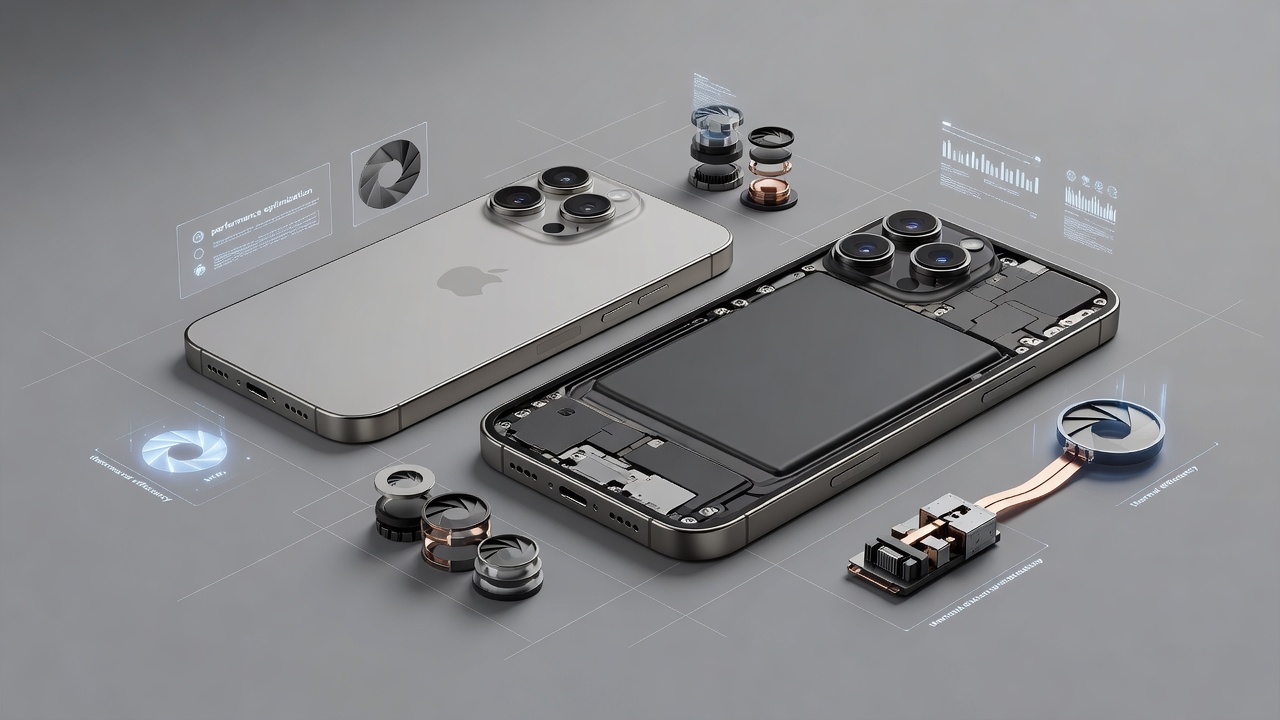
Apple’s next flagship phone won’t arrive for another two months. Yet the chatter around its physical form has already sharpened into something more concrete. A prominent Weibo account doubled down Tuesday on claims that the iPhone 18 Pro will measure noticeably thicker than the iPhone 17 Pro. The final dimension, the leaker said, will prove “somewhat surprising.”
Fixed Focus Digital, the account in question, pointed to leaked materials from a Tata data breach as fresh evidence. Those files, which surfaced last month, included videos of devices undergoing drop tests. Observers quickly noticed the housing around the camera array looked bulkier than on current models. The leaker’s earlier supply-chain note had predicted an aluminum-alloy backplate expansion of roughly 2 millimeters. Now the account insists both the body and the entire rear camera plateau reflect that growth. 9to5Mac reported the latest post.
The shift marks a departure from years of incremental slimming. iPhone 16 Pro models measured 8.25 millimeters thick. Their successors pushed to 8.75 millimeters. Talk of the iPhone 18 Pro landing between 9.9 and 10.9 millimeters therefore lands with force. But why add the extra girth?
Industry watchers tie the change to a redesigned main camera lens that introduces variable aperture. Such a system demands more internal volume. It also carries a reported 50 percent higher production cost. The payoff could appear in superior low-light performance and new creative controls for photographers. Yet the thicker profile also creates room for a larger battery and improved thermal management. Apple appears willing to accept a chunkier handset in exchange for those gains.
Leaker Credibility and Conflicting Signals
Fixed Focus Digital is not alone in flagging dimensional movement. Earlier this year other voices on Weibo, including Ice Universe, floated similar increases before later revising some Pro Max figures downward. MacRumors noted yesterday that the Pro Max could still widen its battery advantage over the standard Pro without uniform thickness across both devices. Separate reporting from three days ago highlighted that the camera bump itself may account for much of the added depth rather than the full chassis. PhoneArena laid out the range of 9.9 to 10.9 millimeters.
Still, the Tata files lend the latest claim unusual weight. The ransomware incident exposed component lists, supplier details and test footage. One video clip, examined by users on Chinese social platforms, showed a device whose camera island protruded more prominently than on the iPhone 17 Pro Max. The leaker explicitly linked that visual to the 2-millimeter backplate growth shared weeks ago. “Looking at the leaked Tata images confirms that both the overall iPhone 18 Pro body and the entire rear camera [plateau] have become thicker,” the account wrote. The translation comes via 9to5Mac.
Material choices add another layer. The iPhone 18 Pro lineup will stick with aluminum alloy rather than switch to titanium across the board. The leaker observed that aluminum midframes will remain standard in slab-style phones for years to come. That decision supports heat dissipation for the A20 Pro chip and any vapor-chamber cooling elements rumored to accompany it. But it also contributes to the perception of added heft.
Analysts have long debated how much consumers will tolerate. Pocket real estate matters. So does one-handed use. Yet battery life consistently ranks among the top complaints in surveys. Apple evidently calculated that a modest thickness increase delivers more value than chasing new thinness records. The company has already accepted thicker Pro models in recent cycles to accommodate bigger batteries and advanced cameras. This appears to be the next step in that pattern.
Recent coverage reinforces the point. A report published hours ago suggests the camera bump alone could explain the visible change, leaving the main body only slightly altered. AppleInsider highlighted the plateau growth. Another piece from the same day examined differences between the 18 Pro and Pro Max, noting the larger model may receive a more meaningful battery capacity bump. Those distinctions help Apple segment its premium offerings without identical hardware in every size.
Supply-chain leaks have also surfaced dummy units and prototype shells. Those mock-ups consistently show reduced gaps between the rear glass and camera module. The smaller Dynamic Island, rumored to shrink by 25 to 35 percent, appears in many of the same images. Combined with the thicker housing, the overall design language moves toward a more unified, less protruding look despite the added millimeters.
Production cost remains a wildcard. Variable aperture technology does not come cheap. If the main sensor jumps to a new Sony IMX-905 or similar component, yields and pricing could pressure margins. Apple has absorbed such increases before. The question is whether the market will reward the trade-off with stronger sales or simply shrug at another incremental upgrade.
Competitors face their own pressures. Samsung and Chinese brands continue to push ultra-thin foldables and vapor-chamber cooled flagships. Apple’s decision to thicken its slab phone instead of chasing the thinnest crown signals confidence in its software and services moat. The iPhone 18 series will also debut alongside the company’s first foldable device, according to multiple supply-chain notes. That context makes the standard Pro’s design choices even more telling. Apple is optimizing each product for its specific use case rather than pursuing a single thinness metric across the board.
Drop-test footage from the Tata breach offers one more clue. Devices shown in the videos endured repeated falls without visible camera module detachment. The reinforced plateau may improve durability even as it adds weight. Early estimates place the Pro model near 240 grams or higher. For some users that extra mass will feel substantial. For others it will simply register as a more substantial premium device.
September remains the expected launch window. Until then, fresh leaks will continue to surface. The aluminum frame choice, the variable aperture lens, the battery expansion. Each element feeds into the same conversation. Apple has chosen capability over minimalism this generation. The thickness surprise Fixed Focus Digital flagged may turn out to be exactly the compromise many analysts have predicted. Not radical. But noticeable. And, for the right features, acceptable.
Whether that calculation holds will only become clear once consumers hold the finished product. Until then the leaks keep the discussion alive. And the Tata files have given them new credibility.


 WebProNews is an iEntry Publication