
Taiwan Semiconductor Manufacturing Co. keeps posting stronger numbers. May revenue hit NT$416.98 billion. That marked a 30.1 percent jump from the same month a year earlier. Sales for the first five months of 2026 reached NT$1.96 trillion. They rose 30 percent compared with the prior period. Yahoo Finance captured the momentum.
Yet the figures tell only part of the story. Demand for advanced chips used in artificial intelligence systems continues to outrun production capacity. TSMC stands at the center of that imbalance. Its factories produce the processors that power Nvidia’s Blackwell systems and Apple’s latest silicon. Customers signal they want even more wafers. Executives at the foundry and its biggest clients describe supply as tight for years to come.
The pattern emerged clearly in early 2026. TSMC reported record quarterly profit in the period ending December 2025. Net income climbed 35 percent to NT$505.7 billion. That beat analyst estimates. The company then laid out plans for the new year. Revenue in U.S. dollar terms would rise nearly 30 percent. Capital spending would land between $52 billion and $56 billion. Reuters reported those details in January.
By April the outlook grew more bullish. TSMC lifted its full-year revenue forecast above the 30 percent mark. It directed spending toward the high end of the range. Conflict in the Middle East had raised worries about broader economic effects. AI orders showed no signs of slowing. Bloomberg highlighted the resilience.
And the pressure keeps building. Nvidia Chief Executive Jensen Huang visited TSMC facilities multiple times last year. He pressed for more 3-nanometer production. Reports indicated he sought a 50 percent increase to feed Blackwell GPUs and prepare for the Rubin generation. Huang has called demand for these systems very strong. He noted that each Blackwell installation involves not just GPUs but associated CPUs, networking chips and switches. The volume multiplies quickly.
TSMC Chief Executive C.C. Wei echoed the tone with shareholders in June. Global chip supply will stay limited for years. He pointed to sustained orders from high-performance computing customers. Wei also expressed caution. He remains nervous about a possible AI investment bubble and urges careful spending. Still, the company raised its long-term growth targets. It now sees revenue compounding at nearly 25 percent annually in dollar terms through the end of the decade. AI accelerator revenue alone could grow at a mid-to-high 50 percent compound annual rate from 2024 to 2029.
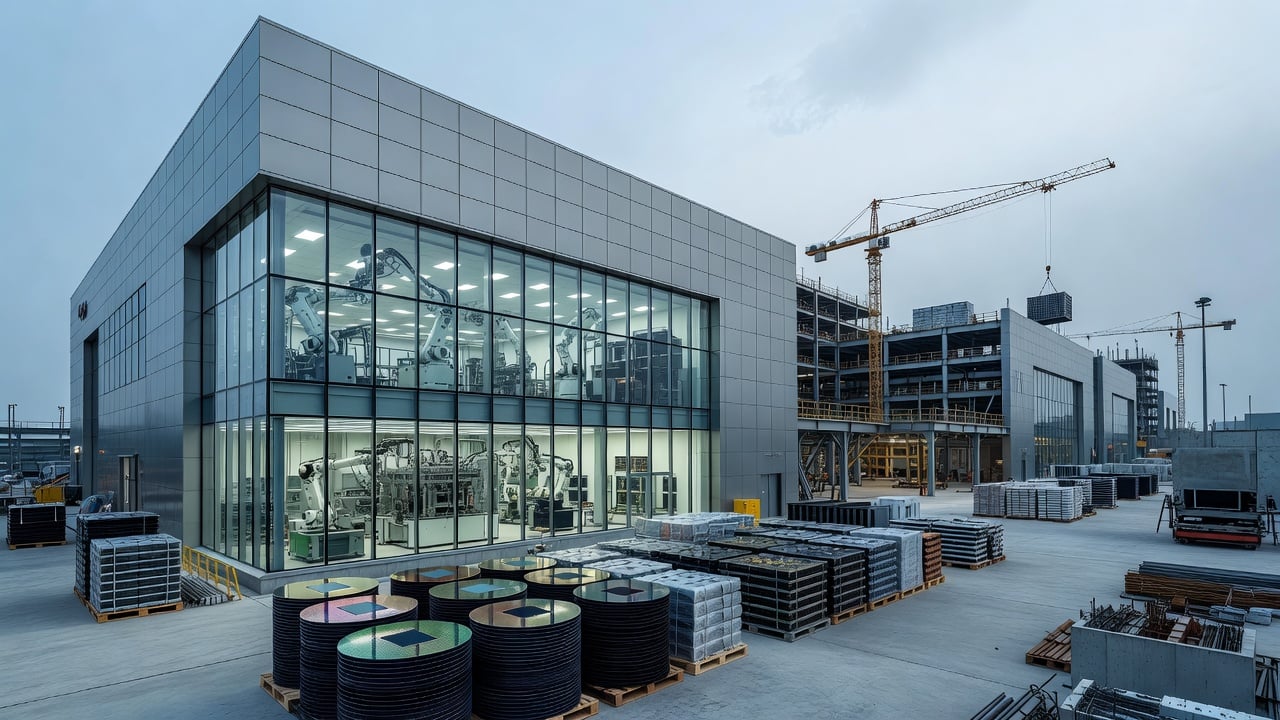
That ambition requires massive investment. TSMC plans to expand capacity in Taiwan with as many as 10 new or upgraded fabs coming online or under construction in 2026. It continues to build in Arizona, where it has acquired additional land and applied for permits for a fourth fab and advanced packaging facility. The overseas push addresses customer desires for geographic diversity and U.S. government incentives. But it also brings higher costs. Overseas operations tend to operate with lower margins than the concentrated Taiwan base.
Packaging has become another flash point. Advanced techniques such as CoWoS sit in heavy demand for stacking high-bandwidth memory with logic chips. Nvidia has reportedly booked the majority of TSMC’s leading packaging capacity for years ahead. The foundry has turned to partners including Amkor Technology for overflow work. In June the two companies announced a long-term collaboration to expand AI chip packaging in Arizona. Recent reports from Investor’s Business Daily and TipRanks noted the partnership and its role in easing bottlenecks.
Analysts have responded with higher price targets. Bank of America lifted its target to $590 from $490 in late June. UBS raised its target to NT$3,400 from NT$3,000 and kept a buy rating. The firm expects TSMC to expand capital expenditures from 2026 through 2028 to address customer concerns about supply. It also sees room for price increases as early as 2027. UBS analysts point to strong momentum that should carry through the July 16 quarterly report.
Financial results through the first quarter already showed the lift. Revenue climbed 35.1 percent to NT$1.13 trillion. Net income surged 58 percent. Gross margin reached 66.2 percent. Those figures reflect the shift toward leading-edge processes. High-performance computing now accounts for more than half of revenue. Smartphones and other consumer categories have lagged but still contribute. The mix favors profitability.
Yet risks remain visible. Geopolitical tension over Taiwan never fully disappears. TSMC’s dominance leaves customers exposed if output falters. Samsung and Intel continue to chase market share in advanced nodes, though neither has matched TSMC’s yields or scale at 3 nanometers and below. The company’s move to 2-nanometer process technology enters mass production in the second half of 2026. Apple will likely use the base N2 for its next chips. Qualcomm and MediaTek target the enhanced N2P version. That contest could shape AI capabilities in future smartphones.
Recent X posts reflect the market chatter. Traders discuss UBS’s upgraded target and expectations for the coming earnings. Others note TSMC’s efforts to strengthen domestic memory supply chains through partnerships with firms like Winbond. The company wants to reduce dependence on South Korean and U.S. memory makers for high-bandwidth stacks used in AI accelerators.
So far the numbers keep beating expectations. Second-quarter guidance called for revenue between $39 billion and $40.2 billion. Margins should stay elevated. If May’s sales pace holds, TSMC appears on track. The foundry raised its 2026 outlook multiple times already this year. Each revision points to the same force. AI infrastructure spending shows little sign of pausing.
Investors have bid up the shares in response. TSMC’s market value sits near records. Some analysts still see upside. Others warn that current valuations bake in optimistic assumptions about sustained AI growth. The company itself buys back shares and pays a healthy dividend. It also faces calls to expand capacity faster. Balancing those demands while managing costs and geopolitical exposure defines the next phase.
Wei and his team have guided the company through previous cycles. This one feels different. The AI wave arrives with unprecedented scale. Data centers consume chips at a pace that strains even TSMC’s disciplined expansion plans. Customers request capacity years in advance. The foundry allocates output carefully. Shortages persist in the most advanced nodes.
That dynamic supports pricing power. TSMC reportedly plans 5 to 10 percent increases on leading processes. Some reports suggest the hikes extend to older nodes as well. The era of steadily cheaper transistors may be bending. Higher costs for energy, equipment and labor play a role. So does the sheer capital required to build new fabs. Each generation demands more investment than the last.
TSMC’s technology symposium in 2026 showcased progress on 2-nanometer, A16 and beyond. It highlighted advances in 3D stacking and packaging. Those capabilities matter as systems move from simple chips to complex assemblies of logic, memory and interconnects. The company positions itself as the indispensable partner for the entire AI stack.
Its success draws attention from governments. The United States, Japan, Germany and others offer subsidies to attract fabs. TSMC accepts some support but insists its core manufacturing expertise stays rooted in Taiwan. The strategy spreads risk without diluting control. Execution will determine whether those new sites match the efficiency of home operations.
For now the growth story holds. Monthly sales data through May confirm the trend. Analyst forecasts for the full year continue to edge higher. The July earnings call may bring another update. Investors will listen for any hint of softening in AI orders or acceleration in capacity plans.
TSMC sits at the intersection of computing demand and manufacturing reality. Its performance in 2026 will test how far that position can stretch. The numbers look strong. The constraints look real. The coming quarters will reveal which force ultimately sets the pace.


 WebProNews is an iEntry Publication