
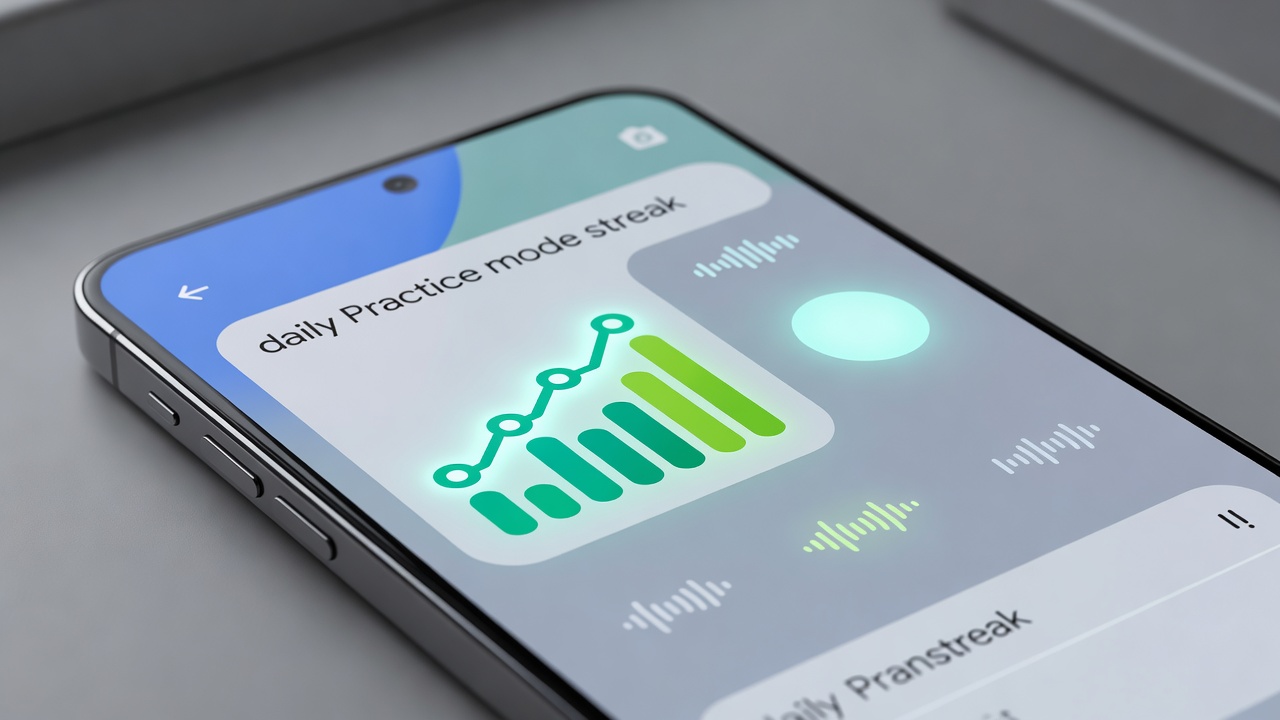
Google Translate keeps expanding beyond quick text conversions. The app now pushes users toward consistent language practice. And a fresh widget in development could make that habit impossible to ignore.
Researchers spotted code for a “Practice streak” homescreen widget in the latest Android version of the app. It displays the number of consecutive days a user has practiced. One tap opens the dedicated Practice mode. The discovery comes from an APK teardown of version 10.23.29.934758792.2-release. (Android Authority)
Practice mode itself arrived last year. It generates customized listening and speaking sessions. Users pick a target language, set their proficiency level from basic to advanced, and describe their goals. The app then creates scenarios around travel, work, school or casual conversation. Google’s official support page walks through the steps in detail. (Google Support)
But here’s the thing. Many users start strong then fade. Notifications help yet get dismissed easily. A persistent widget changes the equation. It keeps the current streak count visible every time someone glances at their phone. Streaks grow when users complete at least one activity per day. The mechanic mirrors established language apps. Yet Google packages it inside a tool billions already install for travel and communication.
From Translation Tool to Tutor
The March 2026 widget refresh first added a basic Practice shortcut. That 2×1 rounded square carried the Translate logo and launched personalized lessons. Now the streak version goes further. It shows progress at a glance. Early code suggests the widget remains resizable. Expanded versions currently look sparse. Developers will likely refine the layout before release. (9to5Google)
Official announcements framed Practice as an experiment powered by advanced models. It adapts to individual skill and motivation. English speakers could start with Spanish or French. Support later reached Spanish, French and Portuguese speakers learning English. Additional languages followed. By late 2025 the feature taught more tongues than at launch. (Google Blog, August 2025)
PhoneArena reported the widget quietly building in the background. It drops users straight into a lesson. No extra steps. The convenience matters for people who treat language study as a five-minute daily commitment rather than a scheduled class. (PhoneArena)
Android Headlines noted the same code strings on the same day. The publication highlighted how the widget addresses a common pain point. Users forget. Or they mean to practice but never open the app. Constant visibility on the home screen removes that friction. (Android Headlines)
Earlier coverage showed the feature’s growth. Android Police documented expansion to new languages in December 2025. What began as a beta limited to a handful of pairings now covers more combinations. The app asks about motivation in the user’s own words or offers presets. Then it builds conversations that feel relevant. One tester described practicing phrases for an upcoming ski trip. Another focused on workplace vocabulary. The AI generates fresh material each session. Accuracy varies. Google warns the experimental nature means occasional mistakes.
TechCrunch captured the initial rollout in August 2025. The piece quoted Google’s description of tailored sessions for beginners and advanced speakers alike. Listening exercises let users tap words they recognize. Speaking practice records responses and offers feedback. The combination turns a translation app into something closer to a conversational coach. (TechCrunch)
Yet the streak widget reveals Google’s deeper ambition. Daily consistency drives retention in language learning. Duolingo proved the model years ago with its own homescreen widget and aggressive notifications. Google Translate already reaches far more devices. Adding streak visibility could pull millions into regular practice without downloading another app. The overlap feels deliberate.
Current Translate widgets handle quick tasks. One translates clipboard text. Another starts the camera. The Practice tile simply launches the mode. The streak version adds accountability. It reports progress without requiring users to open the full app first. That small difference might matter most for casual learners.
Development status remains early. The feature has not reached public beta. APK analysis predicts direction but carries no guarantee of final form. Google could tweak design, add statistics or integrate deeper Gemini capabilities. Past updates rolled out gradually across Android and iOS. This one will likely follow the same path.
Industry watchers point to broader trends. Translation apps face pressure to prove ongoing value. One-time travelers use them sporadically. Language enthusiasts need reasons to return daily. Practice mode combined with a visible streak gives exactly that. It transforms a utility into a companion.
Users already praise the existing mode in forums and reviews. Some say it feels surprisingly human. Others note it complements rather than replaces dedicated learning platforms. The widget could tip the balance for those on the fence. A quick glance at the home screen becomes a prompt. The tap becomes a habit.
Google has not commented publicly on the widget. Company blogs focus on the AI behind lesson generation instead. Yet the pattern is clear. Features discovered in code often appear weeks or months later. Expect further leaks as testing advances.
The bigger picture shows Translate evolving fast. Camera improvements, live conversation tools and now structured practice all build on the same foundation. Each addition makes the app more indispensable. A streak counter on the home screen might seem minor. Its potential impact on user behavior is not.
Language learning demands repetition. Technology can supply reminders. When those reminders sit on the screen users see dozens of times a day, repetition becomes almost automatic. Google appears ready to test exactly that idea.


 WebProNews is an iEntry Publication