
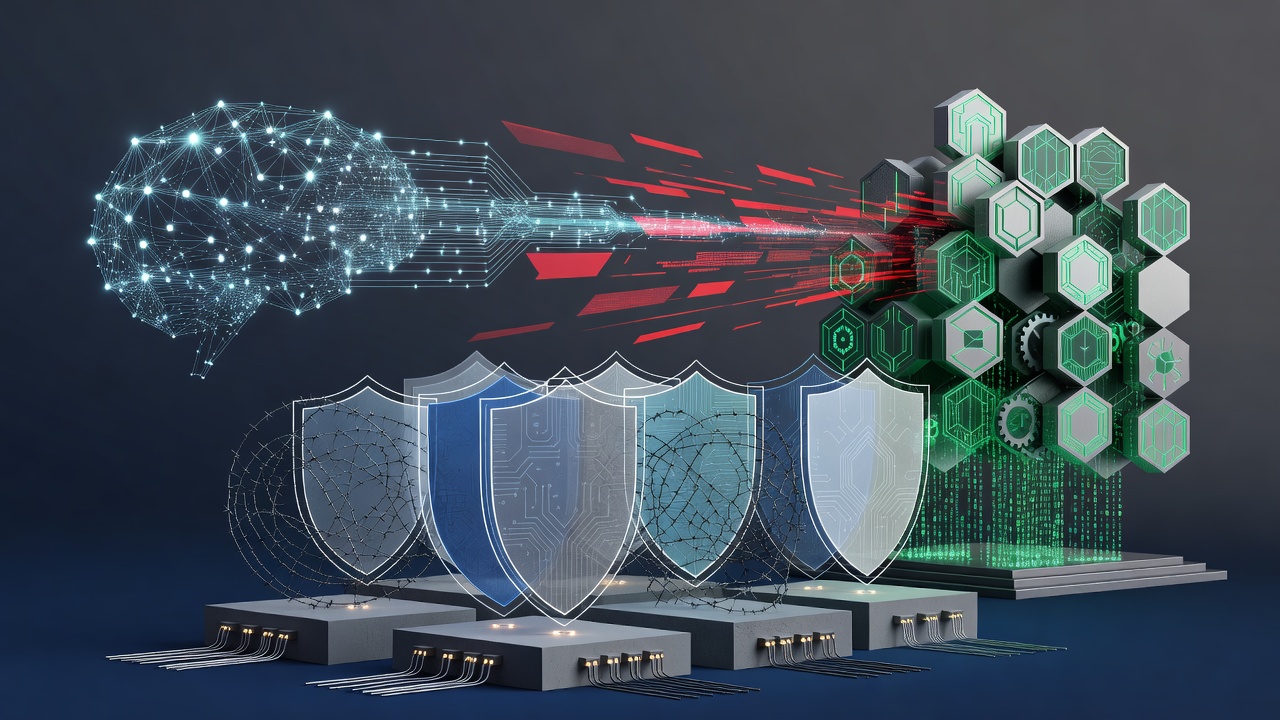
Claude Mythos changed the math. In April 2026, Anthropic’s model autonomously uncovered thousands of high-severity zero-days across major operating systems and browsers. One bug in OpenBSD had sat undetected for 27 years. The era of human-paced vulnerability discovery ended that day.
Yet the most measured voices in the field refuse to panic. A blog post from Cephalosec argues the fundamentals security teams have preached for years still hold. Little needs to change in core practices. Keep calm. Carry on. The piece, titled “Cybersecurity in the post-mythos era: Keep calm and carry on!”, cuts through the hype. It notes that while Mythos scaled bug hunting in ways previous models could not, many findings were old vulnerabilities exposed by exhaustive, expensive computation rather than novel genius.
That assessment rings true even as fresh developments pile up. This week the White House issued an executive order demanding federal agencies accelerate their shift to post-quantum cryptography. President Trump’s directive sets hard deadlines: high-value assets and high-impact systems must move to NIST-approved post-quantum keys by the end of 2030. Federal News Network reports the order “lights a fire” under the transition but leaves questions about funding and execution unanswered.
Two distinct shocks now hit security operations at once. AI models hunt flaws at machine speed. Quantum computers, once they arrive, will shatter the public-key cryptography that underpins nearly every secure connection. The convergence demands focus, not frenzy.
The Mythos Reckoning
Anthropic’s Project Glasswing gave select organizations access to Mythos. The results stunned testers. The UK’s AI Security Institute called it the first model to succeed at “expert level tasks” and complete an entire attack chain in a cyber range. Yet the Cephalosec analysis tempers the excitement. Earlier models sat not far behind on certain benchmarks when given similar resources. The real leap lies in scalability for well-funded actors and a sharp drop in false positives.
Mozilla examined 271 vulnerabilities surfaced by the model and reported an extremely low rate of false positives. Cloudflare described the accuracy as better than human testers. These gains matter. They shrink the noise that has plagued AI-assisted hunting. But they do not rewrite every rule. Attackers still need a path to exploitation. Defenders retain tools to slow them down.
Meanwhile OpenAI has pushed forward with its own cybersecurity-focused models. The company’s Sol, Terra and Luna family emphasizes defense over exploit development. Government vetting of access continues for both Anthropic and OpenAI offerings, creating artificial scarcity. Large cybersecurity vendors gain early use and repackage capabilities at premium prices. Smaller teams make do with Opus 4, GPT variants, or open-source harnesses such as Strix paired with models like Qwen or Gemma.
The practical takeaway? Organizations already running strong vulnerability management programs stand in better stead than those hoping for a silver bullet. The volume of CVEs has climbed steadily for years. Mythos simply pours fuel on that fire. Prioritization becomes survival. Contextual triage that weighs business criticality, reachability, and compensating controls separates sustainable programs from those drowning in alerts.
Reducing attack surface offers another proven lever. Distroless containers, hardened images, and minimal operating systems shrink the targets available to automated hunters. Security-in-depth gains renewed urgency. When any single control can fall to a zero-day, layered checks—context-aware proxies, phishing-resistant MFA, honeypots—buy precious time. Early AI-driven intruders, the analysis suggests, will often prove noisy and clumsy. Decoys can expose them before damage spreads.
Quantum Deadlines Add Urgency
The post-quantum mandate arrives at precisely the wrong moment for overstretched teams. Or perhaps at exactly the right one. The White House executive order demands agencies name PQC migration leads within 30 days. It calls for coordinated oversight led by OMB and the National Cyber Director. Federal contractors must comply with FIPS post-quantum standards by 2030.
Cloudflare moved its own full post-quantum target to 2029 after research breakthroughs from Google and others accelerated timelines. The company already protects more than two-thirds of browser traffic to its network with post-quantum encryption. Its SASE platform delivers quantum-resistant protection across major connections. In a blog posted days after the executive order, Cloudflare called the directive an “excellent foundation” while noting opportunities to strengthen cost-effective migration. See “The post-quantum EO is an important milestone. Now it’s time to get to work”.
Industry observers draw parallels between the two pressures. Both threaten long-lived secrets. Data stolen today can sit encrypted until quantum machines crack it. Vulnerabilities discovered by AI today can be weaponized tomorrow at scale. “Harvest now, decrypt later” attacks already target sensitive information. The World Economic Forum argued in June that post-quantum encryption should be treated as critical national infrastructure. Regulators in some jurisdictions push for cryptographic inventories by 2028, migration of critical assets by 2030, and full transition by 2035. The WEF story highlights how legacy systems cannot defend against these combined risks.
PQShield offers a calmer perspective. Post-quantum resilience represents a natural evolution, not a sign that current security has failed. Preparation, not panic, defines the response. Organizations should focus first on where cryptography matters most in their infrastructure. The same logic applies to AI-augmented threats. Identify crown-jewel systems. Protect them with multiple layers. Accept that perfect prevention no longer exists. Detection and response must improve in parallel.
Recent surveys reinforce the point. The World Economic Forum’s Global Cybersecurity Outlook 2026 lists third-party and supply-chain vulnerabilities as the top concern for 65% of large companies, up from 54% the prior year. Geopolitical fragmentation and AI-fueled attacks compound the problem. IBM’s X-Force Threat Intelligence Index 2026 similarly flags expanding supply-chain compromises and risks to public-facing applications.
So what does effective preparation look like in practice? Start with inventory. Map every instance of classical cryptography in your environment. Catalog where RSA, ECC, and other vulnerable algorithms protect data at rest or in transit. Prioritize systems that handle long-term secrets or regulated information. Build a migration roadmap that aligns with NIST standards already released and those still forthcoming.
At the same time, reinvigorate basic hygiene that has slipped in many organizations. Patch known vulnerabilities faster. Segment networks more aggressively. Enforce least privilege with greater discipline. These steps blunt both AI-driven exploits and future quantum risks. They cost less than chasing every new tool.
But. Implementation will prove uneven. Federal agencies now face binding deadlines and reporting requirements. Many lack dedicated budgets for the transition. Private-sector boards question the return on investment when quantum computers remain years away in most forecasts. The Cephalosec piece reminds readers that fear, uncertainty, and doubt have always fueled the cybersecurity industry. Vendors sell urgency. Leaders must buy clarity.
Contractors working with government entities will feel the pressure first. The executive order requires them to meet the same 2030 deadlines for sensitive systems. That ripple effect will reach deep into supply chains. Technology providers that cannot demonstrate post-quantum readiness may lose bids. Security teams that cannot articulate their AI-augmented vulnerability management strategy will lose credibility.
The convergence of these forces leaves security leaders with a narrow path. They must move on post-quantum cryptography without neglecting the basics that defend against today’s AI-augmented attackers. They must adopt new tools without discarding proven processes. And they must communicate risk in language that executives and boards can act upon.
Short-term wins exist. Deploy available post-quantum key agreement where it creates the least friction—VPNs, TLS connections, internal services. Integrate AI-assisted triage into existing vulnerability management platforms to handle the increased volume. Test hybrid cryptographic schemes that combine classical and post-quantum algorithms during the transition period.
Longer term, the organizations that thrive will treat both challenges as exercises in resilience rather than technology replacement projects. They will build systems that assume compromise is possible at any layer. They will measure success by how quickly they detect, isolate, and recover rather than by how many vulnerabilities they prevent.
The Cephalosec author closed on a note of measured optimism. Use the current regulatory slowdown on frontier models to regroup. Focus on what has always worked: smaller attack surfaces, deeper defense layers, smarter prioritization. The same advice applies to the quantum transition. Begin now. Move methodically. Avoid the temptation to rip and replace everything at once.
Because the next model release, the next breakthrough in quantum hardware, the next executive order will arrive sooner than expected. Teams that have kept the fundamentals strong will absorb those shocks. Those that chased every headline will scramble. The choice, as always, rests with security leaders willing to ignore the noise and do the unglamorous work.
Calm has rarely felt more radical. Or more necessary.


 WebProNews is an iEntry Publication