
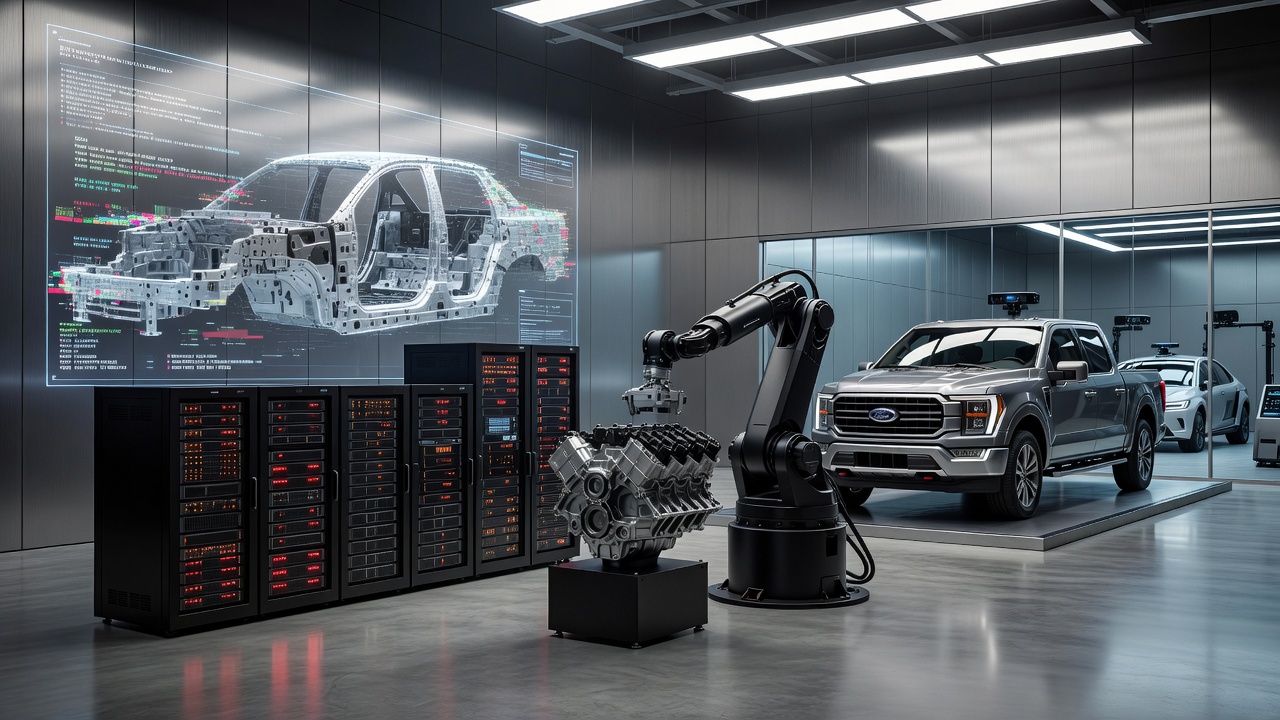
Ford Motor Co. bet big on artificial intelligence to streamline vehicle design and production. The results fell short. Quality suffered. Recalls mounted. So the company changed course.
Over the past three years executives reversed an earlier push that favored algorithms over accumulated human judgment. They hired, promoted or brought back 350 experienced technical specialists. Many carry decades of hands-on knowledge the AI systems never fully absorbed. These veterans now train younger staff, tighten quality checks and refine the data that feeds Ford’s automated tools.
Overreliance on Untested Assumptions
The admission came this week during a briefing tied to strong survey results. “Artificial intelligence is a fantastic tool, but it’s only as good as the information you use to train it,” said Charles Poon, Ford’s vice president of vehicle hardware engineering, according to a Yahoo Finance report. “Mistakenly, we thought that by just introducing artificial intelligence and ingesting the design requirements that we had, that would produce a high-quality product.”
Poon noted that some of the company’s most seasoned personnel had already departed before their expertise could shape the training data. The gap proved expensive. Ford recorded 152 recalls in 2025. That number shattered the previous single-year record of 77 set by General Motors in 2014. This year the tally stands at 51. Many trace back to vehicles built years earlier. The financial toll reached billions in warranty costs and lost trust.
Yet the picture shifted. Ford claimed the top spot among mainstream brands in J.D. Power’s 2026 U.S. Initial Quality Study. First time in 16 years. Executives credit the return of those “gray beard” engineers, closer collaboration across engineering, manufacturing and supply chain teams, and an end to passive problem detection. The rehires don’t reject AI. They augment it. Veterans now improve data collection so the systems catch issues human eyes once spotted instinctively.
But the manufacturing misstep forms only part of a larger pattern at Ford. The company has poured resources into advanced driver assistance and higher levels of automation. BlueCruise, its hands-free highway system, drew sharp criticism after two fatal 2024 crashes. In both cases the vehicles failed to stop for stationary objects ahead. The National Transportation Safety Board concluded that overreliance on automation contributed. Drivers paid more attention to phones or screens than the road. NTSB Chairwoman Jennifer Homendy called such systems “convenience features rather than safety enhancements,” as reported by AP News.
The board urged Ford to strengthen driver monitoring and called on regulators to set minimum performance standards for Level 2 systems. Federal rules remain limited. Drivers can even disable automatic emergency braking while BlueCruise runs or set adaptive cruise control well above posted speeds. Those choices erode safety margins.
Ford nevertheless pushes forward. At CES 2026 the company outlined plans for eyes-off Level 3 capability by 2028 on an affordable new electric vehicle platform. In-house development of hardware and software should cut costs by about 30 percent compared with supplier solutions, Ford executives said. A unified “vehicle brain” module will handle infotainment, driver assistance and networking. The first AI assistant feature begins rolling out to as many as 8 million customers via the Ford and Lincoln app in early 2026.
Yet past autonomy efforts carry scars. Ford once aimed to leap to Level 4 robotaxis. It invested $1 billion in Argo AI. The unit shut down in 2022 after missing targets. CEO Jim Farley later observed that nearly $100 billion had been spent industry-wide on Level 4 technology without a clear path to consumer value at scale. The lesson lingers. Complex physical systems resist pure software shortcuts.
Recent discussions on X echo the tension. One analyst noted that “in complex physical systems, AI often increases demand for expert humans before it reduces it.” Another highlighted how Ford’s experience shows markets still underprice implementation friction in factories and vehicles. The data stays messy. Edge cases prove costly. Errors carry real-world consequences.
So Ford now walks a tighter line. It celebrates its quality turnaround while promising broader autonomy at lower prices. The 350 specialists represent more than a headcount adjustment. They embody a recognition that institutional memory cannot be digitized overnight. Their work reshapes training sets, mentors the next generation and restores balance between code and craft.
Industry watchers will track whether this hybrid model delivers lasting gains. Recall numbers have dropped. Customer satisfaction scores have risen. But the road to profitable, safe higher automation stretches years ahead. Ford’s latest moves suggest executives finally accept a basic truth: the best AI still needs smart people to guide it. And sometimes, to fix what it misses.


 WebProNews is an iEntry Publication