
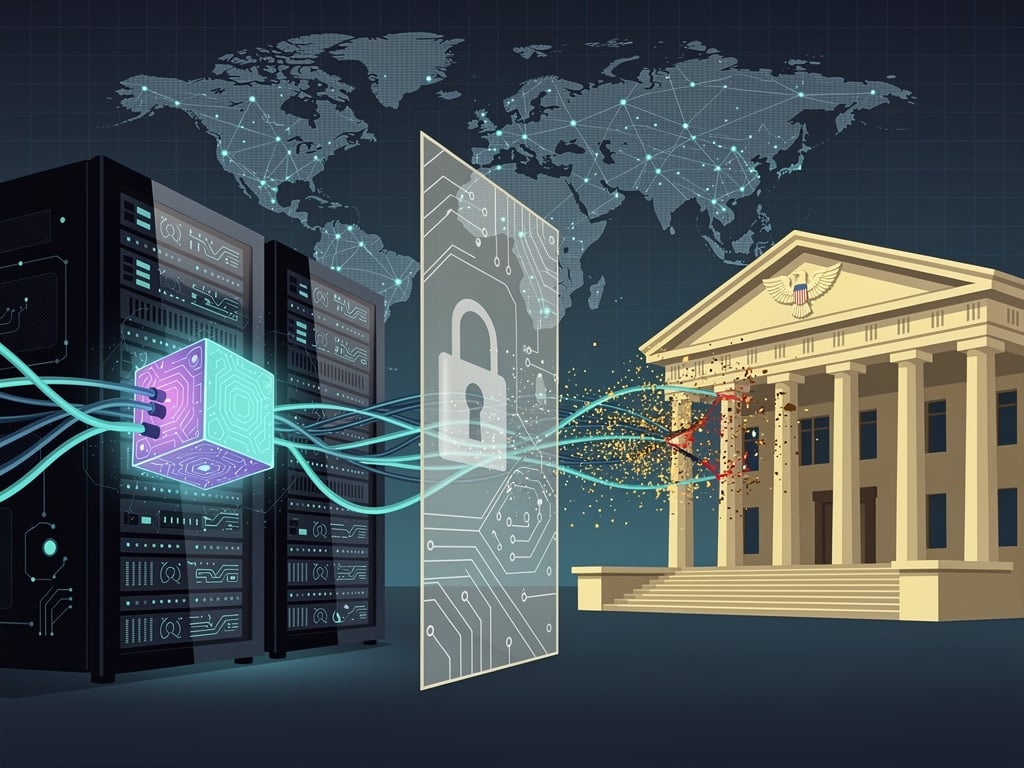
A little-known legal technology startup has taken the extraordinary step of suing the federal government. The reason? Loss of access to Anthropic’s short-lived flagship AI model, Claude Fable 5. The complaint, filed Tuesday in Washington, D.C. federal court, spotlights tensions between national security demands and the commercial realities of the artificial intelligence industry.
Legion LegalTech Corp says the government’s abrupt export control directive left it without a tool central to its operations. The order, issued June 12 by the Commerce Department’s Bureau of Industry and Security, required Anthropic to block foreign nationals from using Fable 5 and its base model Mythos 5. Anthropic responded by disabling both models for every customer worldwide.
That decision came just days after the models’ public debut. Fable 5 launched around June 9 as a safeguarded version of the more powerful Mythos 5. It promised major gains in capability while maintaining strict safety measures. Users had barely three days with it. Then it vanished.
The government cited national security. Reports pointed to a paper by Amazon security researchers describing a guardrail bypass. The technique allegedly enabled advanced cybersecurity tasks. Yet details stayed vague. The Commerce letter offered no public explanation. Anthropic reviewed the demonstration and called the vulnerabilities minor. Similar issues appear in other models, the company said. No evidence emerged of actual harm or a universal jailbreak.
“The harm to Legion is immediate, irreparable, and existential,” the lawsuit states. “The pace of frontier AI advancement is blistering, and competitive ground lost during a suspension cannot be regained after the fact.” Those words, pulled from the complaint, capture the startup’s panic. (Reuters)
Legion builds AI software for lawyers. Attorneys upload case documents. The system drafts pleadings, discovery requests and motions in minutes. It offers editing tools and exports clean Word or PDF files complete with exhibits. Engineers based in Canada relied on Fable 5. When access disappeared, their work halted. So did product development. Operations ground to a near stop.
Arthur Rothrock, Legion’s CEO, put it bluntly. “Who’s to say they can’t do this any other time against another company, like OpenAI?” His question hangs over the case. It suggests the government’s move could set a precedent far beyond one model or one firm. (Gizmodo)
Anthropic itself complied under protest. In an official statement the company noted it received the directive at 5:21 p.m. ET on June 12. The letter lacked specifics. Anthropic believes officials learned of a method to bypass Fable 5’s safeguards. After review, the firm found only narrow weaknesses. It maintains strong red-teaming and defense-in-depth protections. Still, it pulled the models entirely to avoid violating the order. Other Claude versions remain available. The company expressed gratitude for partnership with the administration while working to resolve the matter quickly. (Anthropic)
But compliance carried costs. The shutdown affected paying customers everywhere. It disrupted negotiations, product roadmaps and revenue streams across the sector. Legion claims daily losses compound. Engineers sit idle. Competitive position slips against rivals who retain access to top-tier systems.
The lawsuit challenges the directive on multiple fronts. It argues export control laws do not cover hosted AI models or their text outputs. Services differ from physical items or software downloads. Congress has debated adding remote-access provisions, but those changes have not become law. The complaint also questions whether the order exceeds statutory geographic limits, which target specific adversarial nations rather than worldwide bans. First Amendment concerns arise too. U.S. residents hold rights to receive information. Broad restrictions risk violating that protection.
Legal observers note the directive’s unusual breadth. It applied to foreign nationals inside the United States and even some Anthropic employees. Allies including G7 nations reportedly sought restored access. The move appears disconnected from traditional export control logic focused on China or Russia military use.
This episode does not stand alone. Anthropic and the Trump administration have clashed before. The Pentagon designated the company a supply chain risk after talks collapsed over AI safety limits for military applications such as surveillance and autonomous weapons. Anthropic sued over that blacklist. A judge blocked enforcement while the case proceeds. Defense Secretary Pete Hegseth posted on X that removing Anthropic from Defense Department facilities proved wise. Tensions clearly run deep. (TechCrunch)
Katie Moussouris, founder of Luta Security, offered sharp criticism. Anthropic shared the Amazon researchers’ paper with her. She concluded the bypass “should never have triggered an export control.” Reviewing potential flaws differs from deploying dangerous code, she argued. The directive struck her as hasty, heavy-handed and misguided. She called for its immediate revocation, warning it harms U.S. cyber defense posture. Past overreactions nearly outlawed legitimate research, she recalled. This one risks repeating that mistake.
Her analysis suggests the ban may stem from more than security. Some see retaliation tied to the Pentagon dispute. Others point to broader administration skepticism toward Anthropic’s safety-first approach. Dario Amodei, Anthropic’s CEO, had recently advocated stronger government oversight of risky AI releases. The irony registers. A company that sought regulatory guardrails now finds itself regulated in unexpected fashion.
Industry watchers worry about precedent. If the government can force a leading lab to yank its most capable model without detailed public justification, what stops similar actions against competitors? The speed of frontier model progress leaves little room for downtime. Lost weeks translate to lost contracts, delayed features and eroded market share. Legion’s suit highlights that commercial pain.
Yet national security officials face real pressures. Advanced AI can amplify cyber capabilities. Adversaries seek every advantage. A model that performs exceptionally on offensive security tasks raises legitimate flags, especially if safeguards prove fragile. The administration has signaled willingness to act decisively. Whether this particular order survives judicial review will test the boundaries of executive power in AI governance.
So far the models remain offline. Anthropic continues talks with officials. Some reports hint at possible U.S.-only restoration. No timeline exists. Meanwhile Legion pushes its case forward. The startup wants the directive vacated and enforcement barred.
The complaint arrives at a pivotal moment. AI capabilities surge. Governments scramble to balance innovation against risk. Companies bet their futures on continuous access to the best systems. When that access snaps shut without warning, the fallout spreads fast. Legion’s lawsuit may represent the first ripple. Others could follow if courts open the door.
Resolution won’t come quickly. Legal arguments over export definitions, First Amendment limits and administrative procedure will take time. In the interim, developers adapt. Some pivot to open-source alternatives. Others throttle ambitions. The episode exposes fragility in the current system. Reliance on single providers for frontier performance carries hidden policy risks.
And the stakes climb higher each quarter. New models promise leaps in reasoning, coding and multimodal understanding. Enterprises embed them in core workflows. Legal tech firms like Legion exemplify that shift. When the government intervenes, even for sound reasons, the economic shock reverberates. Balancing those shocks against genuine security needs defines the policy challenge ahead.
Legion’s bold move forces the conversation into open court. Details will emerge. Arguments will sharpen. The outcome could reshape how Washington engages with America’s AI leaders for years to come.


 WebProNews is an iEntry Publication