
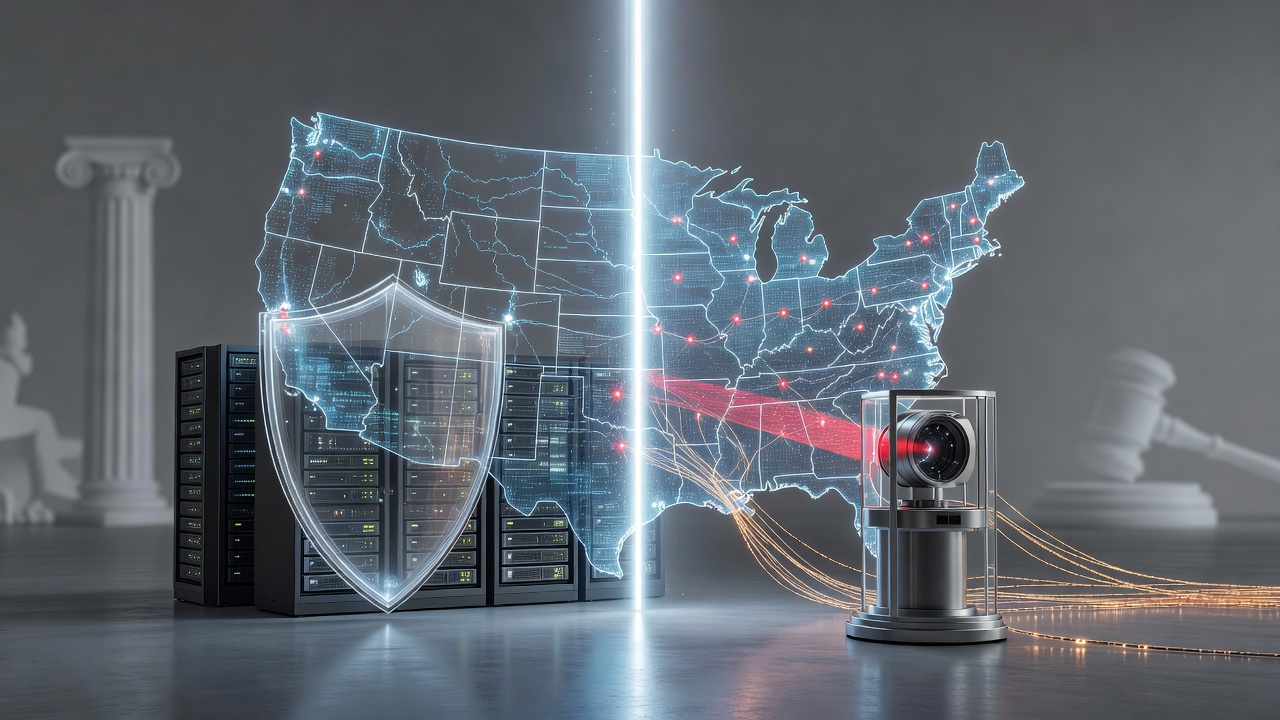
The Supreme Court delivered a sharp rebuke to law enforcement tactics that sweep up digital trails from innocent bystanders. In a 6-3 decision issued June 29, 2026, the justices ruled that police conducted a Fourth Amendment search when they obtained Okello Chatrie’s cellphone location records from Google. The case, which began with a 2019 armed robbery of a Virginia credit union, now forces investigators to rethink how they harness vast troves of geolocation information.
Officers responded to the robbery at Call Federal Credit Union in Midlothian. A gunman had threatened employees and customers before fleeing with nearly $200,000. Surveillance video offered limited leads. So authorities turned to a relatively new tool: a geofence warrant directed at Google. The request sought location data for every device that had been inside a defined perimeter around the bank during a two-hour window on May 20, 2019. Talk Android reported the details of how this warrant operated and its implications for everyday users.
Google’s response followed a three-step process. First it identified all devices that had enabled Location History and entered the geofence. It returned anonymized location points. Investigators reviewed those and narrowed the list to a handful of devices. Only then did they seek identifying information for specific users, including Chatrie. His data placed him at the scene. That evidence helped secure his conviction for the robbery.
Chatrie moved to suppress the records. He argued the government had violated his reasonable expectation of privacy. Lower courts split. A federal district judge initially deemed the warrant unconstitutional yet allowed the evidence under the good-faith exception. The Fourth Circuit, sitting en banc, produced a fractured 126-page decision with multiple concurrences and dissents before ultimately upholding the conviction. The Supreme Court granted certiorari to resolve whether acquiring such data counts as a search.
Justice Elena Kagan wrote for the majority. She built directly on the 2018 precedent in Carpenter v. United States. There the Court held that police need a warrant to obtain historical cell-site location information from wireless carriers. Kagan explained that Google’s Location History data is even more revealing. It offers precision down to about 20 meters, updates roughly every two minutes, and includes elevation details. “Even short-term monitoring can reveal private associations,” she noted. The opinion rejected the government’s claim that a brief window made the intrusion trivial.
The majority also dismissed attempts to apply the third-party doctrine. Users do not voluntarily convey their movements to Google in the same conscious way they hand over bank records, Kagan wrote. Most people leave Location History enabled because modern smartphones function poorly without it. The data functions more like a personal journal than information knowingly shared with the world. And, she added, police demand for it still intrudes on that privacy interest.
Yet the Court stopped short of declaring all geofence warrants invalid. It left for the Fourth Circuit on remand the separate question whether this particular warrant satisfied the Fourth Amendment’s requirements of probable cause and particularity. The multi-step process raised serious concerns about overbreadth. Officers initially received data on dozens or hundreds of innocent devices before narrowing their focus. Justice Ketanji Brown Jackson, joined by Justice Sonia Sotomayor, wrote separately to emphasize those flaws. She would have gone further and held the warrant itself unconstitutional.
Justice Neil Gorsuch concurred only in the judgment. He preferred a property-based analysis. The location records, even when stored by Google, remained Chatrie’s “papers or effects” under the Fourth Amendment’s text. Entrusting them to a third party did not strip away that protection. His approach echoed themes he has explored in other technology cases.
The dissenters pushed back hard. Justice Samuel Alito, joined in part by Justice Clarence Thomas and Justice Amy Coney Barrett, argued that Chatrie had no reasonable expectation of privacy in data he had allowed Google to collect. He criticized the majority for issuing what he called an advisory opinion that avoided the toughest questions while burnishing its privacy credentials. Justice Barrett wrote a separate dissent that likewise found no search had occurred. She contended the third-party doctrine still controlled and that Carpenter should not extend this far.
Legal observers immediately recognized the decision’s breadth. The ruling applies beyond geofence warrants. Any compelled disclosure of detailed cellphone location history now triggers Fourth Amendment scrutiny. SCOTUSblog described it as a major win for digital privacy that clarifies Carpenter’s reach. Police departments that relied on these tools for everything from bank heists to missing-persons cases must now obtain warrants that meet stricter standards.
Technology companies face new pressure too. Google had already altered its Location History storage practices after 2025, a change the Court noted in a footnote. The adjustment makes some older geofence requests impossible. Apple, which has resisted similar demands, may see its stance reinforced. Yet the opinion does not bar law enforcement from seeking such data. It simply requires judicial oversight calibrated to the sensitivity of the information.
Advocacy groups hailed the outcome. The American Civil Liberties Union, Electronic Frontier Foundation, and others had filed briefs urging the Court to reject geofence warrants as inherently overbroad. They warned that approving the practice would open the door to “reverse searches” in which police query massive databases first and identify suspects later. Such methods, they argued, invert the traditional investigative process and chill free movement and association. The Brennan Center for Justice and Constitutional Accountability Center echoed those concerns in their own filings, stressing risks to speech and assembly.
But the victory for privacy advocates is incomplete. The remand means Chatrie’s conviction could still stand if the lower court finds the warrant sufficiently particular or applies the good-faith exception. More litigation lies ahead. Lower courts must now wrestle with what level of detail and narrowing satisfies the Fourth Amendment when investigators cast digital nets over city blocks.
The decision arrives at a moment when location tracking has become routine. Fitness apps, ride-sharing services, and mapping tools all generate similar records. Consumers rarely read the fine print. They simply tap “allow” so their phones work as expected. The Court acknowledged that reality. Modern life leaves little choice but to generate these digital footprints. Treating them as fair game for warrantless police review would erode the privacy expectations most Americans hold.
Critics of the ruling worry about handcuffing investigators. Violent crimes demand swift action. Geofence warrants have helped solve cases that might otherwise go cold. The dissenters highlighted that practical concern. Yet the majority countered that the warrant requirement has long coexisted with effective law enforcement. Probable cause and particularity do not ban useful tools. They discipline their use.
So what changes on the ground? Officers must draft narrower requests. Magistrates will scrutinize them more closely. Tech companies will likely demand higher legal thresholds before turning over data. Defense attorneys will file more suppression motions. And ordinary citizens may pay closer attention to their phone’s privacy settings. The era of location data as an unregulated investigative resource has ended.
Still, the opinion leaves important questions unresolved. How long a time period triggers protection? What about data from apps other than Google’s own services? Does the same logic apply to real-time location pings rather than historical records? Future cases will test those boundaries. For now the Court has drawn a clear line. Cellphone location information carries a reasonable expectation of privacy. Police cannot simply demand it from technology firms without satisfying the Fourth Amendment.
Chatrie’s case illustrates both the power and the peril of these tools. The geofence led authorities to a suspect. It also swept up data from countless bystanders who happened to pass near the bank that morning. In an age when phones constantly broadcast their whereabouts, the justices chose to protect the innocent majority rather than ease the path for catching the guilty few. That choice will shape digital policing for years to come.


 WebProNews is an iEntry Publication