
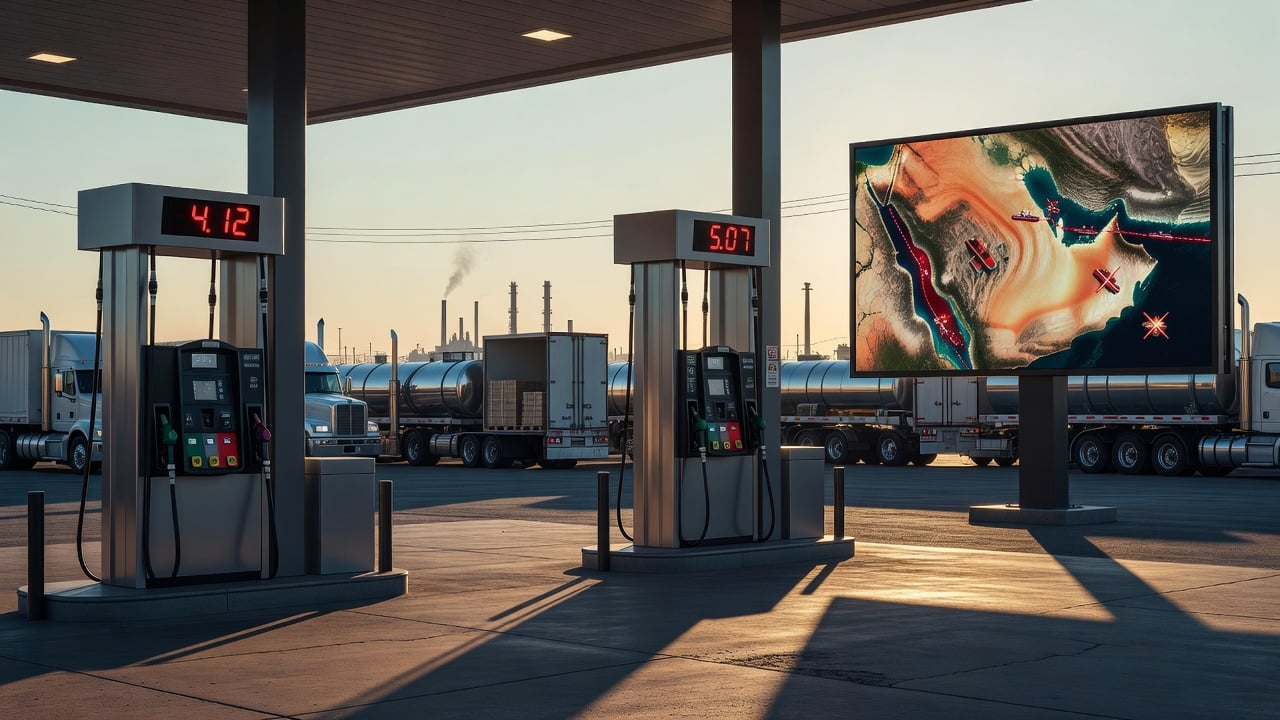
The national average for a gallon of regular gasoline hit $4.0030 on July 20. AAA data confirms the milestone. Diesel sits higher still at $4.4870. These figures mark the second time this year pump prices have breached the $4 threshold.
Drivers feel it immediately. A fill-up that cost $60 last summer now runs closer to $75 in many states. And the reason traces straight back to events halfway around the world. Fighting between the U.S., Israel and Iran that began Feb. 28 has stretched into its fifth month. Cease-fires have come and gone. The Strait of Hormuz remains a flashpoint. Oil flows stay constrained.
Short. Sharp. Painful for household budgets. Yet the numbers tell a longer story of intertwined energy markets, military decisions and political calculations.
Back in late February, the first strikes sent Brent crude soaring 10 to 13 percent within days, according to Wikipedia’s compiled timeline of the 2026 Iran war fuel crisis. U.S. retail gasoline followed. Prices climbed more than 30 percent in March alone, CNBC reported at the end of that month, topping $4 for the first time since 2022. They peaked near $4.61 in May before a June memorandum of understanding between Washington and Tehran offered temporary relief. A fragile pause. Markets responded. Averages dipped below $4 by mid-June, The New York Times noted.
But the calm proved brief. Renewed tensions, airstrikes and uncertainty over safe passage through the Strait of Hormuz pushed prices back up. By early July they had climbed again. Then came this week. The average crossed $4 once more. Gizmodo first flagged the return on July 20, tying it directly to ongoing U.S. military actions and Iranian responses in the Gulf.
State differences stand out. California drivers pay $5.49 on average. Indiana residents see $3.35. Both figures exceed year-ago levels by roughly a dollar in the high-cost areas and 20 cents in the low ones. Diesel, critical for freight, now exceeds $5 in many places and has risen more than $1.25 from 12 months earlier, The Guardian detailed in mid-July reporting. Robert Sinclair Jr., an AAA spokesman, put the ripple effect plainly. Everything reaches consumers on diesel-burning trucks. The impact is universal.
Supply Shocks Meet Political Rhetoric
Oil at roughly $81 a barrel reflects only partial recovery from earlier peaks. Wholesale markets react to every White House statement, every reported strike, every rumor of blockade or reopening. President Trump announced then dropped a plan for a 20 percent transit fee on cargo through the strait. Markets swung. Analysts described the environment as one driven by whim and rumor. Not fundamentals alone.
The original conflict timeline adds context. Trump administration officials predicted the fighting would last four to six weeks. Instead it has lasted nearly five months. Seventeen U.S. service members have died. Dozens more were wounded in strikes that the Pentagon did not publicly disclose at the time, according to later New York Times reporting referenced in coverage. Attacks on commercial vessels have curtailed oil and fertilizer shipments. Roughly one-fifth of global oil supply normally passes through the narrow strait. Disruptions here do not stay local.
But the resumption of active hostilities this month erased recent gains. Breitbart News captured the shift with a blunt headline: resumption of Iran war pushes average gas price over $4. The piece noted that voters dislike both high fuel costs and prolonged wars. It argued only a decisive outcome that neutralizes threats to the strait would restore stability before November midterms. Breitbart’s July 20 article framed the price jump as direct consequence of renewed combat after an earlier understanding collapsed.
Energy experts cited across outlets agree normalization will take time. Even with a lasting cease-fire, rebuilding inventories and restoring full flows could stretch into 2027. Summer driving demand adds pressure. So does any further escalation. One analyst told Al Jazeera in June that prices might not return to pre-conflict levels until after Labor Day at the earliest. That forecast now looks optimistic.
Inflation sits at 3.5 percent. Wage growth matches it. Households tread water. Higher transport costs feed into food, goods, everything. Trucking companies pass expenses along. Airlines have added fuel surcharges. The Wikipedia entry on the fuel crisis catalogs similar effects in Canada, where prices rose 30 percent in early months, and in jet fuel markets that spiked dramatically.
Some retailers tried a different approach. A network of Pennsylvania stations offered discounted gas under the name Freedom Fuel. Local reporting suggested ties to Republican donors and an NFL coach. The apparent goal? Credit the administration for lower prices ahead of elections. Results were mixed. The discounts drew attention but did not alter the national trend.
Trump’s own statements underscore the stakes. On July 20 he posted on Truth Social: “Every time Iran kills an American Soldier they will pay for that killing many times over!” The directive went to Defense Secretary Pete Hegseth and top military leaders. Such language leaves little room for quick de-escalation. And so the cycle continues. Strikes. Retaliation. Shipping fears. Price spikes.
Longer analytical threads emerge when one steps back. U.S. domestic production has cushioned the blow compared with Europe or Asia. Shale output remains high. Strategic reserves were tapped earlier. Yet the global nature of oil pricing means no economy fully escapes a major supply disruption. The IEA has called this episode the largest in history. That assessment still holds.
Recent social media chatter echoes the frustration. Posts on X this week reference the $4 mark, blame policy choices and question why additional supply from Venezuela or Iraq has not eased pressure faster. One user noted the price was near $3 before the February outbreak. Another highlighted diesel topping $5 and its effect on goods movement.
So what comes next? Markets will watch the strait. They will parse every diplomatic signal. They will price in the odds of wider involvement or sudden resolution. For now the trend points higher. A few cents here. A few cents there. Until something breaks the pattern.
Consumers have limited options. They drive less when possible. They combine trips. They absorb the cost. Industry insiders track crack spreads, refinery utilization and tanker movements through alternative routes around Africa. Those routes add days and expense. Insurance premiums for Gulf transit have climbed. All of it feeds back into the price at the pump.
The conflict that was supposed to be short has become something else. A grinding test of endurance, supply chains and political will. Gas at $4 signals that test is far from over. And every driver filling up this week understands the bill is due today. Not sometime in the future.


 WebProNews is an iEntry Publication