
Paris-based Raidium has landed its first major U.S. foothold. The radiology startup rolled out Raidium Read at Moffitt Cancer Center this week. The system already sits inside one of the nation’s premier oncology research hospitals. And it didn’t arrive as yet another bolt-on tool.
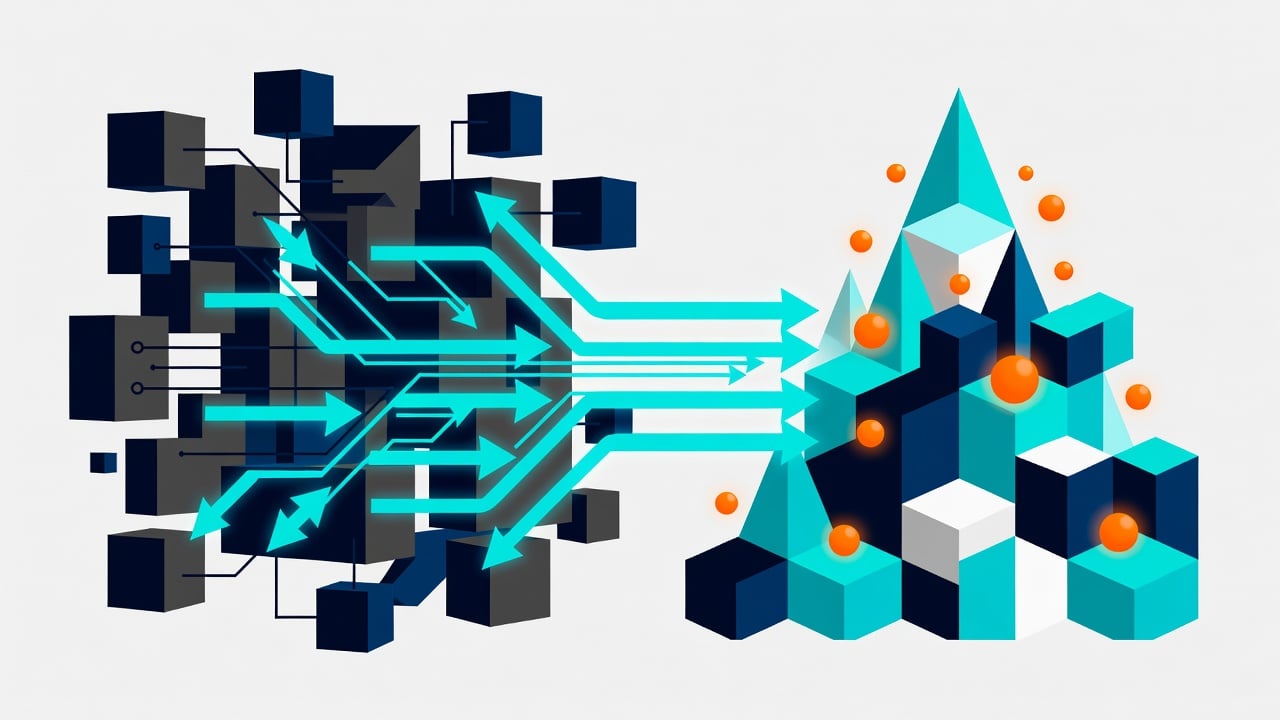
Raidium built the entire viewer from the ground up with its Curia foundation model at the center. No patchwork of separate AI modules. No legacy PACS wrapper. Just one unified interface designed to handle the full complexity of cancer imaging. The move marks a concrete step beyond the point-solution era that has defined medical AI for years.
The timing feels deliberate. Oncology trials generate mountains of CT and MRI scans. Researchers must track tumors across organs, across time, with precision that directly shapes drug approvals. Manual RECIST measurements consume hours. Different readers produce inconsistent results. Raidium claims its system slashes that variability by a factor of three. Three times more consistent.
Curia itself draws from a massive training set. Over 200 million CT and MRI slices pulled from 150,000 exams. The model detects lesions throughout the body. It segments them automatically. It transfers those findings from one scan to the next without manual re-identification. In short, it treats longitudinal tumor assessment as a reasoning task rather than a repetitive measurement exercise.
Moffitt didn’t choose the platform on a whim. The center needed to replace its existing radiomics applications. Raidium Read stepped in and did exactly that. Deployment required no complex backend integration. Researchers gained immediate access for clinical trials and academic projects.
“Raidium’s unified approach empowers us to explore research projects that would have seemed impossible not too long ago,” said Cesar Lam, MD, a radiologist in Moffitt’s Diagnostic Imaging and Interventional Radiology Department. “It is transforming and empowering how we conduct oncology clinical research projects, giving our teams a tool designed for the complexity of real-world imaging data.” (ITN Online)
Paul Herent, Raidium’s CEO and co-founder, frames the breakthrough in historical terms. “For twenty years, the standard PACS viewers have resisted evolution,” he told The Next Web. The company decided not to fight the old systems. It simply built a new one.
That decision reflects a broader shift now visible across radiology AI. Earlier tools often tackled narrow jobs: detect a lung nodule here, flag a brain bleed there. They improved speed in isolated spots but created new workflow friction. Radiologists juggled multiple dashboards, reconciled conflicting outputs, and still performed the final integration themselves.
Raidium takes the opposite path. Its foundation model powers every function inside the viewer. Detection, segmentation, tracking, measurement, even preliminary report structuring all flow from the same underlying intelligence. The architecture resembles agentic systems gaining traction in other technical fields. The AI doesn’t just label pixels. It reasons about the patient’s imaging history as a coherent narrative.
Analysts have watched this evolution accelerate. Last December at RSNA 2025, Raidium first demonstrated the Curia-powered viewer. Early feedback highlighted its ability to interpret entire exams across modalities. CT, MRI, the system treats them with equal fluency. Training data volume helps explain the performance. One billion images informed later iterations, according to company materials. (Imaging Technology News)
Yet impressive benchmarks only matter when they survive real clinical environments. Moffitt’s adoption supplies the first substantial test case. The center’s focus on complex oncology cases pushes the technology hard. Whole-body lesion detection across multiple timepoints isn’t a toy problem. It demands both sensitivity and specificity at scale.
Regulatory clearance remains on the horizon. Raidium expects FDA 510(k) approval before the close of 2026. Until then, the platform operates strictly for research and trial support. That limitation hasn’t dampened enthusiasm at Moffitt. Clinical researchers already see pathways to faster trial endpoints and more reliable data.
The partnership also highlights growing confidence among top cancer centers. Moffitt has conducted its own examinations of radiologist preferences for AI-generated impressions. A study released earlier this year revealed meaningful differences in how physicians and oncologists evaluated the same AI outputs. (Radiology Business)
Such findings underscore why integrated systems may outperform fragmented ones. When the AI lives inside the primary reading environment, calibration becomes easier. Feedback loops tighten. Trust builds through daily use rather than isolated demonstrations.
Raidium isn’t alone in pursuing foundation models for medical imaging. Several groups released open-weight models in 2025 and 2026. Curia itself saw parts of its base model released to researchers, fueling academic experimentation. The company maintains an active research lab alongside its commercial efforts. That dual structure mirrors strategies used by larger players in adjacent spaces.
But the U.S. launch at Moffitt carries special weight. Cancer centers process imaging volumes that dwarf most community hospitals. Success here could open doors at other NCI-designated facilities. It also signals to health system executives that AI-native viewers have moved past pilot stage.
Financial backers appear to agree. The startup has attracted attention from both European and U.S. investors drawn to the combination of strong research output and pragmatic product design. Recent announcements emphasize the platform’s standalone nature. Hospitals can test it without ripping out existing PACS infrastructure. A low-friction entry point matters when capital budgets stay tight.
Of course, challenges persist. Interoperability standards continue evolving. Data privacy rules grow stricter. And no model eliminates the need for skilled radiologists. Raidium positions its technology as an amplifier, not a replacement. The system handles repetitive quantification so physicians can focus on interpretation, correlation with clinical context, and direct patient care.
Early user reactions on professional networks reflect cautious optimism. One physician noted that AI now gives radiologists “a hyper-precise superpower” for tracking millimeter-level tumor changes. Precision at that scale matters enormously in immunotherapy trials where response patterns can be subtle.
Longer term, the company envisions expanding beyond oncology. The same architecture that tracks tumors could adapt to cardiology, neurology, or musculoskeletal imaging. A true generalist radiology foundation model remains the north star. Curia represents an early but substantial stride in that direction.
For now, the spotlight stays on Tampa. Moffitt’s radiologists will generate real-world evidence about whether an AI-native viewer delivers on its promises inside busy research workflows. Their experience could influence how the next wave of imaging AI gets designed and deployed.
The stakes extend past any single startup. Cancer care hinges on accurate, reproducible measurements that guide treatment decisions. If Raidium Read can make those measurements faster, more consistent, and more scalable, the benefits compound across trials, regulatory reviews, and ultimately patient outcomes. That’s the quiet ambition behind the sleek new interface now running at one of America’s leading cancer hospitals.
Watch this space. The next twelve months will reveal whether this French challenger can turn its technical bet into standard clinical practice.


 WebProNews is an iEntry Publication