
Revolutionizing Screen Sharing: Belkin’s ConnectAir Breaks Free from Wi-Fi Constraints
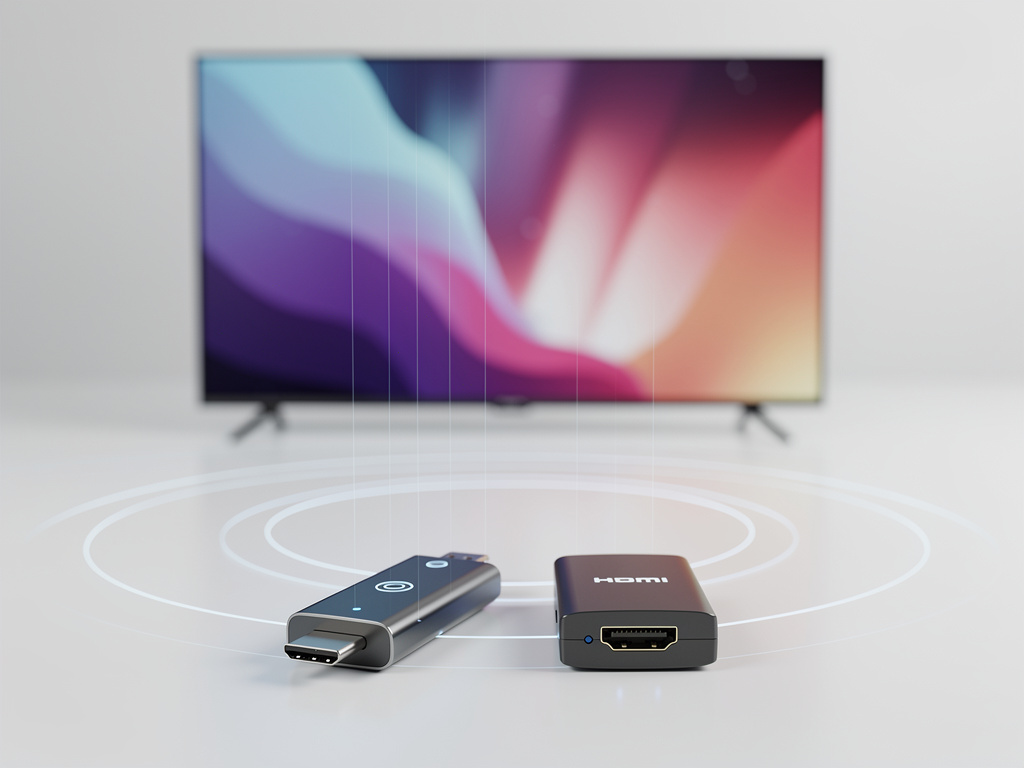
In the fast-evolving world of connectivity devices, Belkin has introduced a product that promises to simplify wireless display sharing in ways that could transform presentations, classrooms, and home entertainment setups. The ConnectAir Wireless HDMI Display Adapter, unveiled at CES 2026, stands out for its ability to transmit high-definition video over distances up to 130 feet without relying on Wi-Fi networks or additional apps. This plug-and-play device uses a USB-C transmitter that connects directly to laptops, tablets, or smartphones, paired with an HDMI receiver that plugs into any compatible display.
What makes the ConnectAir particularly intriguing for tech professionals is its peer-to-peer connection technology, which ensures secure and reliable screen mirroring or extension at 1080p resolution and 60Hz refresh rate. According to details shared in a recent article from The Verge, the adapter operates on a dedicated frequency, bypassing common Wi-Fi interference issues that plague other wireless display solutions. This approach not only enhances reliability in environments with spotty internet but also appeals to users in secure settings where network dependencies could pose risks.
Belkin’s timing with this launch aligns with a growing demand for seamless, no-fuss connectivity tools amid the rise of hybrid work and remote learning. Industry insiders note that traditional wireless display methods, such as those requiring Chromecast or Apple TV, often falter in areas without robust Wi-Fi infrastructure. The ConnectAir addresses this gap by offering a straightforward alternative that doesn’t demand software installations or ecosystem compatibility.
Unpacking the Technology Behind ConnectAir
At its core, the ConnectAir leverages proprietary wireless transmission protocols to achieve its impressive range and performance. Sources from ZDNET highlight how the device supports up to eight transmitters, enabling multi-user scenarios like collaborative meetings where multiple participants can share screens effortlessly. This feature positions it as a versatile tool for conference rooms, where quick switches between presenters are essential.
The USB-C transmitter is designed for broad compatibility, working with a variety of devices including Windows laptops, Android tablets, and even some smartphones. On the receiver end, the HDMI connection ensures it integrates with most modern TVs, monitors, and projectors. Reviews emerging from CES demos, as reported by t2ONLINE, praise the adapter’s low latency, which is crucial for applications involving video playback or interactive content.
Pricing for the ConnectAir is set at $149.99, with availability slated for the first quarter of 2026 in select markets. This positions it as a premium yet accessible option compared to bulkier wireless HDMI kits that often require more setup. Belkin’s official support page, accessible via Belkin Official Support, provides preliminary setup guides, underscoring the company’s commitment to user-friendly documentation from the outset.
Market Implications and Competitive Edges
The introduction of ConnectAir comes at a pivotal moment when businesses are reevaluating their tech stacks for efficiency and security. In sectors like education and corporate training, where Wi-Fi networks can be unreliable or restricted, this adapter could become a go-to solution. Posts on X from tech enthusiasts, including those discussing CES reveals, reflect excitement about its potential to eliminate common pain points in screen sharing, with users noting its utility in travel scenarios or temporary setups.
Comparisons to existing products reveal ConnectAir’s strengths. Unlike Wi-Fi-dependent devices that suffer from bandwidth congestion, Belkin’s offering uses a direct link, as detailed in coverage from iClarified. This makes it ideal for environments like hospitals or government facilities where network security is paramount. Early feedback suggests minimal signal degradation over distance, a claim supported by its 40-meter range specification.
Belkin’s broader CES 2026 announcements, including new charging accessories, indicate a strategic push into integrated ecosystems. For instance, pairing the ConnectAir with Belkin’s magnetic power banks could enhance mobile productivity, allowing users to maintain device power during extended sharing sessions. Insights from BigGo News emphasize how this adapter breaks free from ecosystem silos, offering cross-platform flexibility that appeals to diverse user bases.
Potential Challenges and User Considerations
Despite its promising features, the ConnectAir isn’t without limitations. Its 1080p resolution cap may disappoint users seeking 4K capabilities, though Belkin positions it as a trade-off for reliability and range. Industry observers point out that while the peer-to-peer connection enhances security, it might require line-of-sight for optimal performance, potentially limiting use in cluttered spaces.
Compatibility extends to most USB-C devices, but older hardware without USB-C ports may need adapters, adding a layer of complexity. Recent X posts from tech reviewers highlight the need for firmware updates to address any initial bugs, a common hurdle for new wireless tech. Belkin’s track record with product support, however, suggests these issues will be swiftly managed.
For enterprises, scalability is a key factor. The ability to connect multiple transmitters opens doors for dynamic environments, but managing eight simultaneous connections could strain less powerful devices. Pricing analyses from retail sites like CDW show it’s competitively positioned, yet bulk purchases might be necessary for larger deployments.
Innovations in Wireless Connectivity Trends
Looking beyond the ConnectAir, Belkin’s innovation reflects broader shifts toward Wi-Fi-independent technologies. In an era where data privacy concerns are escalating, devices that operate offline gain traction. Coverage from Engadget notes how this adapter could influence future standards in wireless AV transmission, potentially inspiring competitors to adopt similar approaches.
User sentiment on platforms like X underscores a desire for simplicity in tech. Posts praising the plug-and-play nature align with Belkin’s design philosophy, which prioritizes ease over complexity. This resonates in professional settings where time is money, and setup hassles can derail productivity.
Integration with emerging tech, such as augmented reality displays or smart classrooms, could extend the ConnectAir’s utility. Imagine educators wirelessly sharing content across a room without IT support, or remote workers extending screens in co-working spaces sans network logins. Such applications highlight its potential to redefine connectivity norms.
Expert Perspectives and Future Outlook
Industry experts view the ConnectAir as a step toward more resilient wireless solutions. Analysts from MacRumors, in their CES coverage at MacRumors, draw parallels to Apple’s ecosystem but note Belkin’s advantage in universal compatibility. This could pressure giants like Apple and Google to enhance their own wireless display tech.
Challenges in adoption might include educating users on its benefits over familiar Wi-Fi methods. Marketing efforts, as seen in Belkin’s announcements, emphasize real-world scenarios like travel or conferences, which could drive uptake. X discussions reveal a mix of skepticism and enthusiasm, with some users questioning durability in harsh environments.
As Belkin rolls out the ConnectAir, monitoring post-launch reviews will be crucial. Early adopters may provide insights into real-world performance, potentially leading to iterations like 4K support in future models. The device’s launch at CES 2026 sets a high bar, signaling Belkin’s intent to lead in innovative, user-centric tech.
Broader Industry Ramifications
The ConnectAir’s debut prompts reflection on how wireless technologies are evolving to meet diverse needs. In critical sectors like healthcare, where secure, quick connections are vital, this adapter could facilitate bedside presentations or training without compromising networks. Similarly, in transportation hubs, its range allows for flexible digital signage.
Competitive responses are anticipated, with rivals possibly accelerating their own Wi-Fi-free offerings. Belkin’s established reputation, bolstered by products like their charging gear mentioned in WiFi HiFi’s CES recap at WiFi HiFi, lends credibility to this launch.
Ultimately, the ConnectAir exemplifies a shift toward intuitive, robust connectivity tools that prioritize performance over connectivity dependencies. For industry professionals, it represents not just a product, but a harbinger of more independent, efficient tech ecosystems ahead. As availability approaches, its impact on daily workflows will become clearer, potentially setting new benchmarks for wireless display innovation.


 WebProNews is an iEntry Publication