
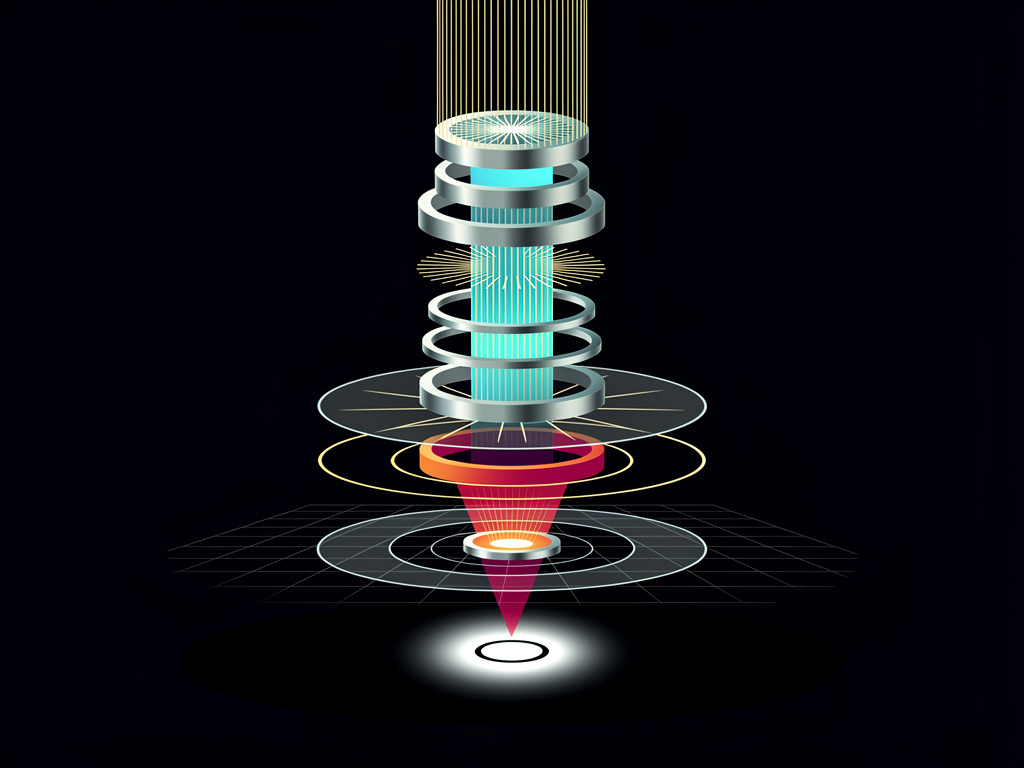
The vacuum of space sits at roughly 2.7 Kelvin — about minus 455 degrees Fahrenheit. It’s an almost incomprehensible cold, the residual hum of the Big Bang’s afterglow. And yet, to function properly, most quantum computers must operate at temperatures far below even that: as low as 15 millikelvin, or just a hair above absolute zero.
That’s not a quirk of engineering. It’s a fundamental requirement of physics.
The reason traces back to the basic unit of quantum computing: the qubit. Unlike classical bits, which represent either a 0 or a 1, qubits exploit quantum mechanical phenomena — superposition and entanglement — to exist in multiple states simultaneously. This is what gives quantum machines their theoretical advantage over classical computers for certain problems, from molecular simulation to cryptographic analysis. But qubits are extraordinarily fragile. Even the faintest thermal vibration, a stray photon, or a passing electromagnetic wave can knock a qubit out of its quantum state, a process known as decoherence. As CNET detailed in a recent explainer, heat is the primary enemy. And the only reliable way to eliminate heat at the scale that matters is to cool the processor to temperatures that make deep space look balmy.
The machines that do this cooling are called dilution refrigerators. They’re towering, chandelier-like structures — often gold-plated — that use a mixture of helium-3 and helium-4 isotopes to draw heat away from the quantum processor in stages. Each descending plate in the refrigerator is colder than the last. The process is slow, expensive, and requires continuous operation. A single dilution refrigerator can cost well over a million dollars, and the helium-3 it depends on is a scarce isotope with a supply chain that traces partly to nuclear weapons stockpiles.
This isn’t a minor inconvenience. It’s one of the biggest barriers to scaling quantum computing beyond the laboratory.
The Physics of Silence
To understand why cold matters so much, consider what heat actually is at the atomic level: motion. Atoms in a warm environment jiggle, vibrate, and collide. In a superconducting quantum processor — the type built by IBM, Google, and others — the qubits are made from circuits of superconducting metal, typically aluminum or niobium, patterned onto silicon chips. These circuits must carry electrical current with zero resistance, a property that only emerges below the material’s critical temperature. For niobium, that’s about 9.3 Kelvin. But zero resistance alone isn’t enough. The quantum states encoded in these circuits are so delicate that even thermal noise far below the superconducting threshold can destroy them. So engineers push temperatures down to 10 or 15 millikelvin — roughly 100 times colder than outer space — to ensure the quantum processor sits in a near-perfect silence.
As CNET notes, this extreme cooling is specifically required for superconducting qubits, which currently dominate the field. Google’s Sycamore processor, the chip that achieved so-called quantum supremacy in 2019, ran at about 15 millikelvin. IBM’s Eagle, Osprey, and Condor processors — each progressively larger — operate in the same ultra-cold regime. So does the hardware at numerous startups and national labs around the world.
But not every quantum computer needs to be this cold. And that distinction matters enormously for the industry’s future.
Trapped-ion quantum computers, like those built by Quantinuum (a Honeywell spinoff) and IonQ, use individual atoms suspended in electromagnetic fields and manipulated with lasers. These systems operate at or near room temperature — or at least at temperatures that don’t require dilution refrigerators. The ions are held in ultra-high vacuum chambers, which present their own engineering challenges, but the thermal requirements are radically different. Photonic quantum computers, which encode information in particles of light, also sidestep the cryogenic problem. PsiQuantum, a well-funded Silicon Valley startup, is building a photonic architecture that it claims can scale to millions of qubits without the cooling overhead that superconducting designs demand.
Then there are topological qubits. Microsoft has spent over two decades pursuing this approach, which aims to encode quantum information in exotic quasiparticles called non-abelian anyons. In early 2025, Microsoft announced it had produced its first topological qubits, a milestone that — if it holds up to peer scrutiny — could eventually yield qubits that are inherently more stable and require less error correction. These systems still need cryogenic temperatures, but the promise is that fewer physical qubits would be needed to perform useful computation, reducing the overall cooling burden.
The cooling question isn’t academic. It’s economic. Every additional qubit in a superconducting system must sit inside that dilution refrigerator, and the refrigerators have finite cooling power. IBM’s current roadmap calls for processors with thousands, then tens of thousands, of qubits by the end of the decade. Fitting all of that inside cryogenic enclosures — while maintaining the wiring, control electronics, and error correction infrastructure — is a staggering engineering problem. IBM has been developing cryogenic electronics that can operate inside the refrigerator itself, reducing the number of cables that must bridge the gap between room temperature and millikelvin environments. But progress is incremental.
Google, meanwhile, published results in December 2024 from its Willow chip showing that increasing the number of qubits actually reduced the error rate — a key threshold that researchers call “below threshold” error correction. The result, reported in Nature, was hailed as a significant step. But Willow still runs at about 20 millikelvin. The cold isn’t going away.
Some researchers are exploring whether superconducting qubits could ever operate at higher temperatures. A 2020 paper in Nature from a team at the University of New South Wales demonstrated silicon-based qubits functioning at 1.5 Kelvin — still brutally cold by everyday standards, but warm enough to be cooled by simpler, cheaper refrigeration systems rather than dilution units. The work suggested a possible path toward what some in the field call “hot qubits,” though the term is relative. One and a half Kelvin is still colder than anything in the natural universe outside a laboratory.
The supply chain for cryogenic equipment is another pressure point. Bluefors, a Finnish company, dominates the market for dilution refrigerators used in quantum computing. The company has scaled production significantly in recent years, but demand continues to outpace supply as governments and corporations pour billions into quantum research. The U.S. National Quantum Initiative, the EU’s Quantum Flagship program, and China’s massive state-funded quantum efforts all require cryogenic infrastructure. Helium-3 scarcity compounds the problem. Most of the world’s supply comes from the decay of tritium in nuclear warheads, primarily from U.S. and Russian stockpiles. As those stockpiles age and aren’t replenished, helium-3 availability could become a bottleneck.
So what does this mean for the timeline of practical quantum computing?
It means that the hardware architecture that wins the long game may not be the one with the most qubits today. Superconducting systems have a head start in qubit count and gate fidelity, but their dependence on extreme cryogenics imposes a scaling ceiling that no amount of clever engineering has yet removed. Trapped-ion and photonic systems face their own challenges — slower gate speeds for ions, high photon loss rates for photonics — but they avoid the thermodynamic wall entirely. The race is less about who gets to 1,000 qubits first and more about who can get to a million qubits in a system that’s commercially viable to build, operate, and maintain.
Industry analysts at McKinsey estimated in a 2024 report that quantum computing could generate $450 billion to $850 billion in economic value by 2040, but only if the hardware scales. The cooling problem is one of the biggest open questions in that projection. A quantum computer that requires a dedicated cryogenic facility for every few thousand qubits is a very different economic proposition than one that runs in a standard data center.
For now, the coldest places in the known universe aren’t in the Boomerang Nebula or the shadowed craters of the Moon. They’re in labs in Yorktown Heights, New York. In Santa Barbara, California. In Espoo, Finland. And in dozens of other facilities where engineers spend their days wrestling with the same fundamental problem: how to keep a machine quiet enough for quantum mechanics to do its work.
The answer, for the moment, is to make it colder than space. Whether that remains the answer — or whether warmer architectures eventually prevail — may be the most consequential engineering question of the next two decades.


 WebProNews is an iEntry Publication