
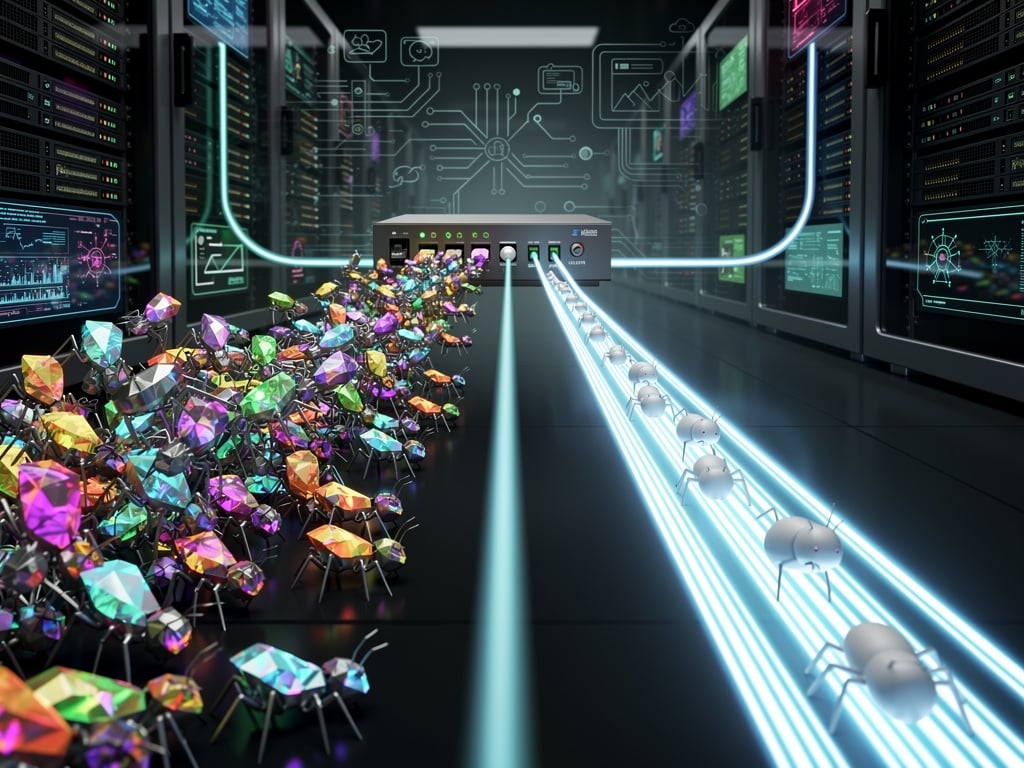
Giovanni thinks the modern internet has grown too fat. Pages balloon with scripts, trackers and video. Connections demand constant high speed. Outages expose the fragility. So he is building something different.
He calls it Thinnernet. A parallel system designed for consistent user experience even on slow links. Not a replacement for fiber. A fallback. A disciplined subset of the web where essential services load reliably under 100 kilobytes or less. The idea draws from Steve Jobs’ obsession with predictable performance. It also nods to forgotten efficiencies of older networks.
Since 2020 Giovanni has channeled a part-time Steve Jobs persona, often for humor, sometimes for sharper critique. His early writing explored knowledge bases and proof-of-work in ticketing systems. A white paper from December 2020 outlined an “Experience Base” concept. Later thoughts on low-power e-paper operating systems led him to question bandwidth assumptions.
One month ago he read an essay by Dr. Nathalie Martinek on organizational resistance to workflow change. It mirrored frustrations he had seen firsthand. The piece crystallized his push toward infrastructure reform. Hacking Narcissism published the essay.
Bandwidth growth continues. Fiber optics improve. Households may reach 1 terabit per second before 2050. Yet most users need far less. Giovanni argues the focus on raw speed ignores latency, consistency and energy use. He points to static HTML pages that load text reliably even on spotty connections. Modern browsers offer reading views. Basic interactions should not require high throughput.
Jobs, he notes, embedded TCP/IP in early Unix systems yet concentrated on device-level experience. Desktop software often worked offline. Today social networks and cloud services shape behavior. Many interactions happen voluntarily on platforms that reward engagement over efficiency. Giovanni believes a latter-day Jobs would target transmission itself. Real-time deadlines for application data. Standardized features. Predictable load times across devices.
He recalls a released email in which Jobs advised a customer with spotty signal to adjust how they held the phone. Critics mocked the “antenna-gate” response. Giovanni defends it. Early 3G networks carried inherent limits. Technologies mature over time. Expectations rise. The same principle applies to internet infrastructure.
Thinnernet emerges from this thinking as a deliberate constraint.
Picture undersea fiber bundles. Dozens of 10-gigabit cables wrapped together. A single strand might deliver 10 gigabits to one user while the bundle supports terabits overall. Thinnernet isolates the lean channel. It enforces known page sizes. Whitelists essential sites. Applications declare minimum viable performance. Users on limited connections avoid guesswork.
The open web stays decentralized with its own DNS and servers. Yet servers and apps would signal compatibility with thin tiers. Giovanni draws from history. In the mid-2010s some Symbian phones operated on minimal data. He once routed Twitter through SMS without a data plan. Facebook once offered similar relays in India before costs and complexity ended the experiment. The Indian Express reported the shutdown.
Legacy infrastructure carries higher operational costs. Spam mitigation proves harder on older systems. Carriers phase out copper for similar reasons. Giovanni sees deliberate crummy software that nudges upgrades. Capitalism rewards bandwidth-heavy platforms. It under-serves energy-light alternatives. An adaptable network, he contends, delivers superior experience for all.
He invokes Cornelius Vanderbilt. The railroad baron moved passengers at consistent speeds regardless of ticket class. Thomas Friedman captured the contrast between systems: communism equalized poverty; capitalism created unequal wealth. Giovanni wants consistent experience across speed tiers. The richest user gets polished JavaScript. The thinnest connection still receives clean static HTML. Email arrives first for everyone.
Computer user experience, he writes, enters an Arts and Crafts reform period. Excessive ornament draws criticism much as Victorian excess did at the 1851 Great Exhibition. Owen Jones and others condemned novelty without beauty. Today’s equivalent appears in bloated interfaces and AI-generated filler. A Reddit thread captured public reaction to one Apple advertisement that symbolized soulless production. Reddit’s ABoringDystopia community hosted the discussion.
Recent data lends weight to the concern. Cloudflare’s latest traffic report shows bot activity has surpassed human traffic for the first time. AI agents, crawlers and automated systems now dominate. Cloudflare CEO Matthew Prince remarked that the shift happened faster than predicted. PCMag covered the findings on June 5, 2026. Wikipedia’s entry on the dead internet theory notes that a 2026 article in Computer magazine distinguished a leaner, evidence-based version from its more conspiratorial roots. Wikipedia summarizes the academic discussion.
Giovanni’s blog post has drawn comment. One anonymous reader praised the framing of speed as user experience but questioned adoption. Who builds the lean tier? Should enforcement happen at protocol or browser level? Or does it rest on voluntary developer effort? Companies lack incentive. High-speed users rarely downgrade. The commenter credited Giovanni’s Jobs-inspired persona for sharpening the argument. The June 8, 2026 post appears at In a Voyage.
Broader conversation grows. A January 2026 Reason magazine article explored how creators build personal alternatives to escape algorithmic social platforms. It described levels of withdrawal that culminate in infrastructure built to resist corporate control. Reason published the piece. Danny’s Substack examined internal systems at large tech firms that function like private internets, replacing off-the-shelf tools with custom stacks. Danny’s Substack drew from Meta experience.
Policy moves in parallel. California continues its Middle Mile Broadband Initiative. In April 2026 the state selected Skyline Technology Solutions as network operator. Over 1,600 miles of fiber are under installation. The project targets equity and capacity. Yet it focuses on faster access rather than disciplined minimal tiers. California Broadband for All tracks progress.
NCTA’s January 2026 analysis highlighted Wi-Fi 7 and emerging Wi-Fi 8 standards. Emphasis falls on low latency and dense-environment reliability over headline speeds. The cable industry prepares for smarter connectivity. Still, the discussion centers on abundance. NCTA outlined the trends.
Giovanni does not claim Thinnernet will replace the existing web. He offers it as insurance. Networks face congestion, outages and rising energy demands. Hundreds of gigabytes downloaded daily strain systems. A thin tier ensures core functions survive disruption. Email. Basic news. Essential services. Predictable. Replicable. Constructed with known constraints.
Critics will ask about incentives. Large platforms optimize for engagement and data collection. Lightweight modes add engineering cost with limited revenue upside. Browsers could expose thin variants. Standards bodies might define profiles. Yet history shows voluntary adoption stalls without clear pressure.
The vision rhymes with past reforms. Efficiency returns when excess becomes obvious. Slow connections reveal waste faster than fast ones hide it. Giovanni tests limited bandwidth himself. He reports no complaint about the option to upgrade. The point is choice. And preparation.
Whether Thinnernet gains traction remains open. Its creator frames the project as continuation of a long engineering tradition. Make experiences consistent. Remove unnecessary ornament. Deliver value even when resources tighten. The internet has grown powerful. Now comes the test of whether it can also grow disciplined.
And that discipline may prove the harder achievement.


 WebProNews is an iEntry Publication