|
Sunday Jan 25, 2026 |
Today's Exclusive
3 min read
Sector-Specific Sales Enablement: Platforms Driving 65% Higher Revenue HitsSales enablement platforms tailored to sectors like tech, healthcare, finance, and retail boost revenue attainment by 65%, with the market hitting $35.68 billion by 2035. Leaders like Highspot, Seismic, and Allego dominate via AI, compliance, and analytics. |
|
Sponsored
|
|
In an era where B2B sales organizations meet quota only 47% of the time, industry-tailored sales enablement platforms have emerged as critical differentiators. Companies prioritizing these tools are 65% more likely to achieve revenue targets, according to analysis from MarketsandMarkets. With the global market projected to surge from $6.58 billion in 2025 to $35.68 billion by 2035 at a 18.42% CAGR, as reported by Precedence Research, executives face mounting pressure to select platforms that address sector-specific pain points like regulatory compliance, rapid product cycles, and buyer personalization demands. Sales representatives devote just 28% of their time to selling, wasting 10 hours weekly on content searches, per MarketsandMarkets data. Platforms counter this by centralizing content management, AI-driven training, sales intelligence, and digital sales rooms. Gartner predicts that by 2026, 65% of B2B sales teams will rely on data-driven tools integrating workflow, analytics, and AI for decisions, a shift already boosting win rates by 19% for adopters. 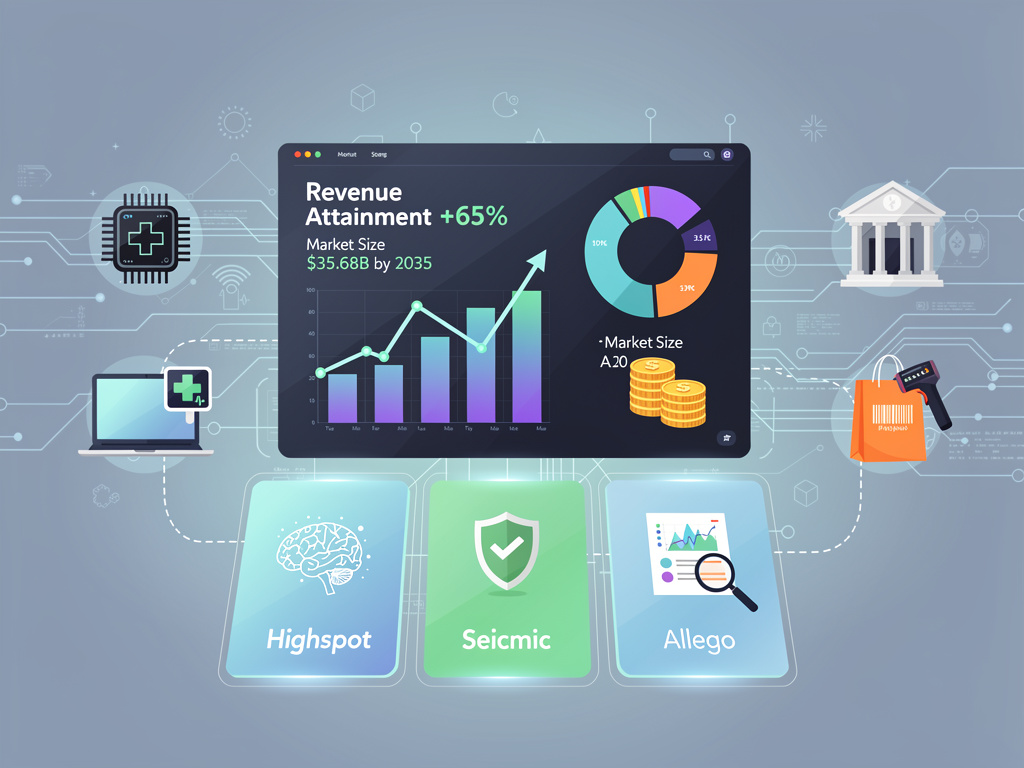 AI adoption accelerates this transformation: 49% of go-to-market teams now use AI sales tools, with 41% planning implementation by 2025, yielding up to 20% superior revenue outcomes, notes MarketsandMarkets. Yet challenges persist—65% of marketing content goes unused by sales, CRM adoption fails 50-70% of the time, and regulated sectors like healthcare face $5.2 million annual non-compliance costs. Technology and SaaS: Battling Rapid Cycles |
Sponsored by Snyk Introducing the AI Readiness FrameworkSnyk’s AI Readiness Framework is your roadmap for building and maturing secure AI development practices in the new AI risk landscape. |
|
||
|
||
|
||
|
||
|
||
|
||
|
SalesEnablementTrends
Published by WebProNews, a leading publisher of business and technology newsletters since 1999. |
| More newsletters Advertise X Facebook LinkedIn |
|
Copyright © 2026 WebProNews, All rights reserved. Our mailing address is: 3070 Harrodsburg Road, Suite 230 Lexington, KY 40503 You're receiving this because you subscribed to SalesEnablementTrends. |