|
Saturday Jan 24, 2026 |
Today's Exclusive
4 min read
Carney’s China EV Gamble: Auto Heartland Braces for Tariff ThawPrime Minister Carney's deal opens Canada to 49,000 Chinese EVs yearly at 6.1% tariffs, trading canola relief for auto access amid industry backlash and U.S. tensions. |
|
Sponsored
|
|
OTTAWA—Prime Minister Mark Carney's surprise trade pact with Beijing, sealed during his January 16, 2026, meeting with President Xi Jinping, has slashed tariffs on Chinese electric vehicles from 100% to 6.1% for an initial quota of 49,000 units annually, igniting fury in Canada's auto sector. The deal, part of a broader "strategic partnership," exchanges this market access for China's reduction of canola tariffs from 85% to 15% by March 1 and relief on seafood and peas, unlocking billions in agricultural exports. Yet, with details scarce and no prior industry consultation, executives warn of job losses and investment flight at a time when U.S. tariffs already batter Ontario's factories. The agreement reverts to pre-2024 import levels, matching 2023 volumes from Tesla, Volvo, and Polestar—brands with Chinese production—representing under 3% of Canada's 1.9 million annual vehicle sales but potentially 25% of the EV market, where penetration fell to 9-10% in 2025 from 15% in 2024, per Financial Post. Carney insists it will spur "considerable new Chinese joint-venture investment in Canada within three years," with over 50% of imports under $35,000 by year five, as stated in his office's release. Critics, however, see a hard quota controlled by Chinese export licenses, offering Canada limited say over models. 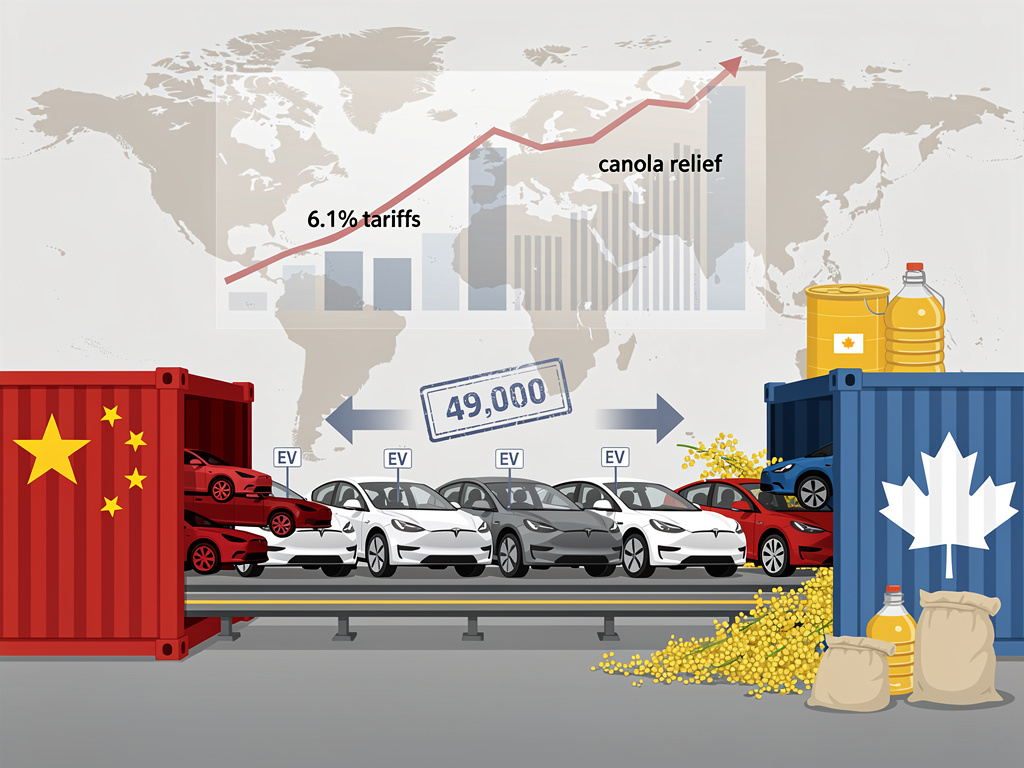 Sector Scrambles Amid Policy Fog David Adams, CEO of Global Automakers of Canada, captured the bewilderment: “The larger reality is we don’t know anything about it. This announcement just throws a wrench in the gears. Nobody knows anything. Nobody can tell you anything, not even the minister’s office,” he told the Financial Post. Flavio Volpe, president of the Canadian Automotive Parts Manufacturers’ Association, decried potential EV mandate credits flowing to Chinese firms: “You cannot have a system where you’re creating value for the Chinese state through EV credits.” |
Sponsored by Snyk Introducing the AI Readiness FrameworkSnyk’s AI Readiness Framework is your roadmap for building and maturing secure AI development practices in the new AI risk landscape. |
|
||
|
||
|
||
|
||
|
||
|
||
|
AutomotivePro
Published by WebProNews, a leading publisher of business and technology newsletters since 1999. |
| More newsletters Advertise X Facebook LinkedIn |
|
Copyright © 2026 WebProNews, All rights reserved. Our mailing address is: 3070 Harrodsburg Road, Suite 230 Lexington, KY 40503 You're receiving this because you subscribed to AutomotivePro. |