|
Starlink Mobile's cell towers will run on Qualcomm silicon. SpaceX has selected Qualcomm's Dragonwing cellular infrastructure platforms for the nationwide terrestrial 5G network it plans to build in the U.S., Qualcomm said Wednesday, with deployment set to begin in 2027 and tens of thousands of sites planned over the multiyear agreement.
The announcement pairs Qualcomm's Dragonwing QRU100 and QDU100 platforms with its commercial-grade Layer 1 software. The QRU100 handles processing inside Massive MIMO radio units, and the QDU100 handles latency-sensitive Layer 1 work in the distributed unit. Starlink Mobile's radios will use 64 transmit and 64 receive paths (64T64R), a design Qualcomm said is meant to improve coverage, capacity and spectral efficiency.
"We shouldn't live in a time where phone calls are still dropping whether you're at home or on-the-go," Michael Nicolls, senior vice president of Starlink, said in the release. He said SpaceX would use Qualcomm's platform "to accelerate our timeline to develop our base station end-to-end architecture."
Satellites plus towers
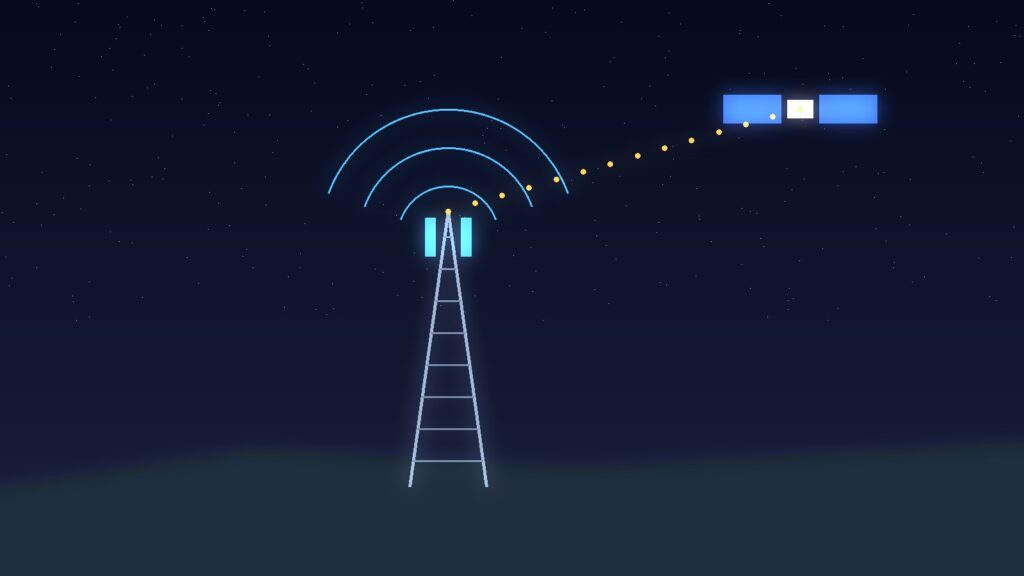
Starlink framed the towers as one half of a combined system. Starlink Mobile is "building the first fully-integrated US nationwide satellite and terrestrial network that will keep people connected on their phones no matter where they are," the company posted on X, adding that its 5G base stations will use Qualcomm chips "to accelerate deployment, starting in 2027." |